 Summer
Fall
Winter
Summer
Fall
Winter
Spring
Summer
Fall
Winter

North Ridge Trail, Purisima Creek Redwoods OSP, March 2009 (Jennifer Rycenga)
The Purisima Creek Redwoods Open Space Preserve is located 4.5 miles south of the junction of State Highways 35 and 92 just beyond the Kings Mountain Country Store. This magnificent preserve harbors large redwoods, mixed conifers and wildflowers along almost thirteen miles of trails. The habitat varies from fog-shrouded redwoods to rolling grasslands down slope. Here you are likely to find breeding Hermit Warblers in spring and summer. Other uncommon nesters are Red-breasted Nuthatch and Hermit Thrush. In winter this area is a good place for hawk watching. It's one of the better places to look for Golden Eagles (rare). Year-round residents include Band-tailed Pigeon, Common Raven, Chestnut-backed Chickadee, Brown Creeper, Pine Siskin, Northern Pygmy-Owl and Steller's Jay. A second entrance, 2.2 miles further south, will put you more immediately into a forest of modestly-sized redwoods and Pacific Madrones. There is also a 'back-door' entrance from Half Moon Bay, that gives access to the western edge of the park. In fact, this is currently the only Skyline area park in which it is possible to hike to the coast, though the point in Half Moon Bay where the trail leaves you is still more than five windy miles from the coast (see Burleigh Murray State Park write-up for more realistic future hopes in this regard). Like any predominantly redwood forest, this park will not yield a high number of species. But the views of the coast and the rolling hills of western San Mateo county are excellent. The North Ridge trail, accessed from the north Skyline parking lot, traces a border between the wooded habitat and some grassy scrublands.
California Quail, Great Blue Heron, Turkey Vulture, Osprey, Sharp-shinned Hawk, Cooper's Hawk, Bald Eagle (rare at this location; flyover), Red-shouldered Hawk, Red-tailed Hawk, California Gull (flyovers), Band-tailed Pigeon, Eurasian Collared-Dove (uncommon here), Mourning Dove, Barn Owl, Western Screech-Owl, Great Horned Owl, Northern Pgymy-Owl, Northern Saw-whet Owl, White-throated Swift, Anna's Hummingbird, Allen's Hummingbird, Belted Kingfisher, Acorn Woodpecker, Nuttall's Woodpecker, Downy Woodpecker, Hairy Woodpecker, Northern Flicker, Pileated Woodpecker (uncommon), Red-breasted Sapsucker, American Kestrel, Merlin, Peregrine Falcon, Olive-sided Flycatcher, Western Wood-Pewee, Pacific-slope Flycatcher, Black Phoebe, Say's Phoebe, Ash-throated Flycatcher, Hutton's Vireo, Warbling Vireo, Cassin's Vireo (migrant), Steller's Jay, California Scrub-Jay, American Crow, Common Raven, Chestnut-backed Chickadee, Oak Titmouse (rare here), Violet-green Swallow, Barn Swallow, Bushtit, Red-breasted Nuthatch, White-breasted Nuthatch (rare here), Pygmy Nuthatch, Brown Creeper, Blue-gray Gnatcatcher, House Wren (rare here), Bewick's Wren, Pacific Wren, American Dipper (unusual at this location), Golden-crowned Kinglet, Ruby-crowned Kinglet, California Thrasher, Western Bluebird, Swainson's Thrush, Hermit Thrush, American Robin, Varied Thrush, Wrentit, European Starling, Cedar Waxwing, Orange-crowned Warbler, Common Yellowthroat, Yellow-rumped Warbler, Yellow Warbler, Wilson's Warbler, Nashville Warbler (migration), Black-throated Gray Warbler, Townsend's Warbler, Hermit Warbler (uncommon, migration), MacGillivray's Warbler, Spotted Towhee, California Towhee, Fox Sparrow, Song Sparrow, Lincoln's Sparrow (rare, in migration), White-crowned Sparrow, Golden-crowned Sparrow, Dark-eyed Junco, Western Meadowlark, Red-winged Blackbird, Brewer's Blackbird, Purple Finch, House Finch, Pine Siskin, Red Crossbill, American Goldfinch, Lesser Goldfinch, Western Tanager, Black-headed Grosbeak
In this guide, "rarities" are defined as those species given an County Abundance Code of 4, 5, or 6.
Wild Turkey (2018), Golden Eagle (2016, 2018), Philadelphia Vireo (2017), Chestnut-sided Warbler (2017, 2018), Lawrence's Goldfinch (2018), White-throated Sparrow (2004, 2010)
The main parking lot for Purisima Creek Redwoods Open Space Preserve is along Skyline Boulevard, 4.5 miles south of the junction of SR 35 and SR 92. The lot is on your right. The second entrance is further down on your right, another 2.2 miles further south. The Half Moon Bay entrance is reached by taking Higgins-Purisima Road east from the junction of SR1 and Main Street, until its end (the junction with Purisima Creek Road). This parking lot is quite small, and fills quickly on weekends.
Red Markers: Parking Area or Trail Head
Hover mouse pointer over marker, or click marker, for identification.
There are no fees connected with this location.
8:00 am to around sunset officially.
The usual - ticks, Mountain Lions, poison oak. Don't get too close to ridge edges. The trails are used by equestrians, which only makes them muddier than they are anyway in spring.
There are bathrooms at the north Skyline and Half Moon Bay entrances. Nearest supplies are scarce - plan ahead. There is a store at King's Mountain, and a few restaurants in the area. Half Moon Bay has supplies aplenty.
The Midpeninsula Region Open Space District can be contacted at 650-691-1200 during regular business hours. The 24-hour dispatch number for an MROSD ranger is 650-968-4411.
The eBird hotspot, titled "Purisima Creek Redwoods OSP," has data for a 46 calendar quadrants of 48, logging 112 species species; continue recording your sightings oneBird!
The iNaturalist location marker for Purisima Creek Redwoods OSP notes almost 500 species covering all taxa. This is an excellent location for fungi and lichens.
Sequoia Audubon Society has sponsored but one field trip to this often-crowded location, in 1961! Time for another, intrepid leaders!
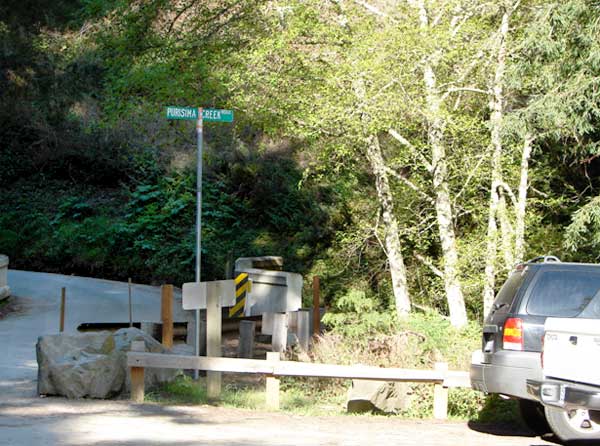
Parking lot accessed from Half Moon Bay, Purisima Creek Redwoods OSP (Jennifer Rycenga)
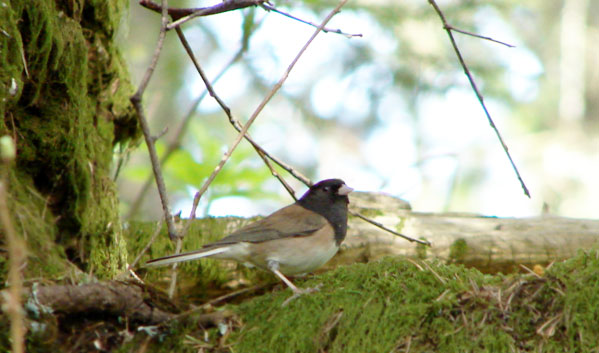
Dark-eyed Junco, Purisima Creek Redwoods Open Space Preserve, March 2009 (Jennifer Rycenga)
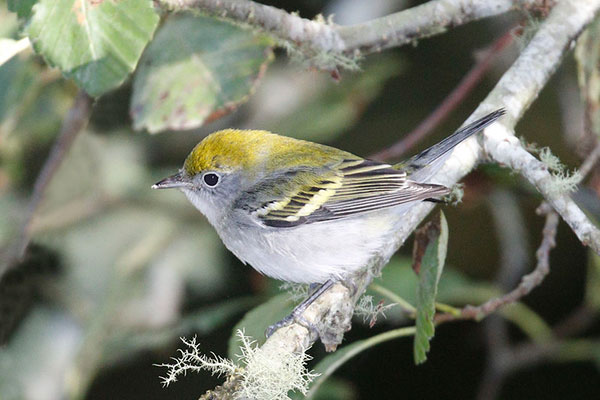
Chestnut-sided Warbler, September 2017 (Donna Pomeroy)
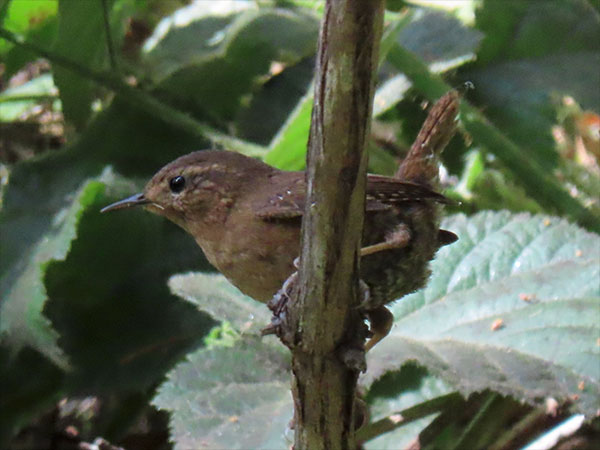
Pacific Wren, February 2020 (Ed Miller)
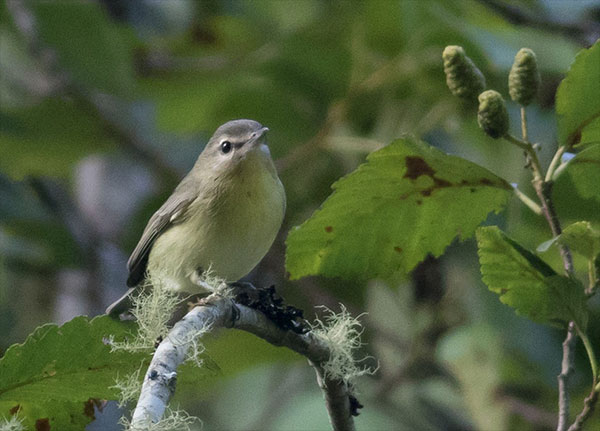
Philadelphia Vireo, September 2017 (Tom Johnson)
Author: Jennifer Rycenga and Dan Keller, Uploaded: