 Summer
  Fall
Fall  Winter
Spring
Summer
Fall
Winter
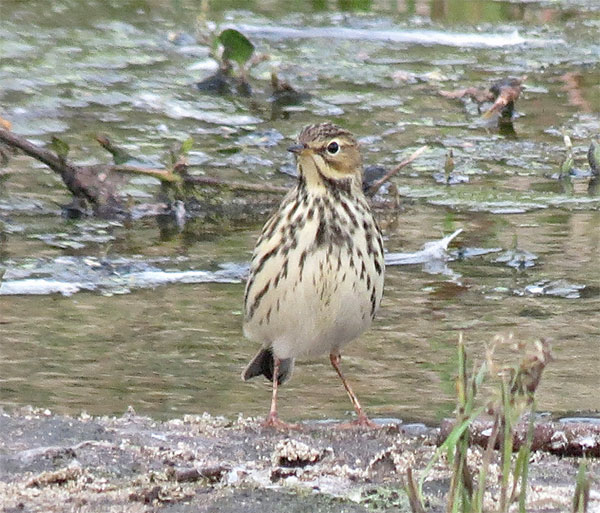
Red-throated Pipit, found by Alvaro Jaramillo, at Pilarcitos Creek Mouth, September 2014 (Malia deFelice)
The area that local birders refer to by the name "Pilarcitos Creek Mouth" encompasses a section of Half Moon Bay State Beach between Francis Beach on the south and Venice Beach to the north. The beach is officially dubbed "Elmar Beach," but this name is not commonly used among birders.
There are two distinct areas involved here. The first involves the paved Coastal Trail. To get to this area, park as indicated below at the corner of Wave and Pilarcitos. From the large house on the northwest corner, locate the dirt trail heading west to the ocean. Go past the dirt horse trail to the paved Coastal Trail. Walk south along this paved trail. The coastal scrub yields sparrows, including towhees, wrens, and Bushtits. A metal bridge where the trail crosses Pilarcitos Creek provides great views of this riparian area. This place, and nearby access points to the creek, feature mixed flocks of chickadees, Bushtits, and warblers. Continuing across the bridge brings one to the Corporation Yard of Half Moon Bay State Beach; the riparian corridor here lies on the bank of the creek across from the Sewer Treatment plant (see separate listing), and can hold warblers and wrens among other small birds. Check all blackbirds along the coastal trail; in winter there are almost always some Tricolored Blackbirds mixed into the local flock.
The other distinct area at Pilarcitos Creek Mouth is the creek mouth itself. This area, which sustains variable water levels, provides good habitat for migrating shorebirds, and has been a site for rarities over the past few years. To get to this area, park as indicated below at the corner of Wave and Pilarcitos. From the large house on the northwest corner, locate the dirt trail heading west to the ocean. Go past both the horse trail and the paved Coastal Trail, and head for the (currently) unused parking lot, aiming for its southwest corner. From the southwest corner, you will see a dirt trail heading south. Cleave as close as you can to the cliff, until you come to any place where you can see over the cliff edge to the beach below. From late fall through early spring, there are often flocks of gulls on the beach (both here and at Venice Beach - see separate entry for Venice Beach). Depending on the size of the collected water at the creek mouth, there can be shorebirds, Common Ravens, and rare gulls. From the blufftop, it can also be productive to scan the ocean: pelagic species such as Marbled Murrelet, Sooty Shearwater, and Northern Fulmar have been observed from here.
Parts of this area, particularly on the border between Francis and Elmar beaches, are crucial management areas for protecting Snowy Plovers. If you want to be a docent protecting the Snowy Plovers from disturbance, contact the state park personnel at Half Moon Bay State Beach: many Sequoia Audubon members participate in this successful program.
This area, by way of the Coastal Trail, is contiguous with Half Moon Bay State Beach to the south and Venice Beach to the north, as mentioned above (see separate entries for these two areas). Pilarcitos Creek runs parallel to SR 92 in Half Moon Bay; other sites in this guide that describe accessible sections of Pilarcitos Creek include entries on Half Moon Bay Sewer Treatment Plant, Strawflower Plaza: Pilarcitos Creek Watershed, and Carter Park: Pilarcitos Creek Downtown Half Moon Bay.
Brant, Mallard, Northern Pintail, Cinnamon Teal (uncommon at this site), Ring-necked Duck (uncommon at this site), Red-breasted Merganser, California Quail, Common Loon, Pacific Loon, Red-throated Loon, Western Grebe, Clark's Grebe, Black-vented Shearwater, Sooty Shearwater, Pink-footed Shearwater (uncommon here), Northern Fulmar, Brown Pelican, Double-crested Cormorant, Pelagic Cormorant, Brandt's Cormorant, Great Blue Heron, Great Egret, Snowy Egret, Green Heron (unusual at this location), White-tailed Kite, Northern Harrier, Red-shouldered Hawk, Red-tailed Hawk, American Kestrel, Merlin, Peregrine Falcon, Black-bellied Plover, Snowy Plover, Semipalmated Plover, Killdeer, American Avocet (2011, 2018, unusual at this location), Willet, Whimbrel, Marbled Godwit, Lesser Yellowlegs (rare at this location), Red Knot (rare at this location), Sanderling, Western Sandpiper, Least Sandpiper, Short-billed Dowitcher, Dunlin, Spotted Sandpiper (rare at this location), Wandering Tattler (rare at this location), Red-necked Phalarope (rare at this location), Wilson's Snipe (rare at this location), Bonaparte's Gull (uncommon), Heermann's Gull, Ring-billed Gull (rare at this location), Western Gull, California Gull, Herring Gull (look too for the Asian Herring Gull, known as a Vega Gull, which has been observed here), Glaucous-winged Gull, Short-billed Gull, Caspian Tern, Elegant Tern, Black Skimmer (rare here), Parasitic Jaeger, Common Murre, Marbled Murrelet, Rock Pigeon, Eurasian Collared-Dove, Mourning Dove, Barn Owl, Great Horned Owl, Anna's Hummingbird, Allen's Hummingbird, Western Wood-pewee (migration), Pacific-slope Flycatcher (migration), Black Phoebe, Say's Phoebe, Western Scrub-Jay, American Crow, Common Raven, Violet-green Swallow, Barn Swallow, Chestnut-backed Chickadee, Bushtit, Blue-gray Gnatcatcher (rare here), Bewick's Wren, Golden-crowned Kinglet (unusual here), Ruby-crowned Kinglet, American Robin, Wrentit, California Thrasher (noteworthy at this location), American Pipit, European Starling, Yellow Warbler, Yellow-rumped Warbler, Orange-crowned Warbler, Black-throated Gray Warbler (unusual at this location), Townsend's Warbler, Common Yellothroat, Wilson's Warbler, Spotted Towhee, California Towhee, Savannah Sparrow, Fox Sparrow, Song Sparrow, White-crowned Sparrow, Golden-crowned Sparrow, Red-winged Blackbird, Tricolored Blackbird, Western Meadowlark, Brewer's Blackbird, Brown-headed Cowbird, Purple Finch, House Finch, Lesser Goldfinch, American Goldfinch, House Sparrow
In this guide, "rarities" are defined as those species given an County Abundance Code of 4, 5, or 6.
Greater White-fronted Goose (2010, 2015, 2017, 2019, 2020, 2021, 2022), Ross's Goose (2013), Snow Goose (2013, 2014), Cackling Goose (2011, 2013, 2014, 2016, 2017, 2019, 2021, 2022), Wood Duck (rare at this location), Blue-winged Teal (2018), Red-necked Grebe (2019), Ferruginous Hawk (2018), Bald Eagle (2015, 2019, 2020), White-faced Ibis (2015, 2018, 2022, 2023), Sandhill Crane (fly-by 2015), Brown Booby (2015), Northern Gannet (2016), Pacific Golden-Plover (2014), American Golden-Plover, Solitary Sandpiper (2020), Semipalmated Sandpiper (2010, 2013, 2014, 2015, 2017, 2019), Baird's Sandpiper (2010, 2013, 2015, 2016, 2017, 2020, 2022), Buff-breasted Sandpiper, Pectoral Sandpiper (2010, 2012, 2013, 2014, 2015, 2017), Wilson's Phalarope (2011, 2013), Red Phalarope (2020), Pomarine Jaeger (2021), Black-legged Kittiwake (2011, 2016, 2017, 2018, 2019, 2020, 2021, 2022, 2023), Laughing Gull (2015, 2017, 2018, 2019), Franklin's Gull (2013, 2018, 2023), Kelp Gull (2015, 2016), Lesser Black-backed Gull (2016, 2017, 2019, 2020, 2021, 2022), Slaty-backed Gull (2014, 2017, 2018, 2019, 2021, 2022), Glaucous Gull (one or two most winters), Royal Tern (2019), Common Tern (2011, 2013, 2017, 2019), Least Tern (2013, 2016), Tropical Kingbird (2008, 2009, 2012), Purple Martin (2015, 2016, 2017, 2019, 2020, 2021), Horned Lark (2022), Red-throated Pipit (2014), Black-and-White Warbler (2012, 2015, 2020), Tennessee Warbler (2010, 2015), Palm Warbler (2013, 2017, 2020), Nashville Warbler (2015), Blackburnian Warbler (2010), Magnolia Warbler (2015), Northern Waterthrush (2018), Blackpoll Warbler (2012, 2015), Lark Sparrow, Dickcissel, Swamp Sparrow (2012, 2013, 2018), Clay-colored Sparrow (2012, 2015), Chipping Sparrow (2020), Snow Bunting (2022, 2023)
Park on the street near the corner of Wave and Pilarcitos. To get there, from SR1, turn west on Kehoe Avenue (a bit north of the intersection of SR1 and SR92). Take Kehoe to its end, then turn right on Pilarcitos. The intersection of Wave and Pilarcitos is at the end of Pilarcitos. From the large house on the NW corner of this intersection, you will see a dirt trail heading west. Follow this past the house, over the unpaved horse trail. The next trail is paved. This is the coastal trail. Turning left and walking down the coastal trail will bring you to the bridge over Pilarcitos Creek. Continue over the bridge to access further riparian by the Corporation Yard of Half Moon Bay State Park. If you cross the paved trail, you will come to a vacant state beach parking lot. Cross that parking lot, heading for its southwest corner. You'll see a trail here: walk along this trail in a southerly direction, always choosing to head west when you can. You will come to places where you can overlook the beach, and observe the gulls, shorebirds, and more using the creek mouth in fall and winter.
Red Markers: Parking Area or Trail Head
Hover mouse pointer over marker, or click marker, for pin identification.
Use + or - buttons to change map zoom. Click & Drag to pan.
There are no fees to use this area. If you enter from Venice Beach, or the main entrance of Half Moon Bay State Beach, you must pay the state parks fee, or show your state parks pass.
There are no known time restrictions for using these areas. A walk along the paved Coastal Trail at night in fall and winter could yield sightings of the three large owls: Great Horned, Barn, and Short-eared Owls (rare).
The coastal trail receives heavy usage, including from bicyclists, so try to stay close to the edge of the trail rather than taking up the entire trail. The horse trail runs parallel to the paved trail, and has issues of muddiness and horse waste that you should be aware of before walking along that way. The cliff at the bluff's edge could have some risk of collapse; take the precaution to not stand right at the loose edges of the cliff.
There are rest rooms at both Half Moon Bay State Beach and Venice Beach. There are provisions nearby in the town of Half Moon Bay.
Accessibility information is currently not available for this location.
Half Moon Bay State Beach personnel can be reached at 650-726-8819.
Pilarcitos Creek Mouth is a hotspot in eBird, populated mostly with data from late summer and fall. Don't neglect winter birding here, which could yield over-wintering rarities. The importance of this area for Snowy Plover nesting has been noted; the population figures for this area have been growing, and the flock has been studied. Always look for birds with bands; at this site species likely to be banded include the Snowy Plover and Western Gull. Pt. Reyes Bird Observatory (PRBO) maintains a long-running study of Western Gulls; if you see Western Gulls with colored leg bands, note the respective legs and colors, and contact PRBO to forward this data to the researchers on this project.
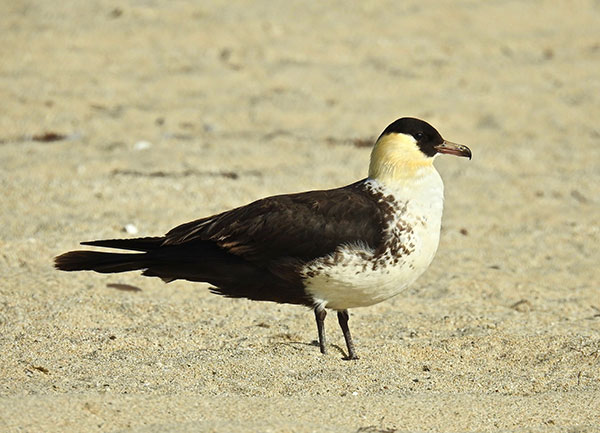
A Pomarine Jaeger stopped by for a rest near the creek mouth, August 2021 (Malia DeFelice)
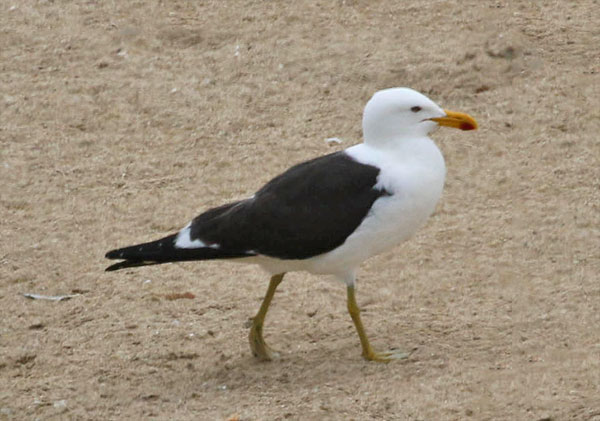
A southern hemisphere bird, this lovely Kelp Gull chose to visit the shores of San Mateo county, May 2015 (Alvaro Jaramillo)
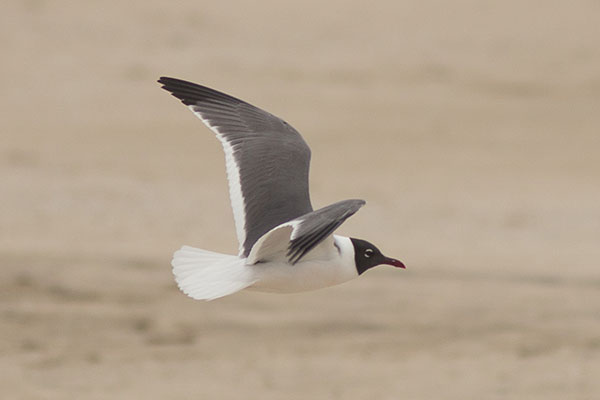
Laughing Gull, Pilarcitos Creek Mouth, May 2015 (Donna Pomeroy)
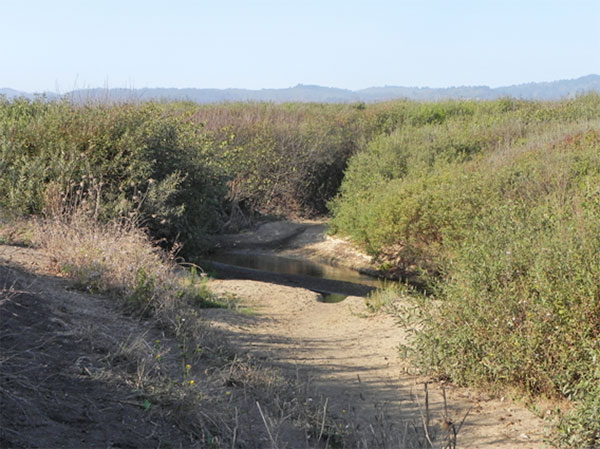
Horse trail at Pilarcitos Creek Mouth, south of the metal bridge, October 2010 (Jennifer Rycenga)
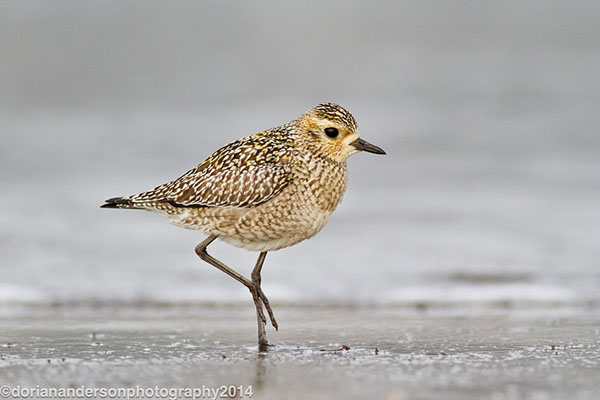
Pacific Golden-Plover, seen by Dorian Anderson in his Big Green Year, September 2014 (Dorian Anderson)
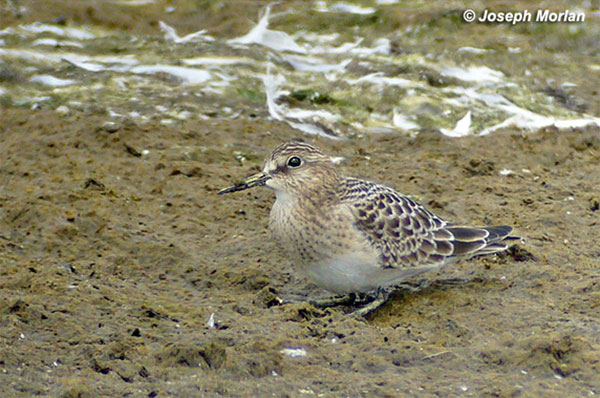
Baird's Sandpiper, with some mud on its bill, Pilarcitos Creek Mouth, September 2010 (Joe Morlan)
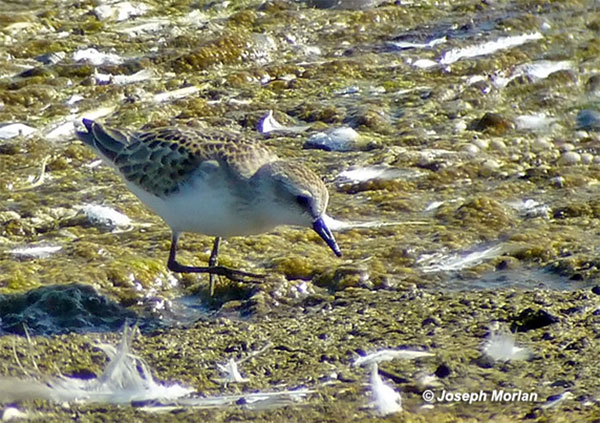
Semipalmated Sandpiper amidst gull feathers, Pilarcitos Creek Mouth, August 2010 (Joe Morlan)
Author: Jennifer Rycenga
Uploaded:
October 27, 2010
Last Update:
September 11, 2023 5:58pm
All content ©Sequoia Audubon Society and others
No use without written permission
