 Summer
 Fall
 Winter
Spring
Summer
Fall
Winter
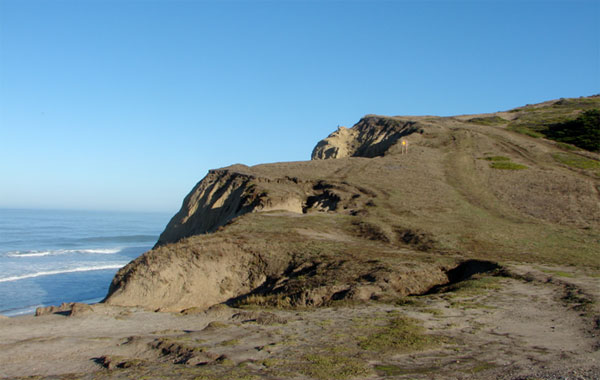
San Gregorio State Beach, Cliffs looking north (Jennifer Rycenga)
This beach park, long underbirded, has many habitats in a small space. There are five distinct habitats for birding as described below. While the species expected here are similar to those that can be found in the Half Moon Bay and Pescadero areas, the chance of finding your own rarity is increased by virtue of the lack of coverage here. The compact nature of this park makes it possible to assemble a considerably varied list in just about an hour.
If you park in the state beach parking lot (opens at 8:00 AM), you will notice a line of pines and cypresses to the north of you, running east to west from SR1 to the beach cliffs. There are some trails to this hillside, which holds a good mix of woodland birds at any season, and likely serves as a migrant trap in fall. The view from the cliff tops provides some sea-watching possibilities, but this area has no peninsular characteristics to bring pelagic birds closer. However, loons, sea ducks, Brown Pelican, and all three cormorants can be expected. Beach cliffs may hold rocky shorebirds. On the beach itself, there is a large lagoon that attracts migrants, shorebirds, a moderate-sized winter gull flock, and other water birds. Once you are on the beach, walk southeast toward the highway bridge underpass. If water levels permit, you can walk under the bridge to the quieter parts of the lagoon in the rear. Waterfowl, Common Yellowthroat, and Song Sparrow can be found here. As you proceed east of the bridge, you will come across a large pile of driftwood in an opening to your left (north). If your footing is good (and this is really not very treacherous), walk over that area and you will find yourself at the marsh edge. Sora, Virginia Rail, Wilson's Snipe, and Common Yellowthroat are likely to be present, though few in number. Bewick's Wren likes the tangle back here, too. For another approach to the marsh edge, yielding more land birds, return to the intersection of SR1 and SR84. From the dirt lot on the SE side of this intersection, walk south into the field. In fall and winter, there are sparrows around the margin of this field, including Song, Lincoln's, Golden-crowned, White-crowned, and possible White-throated Sparrows, as well as Dark-eyed Junco, Western Bluebird, Spotted and California Towhees, Wrentit, Bushtit, Northern Flicker and more.
Brant, Cackling Goose (unusual), Canada Goose, Cinnamon Teal (unusual at this location), Gadwall, American Wigeon, Mallard, Green-winged Teal, Greater Scaup, Lesser Scaup (unusual at this location), Surf Scoter, Black Scoter, White-winged Scoter, Bufflehead, Common Goldeneye, Hooded Merganser, Red-breasted Merganser, Common Merganser, Ruddy Duck, California Quail, Red-throated Loon, Pacific Loon, Common Loon, Pied-billed Grebe, Eared Grebe, Horned Grebe, Western Grebe, Clark's Grebe, Ashy Storm-Petrel, Northern Fulmar, Sooty Shearwater, Pink-footed Shearwater, Black-vented Shearwater, Brown Pelican, Double-crested Cormorant, Brandt's Cormorant, Pelagic Cormorant, Great Blue Heron, Green Heron, Great Egret, Snowy Egret, Turkey Vulture, Northern Harrier, White-tailed Kite, Osprey, Sharp-shinned Hawk, Cooper's Hawk, Red-tailed Hawk, Red-shouldered Hawk, Bald Eagle, Merlin, American Kestrel, Peregrine Falcon, American Coot, Sora (uncommon), Virginia Rail (uncommon), Black-necked Stilt (unusual at this location), American Avocet (unusual at this location), Black Oystercatcher, Black-bellied Plover, Snowy Plover, Semi-palmated Plover, Killdeer, Spotted Sandpiper, Greater Yellowlegs, Lesser Yellowlegs (unusual at this location), Whimbrel, Willet, Long-billed Curlew, Marbled Godwit, Ruddy Turnstone (unusual at this location), Black Turnstone, Surfbird, Sanderling, Western Sandpiper, Least Sandpiper, Dunlin, Short-billed Dowitcher (unusual at this location), Long-billed Dowitcher (unusual at this location), Wilson's Snipe, Red-necked Phalarope, Red Phalarope, Wandering Tattler, Heermann's Gull, Short-billed Gull, Western Gull, Ring-billed Gull (rare on coast), California Gull, Herring Gull, Iceland Gull thayeri, Glaucous-winged Gull, Caspian Tern, Elegant Tern (late summer), Parasitic Jaeger, Common Murre, Pigeon Guillemot, Marbled Murrelet, Rhinoceros Auklet, Rock Pigeon, Mourning Dove, Eurasian Collared-Dove, Barn Owl, Great Horned Owl, Anna's Hummingbird, Belted Kingfisher, Downy Woodpecker, Hairy Woodpecker, Northern Flicker, Black Phoebe, Say's Phoebe, Hutton's Vireo, Warbling Vireo (migrant), California Scrub-Jay, Steller's Jay (unusual at this location), Common Raven, American Crow, Tree Swallow, Violet-green Swallow, Barn Swallow, Northern Rough-winged Swallow, Cliff Swallow, Chestnut-backed Chickadee, Bushtit, Red-breasted Nuthatch (uncommon at this location), Pygmy Nuthatch, Blue-gray Gnatcatcher (unusual at this location), House Wren, Pacific Wren, Bewick's Wren, Marsh Wren, Ruby-crowned Kinglet, Western Bluebird, Hermit Thrush, Swainson's Thrush (uncommon here), American Robin, Wrentit, European Starling, Orange-crowned Warbler, Yellow Warbler (migrant), Yellow-rumped Warbler, Townsend's Warbler, Common Yellowthroat, Wilson's Warbler, Spotted Towhee, California Towhee, Savannah Sparrow, Fox Sparrow, Song Sparrow, Lincoln's Sparrow, White-crowned Sparrow, Golden-crowned Sparrow, Dark-eyed Junco, Western Meadowlark, Red-winged Blackbird, Tricolored Blackbird, Brewer's Blackbird, Brown-headed Cowbird, House Finch, Purple Finch, Red Crossbill, Pine Siskin, Lesser Goldfinch, American Goldfinch, House Sparrow
In this guide, "rarities" are defined as those species given an County Abundance Code of 4, 5, or 6.
Swallow-tailed Gull (2023), Emperor Goose (2020), Snow Goose (2016), Ross's Goose (2014), Greater White-fronted Goose (1985), Cackling Goose (2015, 2016), Tundra Swan (2020), Long-tailed Duck (2020), Harlequin Duck (1976), Short-tailed Shearwater (2017), Bald Eagle (2016, 2020), Ferruginous Hawk (2017, 2018), Rough-legged Hawk (2012), White-winged Scoter (annual), Red-necked Grebe (2017), Black-legged Kittiwake (2011, 2015), Bonaparte's Gull (2012, 2013, 2020), Laughing Gull (2020), Swallow-tailed Gull (2023), Iceland Gull kumlieni (2009), Lesser Black-backed Gull (2017), Slaty-backed Gull (2012), Glaucous Gull (many years), Sabine's Gull (2021, 2022), Royal Tern (1971), Bar-tailed Godwit (1997), Baird's Sandpiper (2011), Pectoral Sandpiper (2011, 2012, 2019), Tropical Kingbird (2011, 2019), Yellow-green Vireo (2000), Philadelphia Vireo (2011), Palm Warbler (2011), White-throated Sparrow, Loggerhead Shrike (2009), Rusty Blackbird (1982)
From anywhere on the Peninsula, you can get to San Gregorio by taking Highway 92, then State Route 1 (the Coastal Highway) to just south of the intersection with La Honda Road, a.k.a. State Route 84. You can also get here directly by SR 84, but the road is quite windy. The parking lot for the beach is off of SR 1, just south of the intersection with SR 84. At the intersection, there is a dirt parking area, near a SamTrans bus sign. This area provides access to the open field and marsh edges. If you arrive or leave in the dark, the telephone wires in the first few miles east on SR84 often have Great Horned Owls.
Red Markers: Parking Area or Trail Head
Hover mouse pointer over marker, or click marker, for pin identification.
Use + or - buttons to change map zoom. Click & Drag to pan.
There is a parking fee for the State Beach, currently $6.00 or a State Parks Pass.
The main parking lot is unlocked from 8:00 am until sunset.
Aside from the usual (ticks and riptides), there is a very popular nudist beach nearby, to the north of the state beach. Birders sporting high caliber optics might find their intentions misinterpreted by the denizens of this latter beach. For more information, visit this web site.
The park features well-maintained outhouses. Picnic tables, recycling bins. Picturesque views. Can be crowded on warm weekends. There is a small general store in San Gregorio, about one mile east on SR 84.
Accessibility information is currently not available for this location.
650-879-2170
http://www.parks.ca.gov/DEFAULT.ASP?page_id=529
San Gregorio State Beach is a hotspot in eBird, featuring 177 species, filling all 48 time quadrants. The hotspot information page can be found here. Please enter all sightings on eBird and build the data base!
The San Francisco Bay Bird Observatory (SFBBO) is conducting a long-range study of gull movements in the Bay Area. California Gulls have been leg-banded with plastic colored bands. If you see any of these gulls, please note the leg and the color of the band; if it is possible to read the number on the band, record that also. This information can be shared directly with Carly at SFBBO (cschacter@sfbbo.org). If the birds also have a metal band, and you can read that number, too, please report that to the National Bird Banding Lab.
The iNaturalist 'place' marker for San Gregorio can be found here; unlike eBird, this location is starved for iNaturalist observations. Build the data base in all taxa by joining iNaturalist! Like eBird, it's free and fun, sponsored by the California Academy of Sciences.
Sequoia Audubon Society has led ten field trips to San Gregorio, most of them in the decade of the 2010s. These field trips confirmed the discovery of a migrant hot zone along the base of SR84, and also revealed the activity in the marshy area. Field trips are great! Join one - or lead one - today!
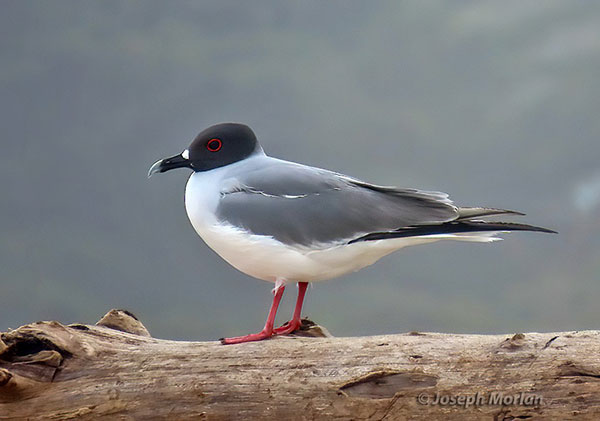
The gorgeous Swallow-tailed Gull made its first San Mateo county appearance here at San Gregorio in September 2023, where it was found by Aaron Maizlish. Photograph by Joe Morlan.
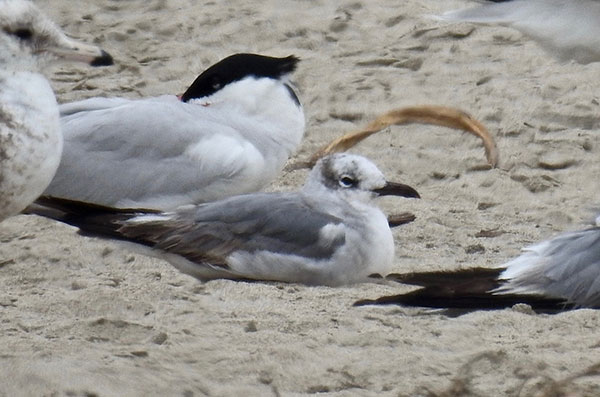
Laughing Gull, July 2020, in the San Gregorio gull flock (Malia DeFelice)
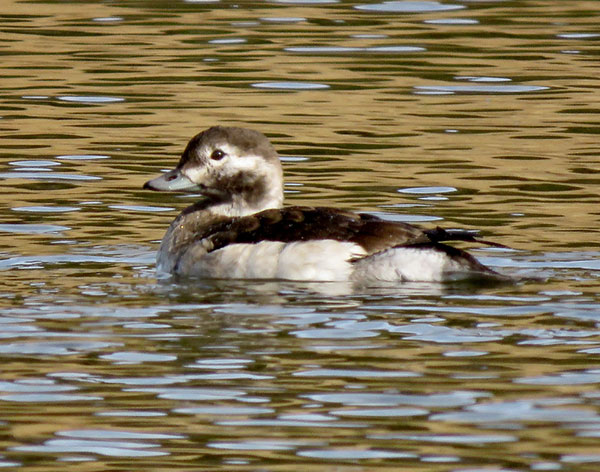
Long-tailed Duck using the lagoon, November 2020 (Leslie Flint)
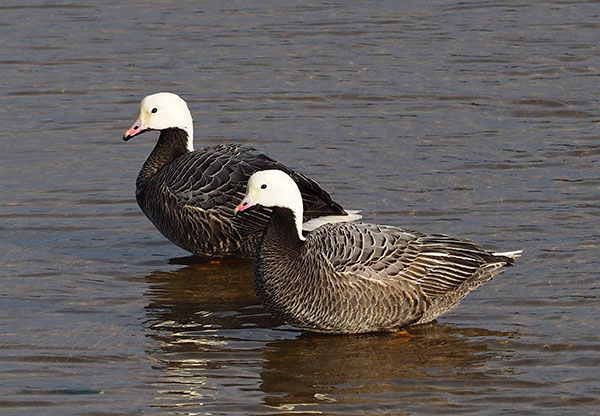
Emperor Geese, March 2020 (Donna Pomeroy)
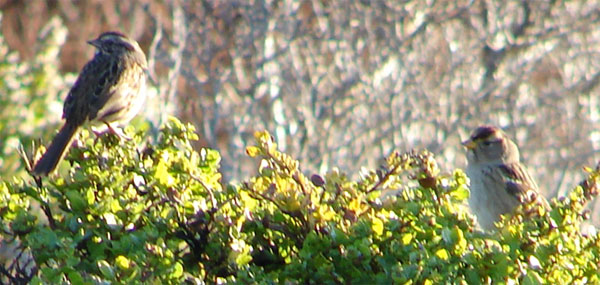
White-crowned Sparrows (Jennifer Rycenga)
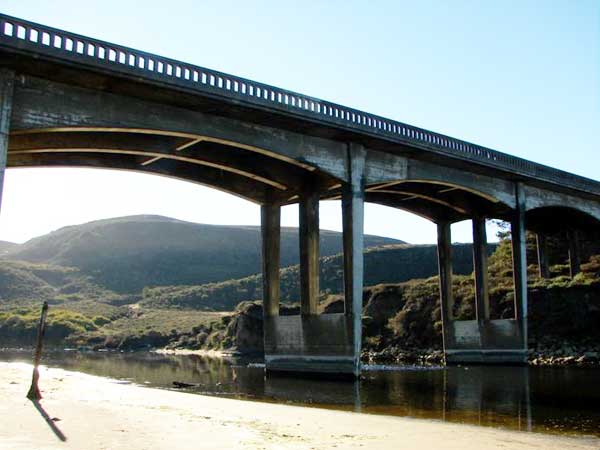
Highway One bridge over San Gregorio Creek, looking east; this is the way to get to the marsh section of this park. (Jennifer Rycenga)
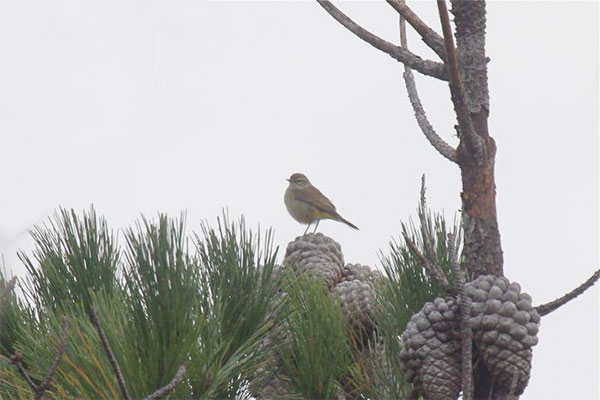
Palm Warbler, San Gregorio State Beach, October, 2011 (Michael Retter)
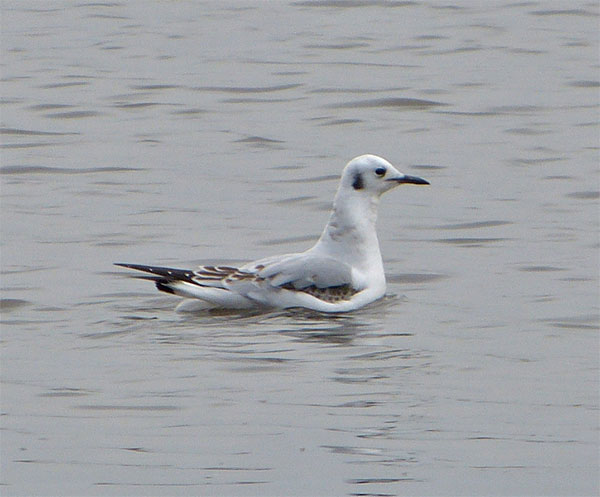
Bonaparte's Gull, San Gregorio State Beach, November 2012 (Malia DeFelice)
Author: Jennifer Rycenga
Uploaded:
February 25, 2009
Last Update:
September 2, 2023 6:58am
All content ©Sequoia Audubon Society and others
No use without written permission

