 Summer
 Fall
Winter
Spring
Summer
Fall
Winter
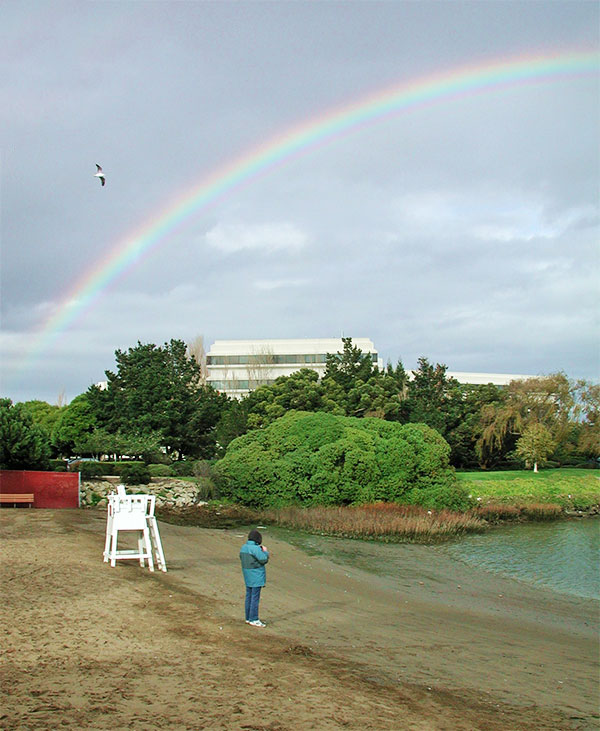
The beach and marshy edges at Oyster Point, August 2010 (Laurie Graham/Jeff Fairclough)
Oyster Point Marina and Park is a multi-use public space, in the midst of some beautiful habitat. The stretch of the Bay Trail from Oyster Point north to Sierra Point is a paved, flat trail which is wheelchair accessible. If you are continuing from the San Bruno Point description in this guide, you will be walking along the north side of UPS Cove, which is the south side of Oyster Point Marina. When you reach the boat launch, you are at Oyster Point Park. Birds here can include Savannah Sparrow, American Robin, House Finch, and shorebirds in the cove. Birds in the bay include Aechmophorus Grebes, Double-crested Cormorants and Brown Pelicans year around, as well as ducks in winter. There are picnic tables near the fishing pier, and the Bait Shop has a deli. Pause to check out the birds on the tall concrete breakwaters, usually Forster's Tern, Western Gull, and Brown Pelican. Along the shore of the marina, you can often find a Willet or two, maybe with a companion Whimbrel. A detour around the Harbormaster's office will net more terns and gulls, and shorebirds such as Killdeer and Western Sandpiper often run along the parking area.
Continue west past the boats, and you will come to a small swimming cove with a beach and benches. On the south side of the trail is a large lawn. The Bay Trail continues around the beach and the perimeter of the almost-square business park and turns back west at Oyster Cove Marina. There are often interesting birds seen in the riprap between the trail and the water, including Black-crowned Night Heron, Spotted Sandpiper, Snowy Egret, and ducks in the bay. The parking lots host passerines on their margins.
Because we are paralleling the Bay Trail description, this description ends at Oyster Cove Marina.
Cackling Goose (rare), Canada Goose, Brant (rare at this location), Cinnamon Teal, Northern Shoveler, American Wigeon, Mallard, Green-winged Teal, Canvasback, Redhead (uncommon), Ring-necked Duck, Greater Scaup, Lesser Scaup, Surf Scoter, Bufflehead, Common Goldeneye, Hooded Merganser, Common Merganser, Red-breasted Merganser, Ruddy Duck, Pacific Loon (uncommon here), Red-throated Loon, Common Loon, Pied-billed Grebe, Horned Grebe, Eared Grebe, Western Grebe, Clark's Grebe, Brown Pelican, American White Pelican, Brandt's Cormorant (unusual in the bay), Pelagic Cormorant, Double-crested Cormorant, Great Blue Heron, Great Egret, Snowy Egret, Black-crowned Night-heron, Turkey Vulture, Osprey, White-tailed Kite, Northern Harrier, Sharp-shinned Hawk, Cooper's Hawk, Red-tailed Hawk, Burrowing Owl, Merlin, Peregrine Falcon, American Coot, Black-bellied Plover, Semipalmated Plover, Semipalmated Sandpiper, Killdeer, Black Oystercatcher (uncommon), Black-necked Stilt, American Avocet, Spotted Sandpiper, Greater Yellowlegs, Willet, Lesser Yellowlegs, Whimbrel, Long-billed Curlew, Marbled Godwit, Ruddy Turnstone, Black Turnstone, Sanderling, Western Sandpiper, Least Sandpiper, Dunlin, Short-billed Dowitcher, Long-billed Dowitcher, Common Murre (unusual at this location), Parasitic Jaeger (rare, harassing Elegant Terns in late summer/fall), Bonaparte's Gull (rare at this location), Heermann's Gull, Short-billed Gull, Ring-billed Gull, Western Gull, California Gull, Herring Gull, Iceland Gull thayeri (uncommon), Glaucous-winged Gull, Least Tern, Caspian Tern, Forster's Tern, Elegant Tern, Rock Pigeon, Mourning Dove, Eurasian Collared-Dove, Anna's Hummingbird, Belted Kingfisher, Downy Woodpecker, Nuttall's Woodpecker, Northern Flicker, Pacific-slope Flycatcher, Black Phoebe, Say's Phoebe, Hutton's Vireo, California Scrub-Jay, American Crow, Common Raven, Violet-green Swallow, Cliff Swallow, Barn Swallow, Chestnut-backed Chickadee, Oak Titmouse (unusual at this location), Bushtit, Wrentit, Ruby-crowned Kinglet, Red-breasted Nuthatch (irruptive years), House Wren (uncommon migrant), Marsh Wren, Bewick's Wren, Hermit Thrush, American Robin, Northern Mockingbird, European Starling, American Pipit, Cedar Waxwing, Orange-crowned Warbler, Yellow-rumped Warbler, Yellow Warbler (migration), Townsend's Warbler, Black-throated Gray Warbler (rare migrant), Wilson's Warbler, Common Yellowthroat, Spotted Towhee, California Towhee, Clay-colored Sparrow (unusual), Savannah Sparrow, Fox Sparrow, Song Sparrow, Lincoln's Sparrow, White-crowned Sparrow, Golden-crowned Sparrow, Dark-eyed Junco, Western Meadowlark, Red-winged Blackbird, Brewer's Blackbird, Brown-headed Cowbird, House Finch, American Goldfinch, Lesser Goldfinch, House Sparrow, Western Tanager
In this guide, "rarities" are defined as those species given an County Abundance Code of 4, 5, or 6.
Cackling Goose (2012, 2018), Snow Goose (2016), Greater White-fronted Goose (2018), Redhead (2018-20), Harlequin Duck (2003), Brown Booby (2014, 2020), Common Tern (2006, 2017, 2020), Least Tern (2020), Long-eared Owl (2012), Burrowing Owl (2014, 2020), Prairie Falcon, Tropical Kingbird (1994), Western Kingbird (2012, 2017), Horned Lark (1980), Dusky Warbler (2016, in fennel patch between Gull Boulevard and UPS facility), Blackpoll Warbler (2011, 2021), Tennessee Warbler (2020), Lucy's Warbler (2013), Vesper Sparrow (2015), Lark Sparrow (2014), Clay-colored Sparrow (2013, 2016, 2017), Brewer's Sparrow (2013, 2019), White-throated Sparrow (2013), Lapland Longspur (2018)
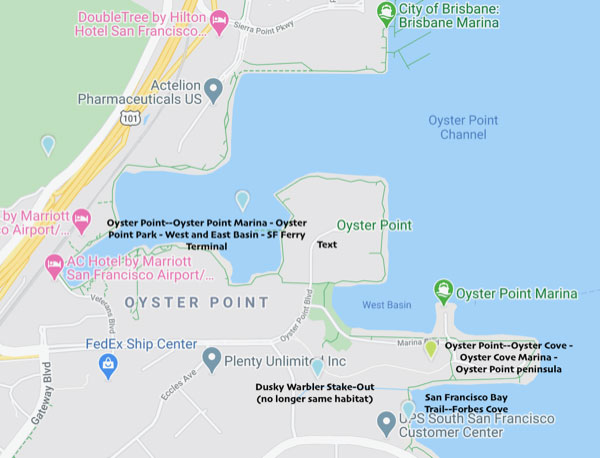
Going north on US-101, take exit 425B toward Oyster Point Blvd. Turn left at Dubuque Ave but be in the right lane. Turn right at Oyster Point Blvd and continue east. Turn right at Marina Blvd. Continue almost to the fishing pier and park.
From the north, take 425B Oyster Point Blvd, and continue east. Turn right at Marina Blvd. Continue almost to the fishing pier and park.
The official address is 95 Harbormaster Road, South San Francisco, California.
Red Markers: Parking Area or Trail Head
Hover mouse pointer over marker, or click marker, for pin identification.
Use + or - buttons to change map zoom. Click & Drag to pan.
None
24/7/365
Don't leave valuables visible in parked cars.
There are public restrooms at the Marina, near the fishing pier and the Harbormaster's Office. The Oyster Point Marina Bait Shop has a deli. It is open Tues through Sunday 6 a.m. - 5 p.m. There are sheltered picnic tables at trailside. The Inn at Oyster Point has a fine-dining restaurant, SouthHarbor, but birders are rarely dressed for such an experience. There is usually a taco truck in the vicinity of Oyster Point Blvd and Gull Drive during the week. There are LOTS of eateries close by (check out the list here ).
Accessibility information is currently not available for this location.
Oyster Point Marina/Park, 95 Harbormaster Road, #1, South San Francisco, California 94080; Phone: 650-952-0808; E-mail: oysterpoint@smharbor.com
Confusingly, there are four eBird hotspots for this vicinity. Links to each are given schematically below, as well as a map in the illustration section (as of 2020).
"Oyster Point--Oyster Point Marina - Oyster Point Park - West and East Basin - SF Ferry Terminal" is the principal hotspot for the area, and should be the preferred hotspot for for general coverage of the area. It holds data in 44 of 48 time quadrants, representing 140 species.
"Oyster Point--Oyster Cove - Oyster Cove Marina - Oyster Point peninsula" deals primarily with the eastern sections of Oyster Point, closest to US-101. It holds data for 19 of 48 time quadrants for 83 species.
"stakeout Dusky Warbler, South San Francisco (2016)" was a wonderful field of Fennel that since has been plowed under for another corporate building. But the Dusky Warbler was amazing (see picture). The utility of this hotspot is mainly historic, rather than active. It holds data in 9 of 48 time quadrants representing 87 species.
"San Francisco Bay Trail--Forbes Cove" refers to the area of the Bay Trail south of the West Basin. It is under-utilized as a hotspot, with 19 of 48 time quadrants holding data for 94 species.
The newly-established (2020) place marker for iNaturalist reveals a paucity of data. Data gatherers of San Mateo county, you know what to do!
There is an active study of Clapper Rails in the Bay being conducted under the auspices of the USGS Western Ecological Research Center, that includes radio-tagged rails at the nearby Colma Creek Mouth area.
The San Francisco Bay Bird Observatory (SFBBO) is conducting a long-range study of gull movements in the Bay Area. California Gulls have been leg-banded with plastic colored bands. If you see any of these gulls, please note the leg and the color of the band; if it is possible to read the number on the band, record that also. This information can be shared directly with Carly at SFBBO (cschacter@sfbbo.org). If the birds also have a metal band, and you can read that number, too, please report that to the National Bird Banding Lab.
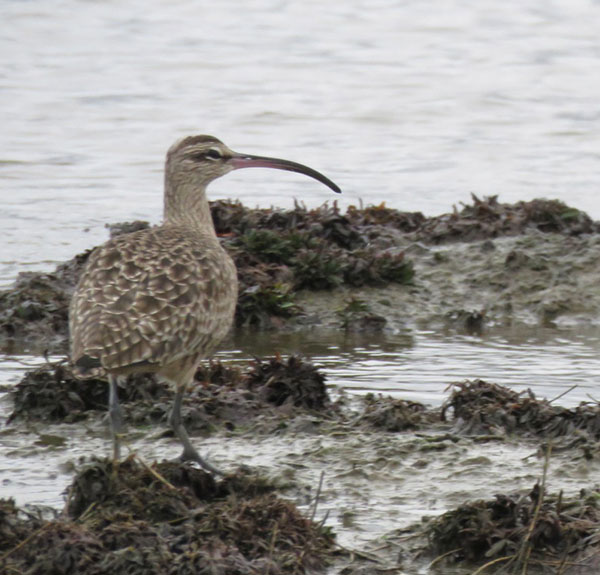
Whimbrel, January 2019 (George Chrisman)
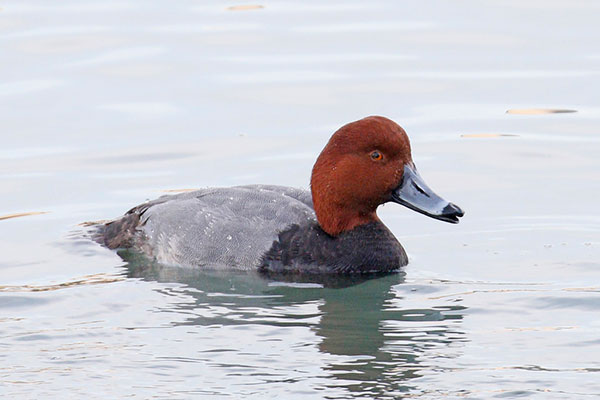
Redhead, a surprisingly scarce waterfowl species in San Mateo county, January 2019 (Donna Pomeroy)
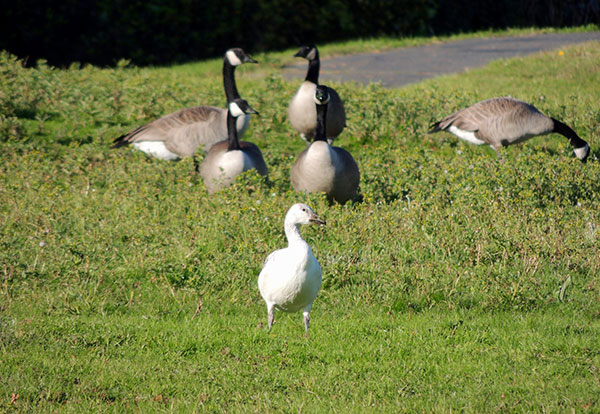
Snow Goose, December 2016 (Juli Chamberlin)
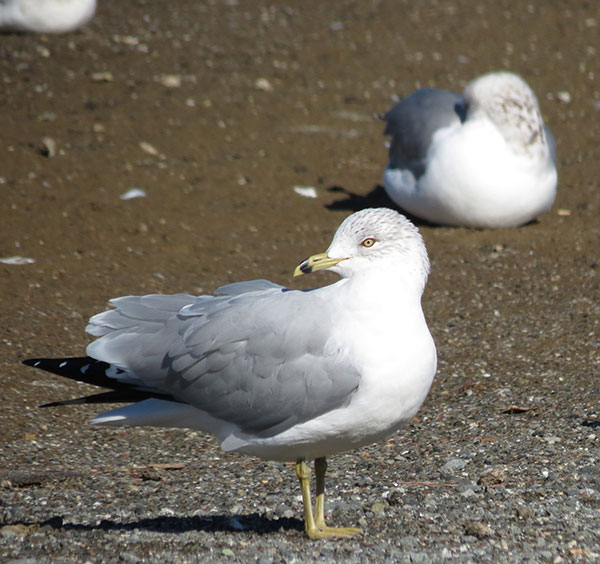
Ring-billed Gull, January 2018 (Laurie Graham)
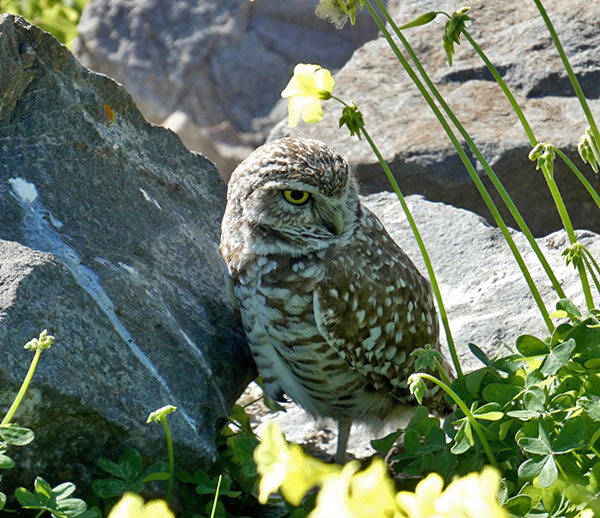
Burrowing Owl, February 2020 (Malia DeFelice)
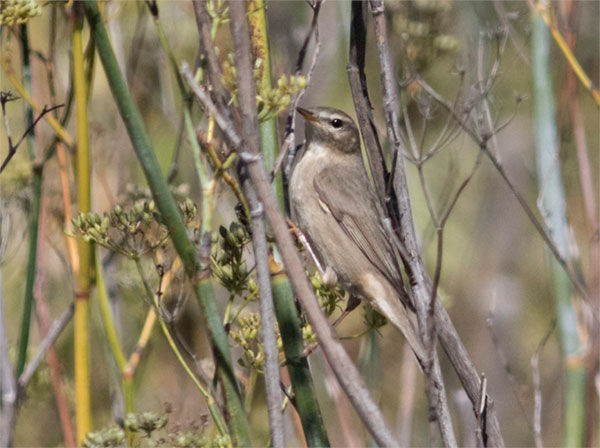
County record first Dusky Warbler, Oyster Point area between Gull Boulevard and UPS Facility, September 24, 2016 (Michael Park)
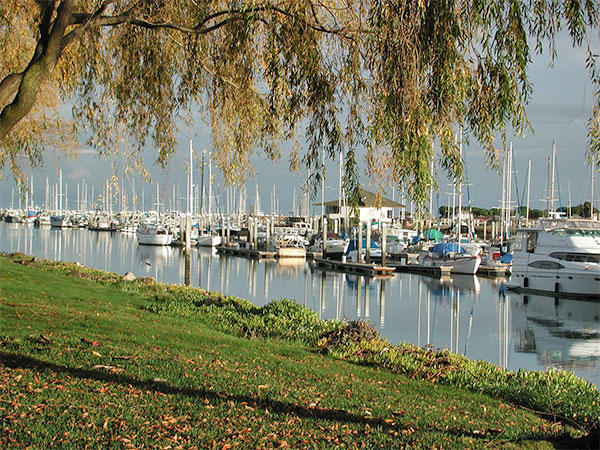
The Marina at Oyster Point, August 2010 (Laurie Graham/Jeff Fairclough)
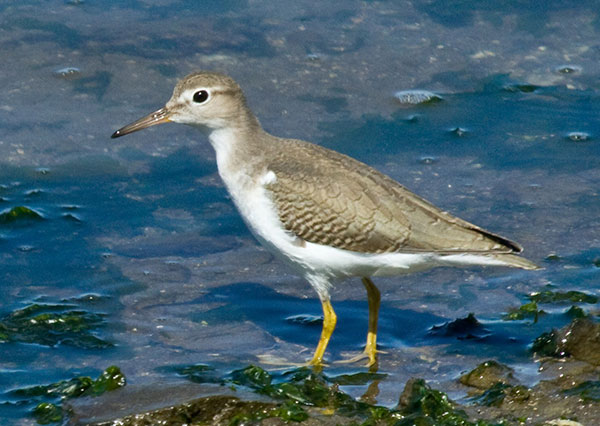
Spotted Sandpiper, Oyster Point, September 2014 (Donna Pomeroy)
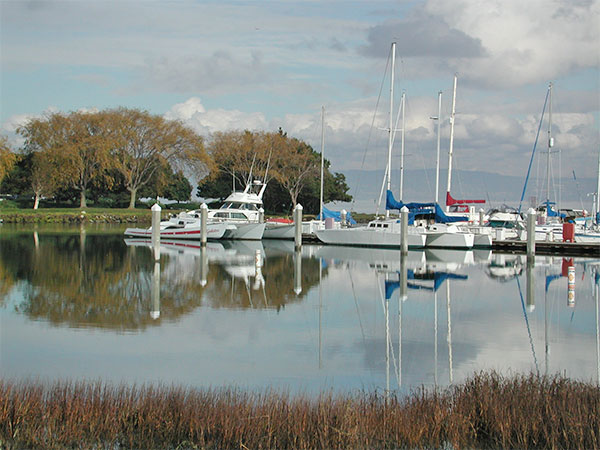
The Marina, showing marshy grasses and trees at the edge of the peninsula; this mix of habitats makes Oyster Point worth a stop, especially in fall migration. August 2010 (Laurie Graham/Jeff Fairclough)
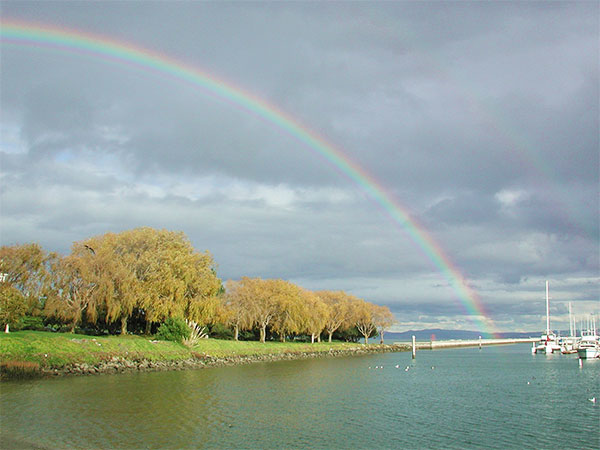
Gulls, ducks, and a rainbow at the Oyster Point Marina, August 2010 (Laurie Graham/Jeff Fairclough)
Author: Laurie Graham & Jeff Fairclough
Uploaded:
September 17, 2014
Last Update:
October 14, 2021 8:46am.
Updated by: Jennifer Rycenga
All content ©Sequoia Audubon Society and others
No use without written permission
