 Summer
Fall
Winter
Spring
Summer
Fall
Winter
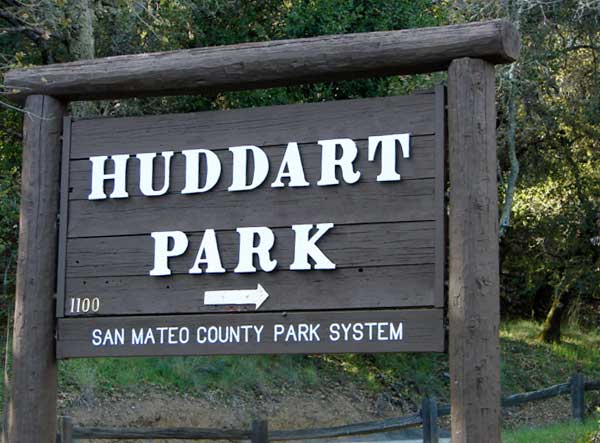
Main Entrance to Huddart Park, on King's Mountain Road (Jennifer Rycenga)
Huddart County Park is one of San Mateo County's most versatile recreation areas. The 973 acres offer the opportunity to bird in Redwood/Douglas Fir forest, oak woodland, Pacific Madrone and California Bay associations, as well as creek side and riparian habitats. Bird life is plentiful and diverse.
Common year-round residents include Red-tailed Hawk, California Quail, Hairy and Downy Woodpeckers, Nuttall's Woodpecker; White-breasted, Red-breasted and Pygmy Nuthatches, Brown Creeper; Bewick's Wren, Oak Titmouse, California Thrasher, and the usual complement of hummingbirds, chickadees, juncos and Wrentits. Mid-elevation birds in summer include Pacific-Slope Flycatcher; Olive-sided Flycatcher; Western Wood-Pewee, Swamson's Thrush, Cassin's Vireo, Black-throated Gray, Wilson's and Orange-crowned Warblers. In winter one can also find Ruby-crowned Kinglet, Red-breasted Sapsucker, Varied and Hermit Thrushes, Fox Sparrow, Golden-crowned, White-crowned and Lincoln's Sparrows. At night listen for Northern Saw-whet Owl in mixed conifer forests, and Western Screech-Owl in lower elevation oaks; this is one of the most dependable locations for Screech-Owl in the county.
The park is open year-round from dawn to dusk. Birding in the fall and winter when park use is light can be rewarding. Huddart Park has an extensive hiking trail system, group and individual picnic areas, equestrian trails, and even an archery range. There is a trailhead off Kings Mountain Road west of the main entrance, and another trailhead north of the intersection of Kings Mountain Road and Skyline Boulevard on Skyline. Be sure to park without blocking driveways, and watch for "no parking anytime" signs. There is also a trail through the California Water Company-Bear Gulch Watershed paralleling Skyline Boulevard, which connects Huddart Park with Wunderlich Park.
Canada Goose (rare fly-over), Mallard (fly-over), California Quail (uncommon), Wild Turkey (ucommon), Great Blue Heron (uncommon), Turkey Vulture, Sharp-shinned Hawk, Cooper's Hawk, Red-shouldered Hawk, Red-tailed Hawk, Band-tailed Pigeon, Mourning Dove, Vaux's Swift (rare), White-throated Swift, Anna's Hummingbird, Allen's Hummingbird, Western Screech-Owl, Great Horned Owl, Northern Pygmy-Owl, Northern Saw-whet Owl, Red-breasted Sapsucker (rare here), Acorn Woodpecker, Nuttall's Woodpecker (uncommon here), Downy Woodpecker, Hairy Woodpecker, Northern Flicker, Merlin (rare here), Peregrine Falcon (uncommon), Olive-sided Flycatcher (spring migration), Western Wood-Pewee, Pacific-slope Flycatcher, Black Phoebe, Hutton's Vireo, Warbling Vireo, Steller's Jay, California Scrub-Jay, American Crow, Common Raven, Northern Rough-winged Swallow (rare migration), Violet-green Swallow (spring-summer), Tree Swallow, Chestnut-backed Chickadee, Oak Titmouse, Bushtit, Red-breasted Nuthatch, White-breasted Nuthatch (uncommon), Pygmy Nuthatch, Brown Creeper, House Wren, Bewick's Wren, Pacific Wren, Golden-crowned Kinglet, Ruby-crowned Kinglet (fall-spring), Blue-gray Gnatcatcher (uncommon here), European Starling, Western Bluebird, Hermit Thrush, Swainson's Thrush, American Robin, Varied Thrush, Northern Mockingbird (rare here), Cedar Waxwing, Wrentit, Townsend's Warbler (fall-spring), Yellow-rumped Warbler (fall-spring), Orange-crowned Warbler, Yellow Warbler (rare in migration), Black-throated Gray Warbler (one of the best spots in the county for this species), Hermit Warbler, Wilsons Warbler, Spotted Towhee, California Towhee, Fox Sparrow, Dark-eyed Junco, White-crowned Sparrow, Golden-crowned Sparrow, Song Sparrow, Bullock's Oriole (rare at this location, spring migration), Western Tanager, Black-headed Grosbeak, American Goldfinch, Lesser Goldfinch, Purple Finch, House Finch, Pine Siskin (rare at this location)
In this guide, "rarities" are defined as those species given an County Abundance Code of 4, 5, or 6.
Osprey (fly-over), Golden Eagle (fly-over), Bald Eagle (fly-over), Sandhill Crane (1977), Gray Flycatcher (1978), Pileated Woodpecker (regular here), Cassin's Vireo (spring migration; breeding confirmed 2020), Purple Martin (1986)
Huddart County Park's main entrance is off Kings Mountain Road in Woodside. From Interstate 280, exit at Woodside Road West (Highway 84) and proceed west for approximately 1.5 miles. Veer right onto Kings Mountain Road and follow it for two miles (the road winds considerably) to the main entrance on your right. From Skyline Boulevard, (SR 35), turn east on Kings Mountain Road to get to the entrance.
Red Markers: Parking Area or Trail Head
Hover mouse pointer over marker, or click marker, for pin identification.
Use + or - buttons to change map zoom. Click & Drag to pan.
There is a $5 entrance fee per vehicle. One can also purchase an annual pass for the county parks system; this is a good investment for any resident birders. Reservations are needed in advance for the group picnic grounds, which are quite popular in
The park opens at 8:00 am; closing times vary by season. Camping is available in the park.
For such a pleasant park, there's a lot of reason for caution. Many paths are used by horses; sidestep their solid contributions. Poison oak is plentiful on some trails. Both rattlesnakes and mountain lions have been sighted in the area. Ticks are present, too. All of these hazards are either easy to avoid (poison oak and ticks), or very rare (lions and snakes). Now relax and enjoy the park!
There are restroom facilities and running water; consult maps available at the park entrance for exact locations of facilities and trails. Food is available in Woodside. The park has many attractive and inviting picnic groves with tables and barbecue facilities.
Accessibility information is currently not available for this location.
The park office can be reached at 650-851-1210.
Huddart County Park is a hot spot in eBird with solid data in all 48 time quadrants. The eBird hotspot information page can be found here. Please continue to share your sightings here - and everywhere in the county - with birders and scientists in perpetuity, by recording your trips at eBird.
Huddart County Park was the site for two bioblitzes so far. The first covered the more distant western trails in the fall of 2018; data can be found here. The spring 2019 bioblitz in the busier eastern end of the park yielded some great birds as well as an important find for the county isopod taxa. Visit this page for information about the blitz in totality, and then check out the scintillating story of Venezillo microphthalmus reappearing in the county after an absence of nearly a century!
The iNaturalist place page for Huddart can be found here.
Sequoia Audubon Society has led only four field trips to this popular park; that number includes the two BioBlitzes.
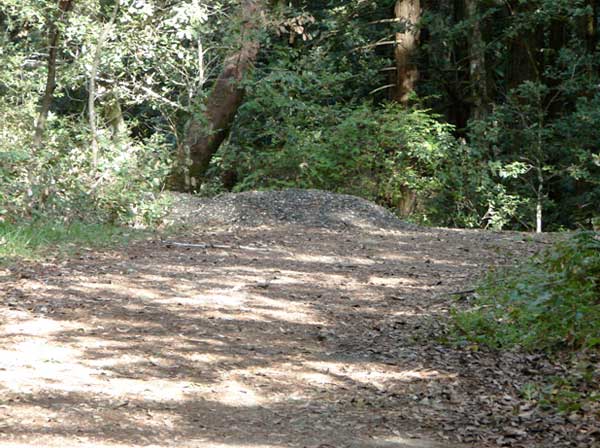
Huddart Trail from Skyline Boulevard, March 2009 (Jennifer Rycenga)
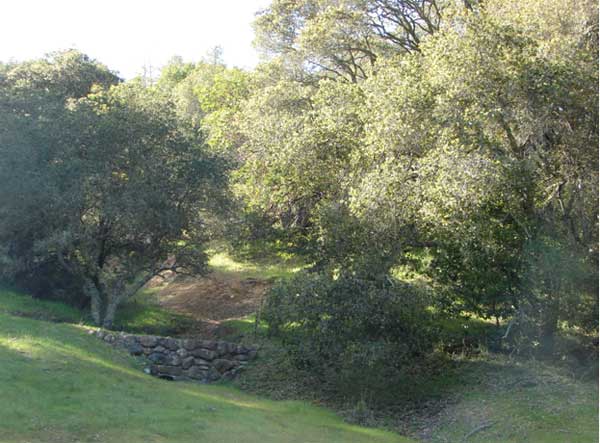
Meadow in Huddart Park, March 2009 (Jennifer Rycenga)
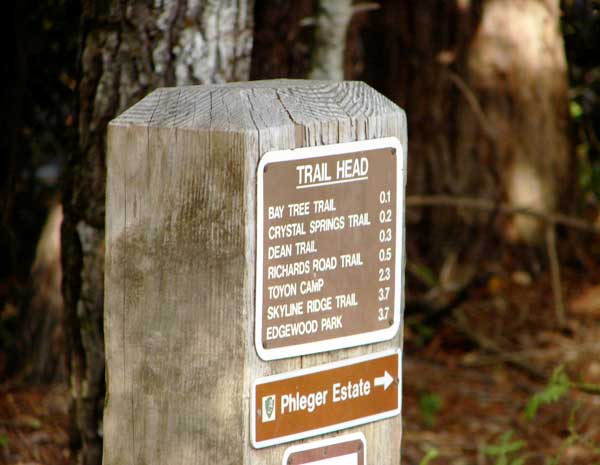
Principal Trailhead below main entrance (Jennifer Rycenga)
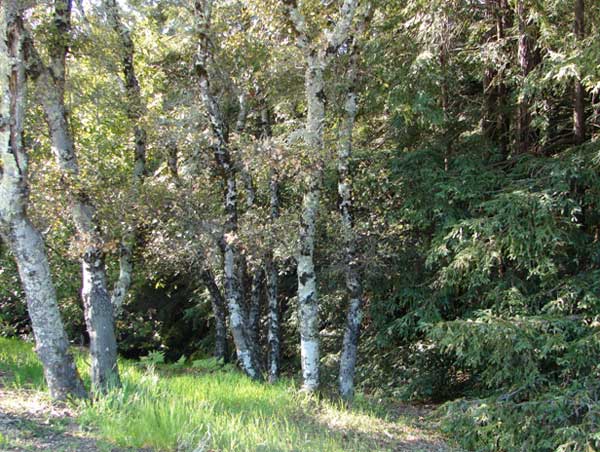
Mixed Woodlands, Huddart Park, March 2009 (Jennifer Rycenga)
Author: Donna Kirsacko, revised by Dan Keller
Uploaded:
March 6, 2009
Last Update:
April 28, 2021 9:18pm.
Updated by: Jennifer Rycenga
All content ©Sequoia Audubon Society and others
No use without written permission

