 Summer
 Fall
Winter
Spring
Summer
Fall
Winter
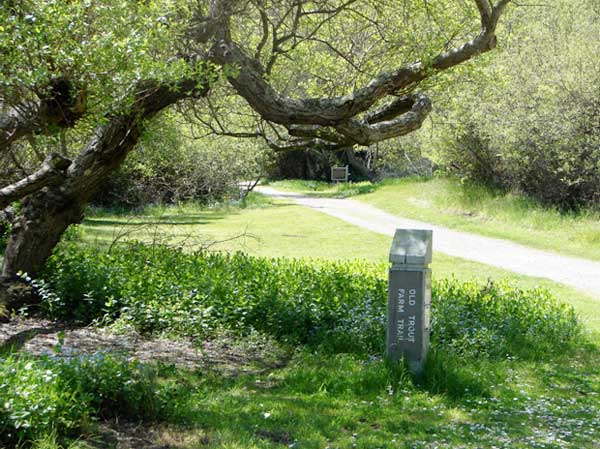
Excellent Riparian area on the east side of the Old Trout Farm Trail loop, near the parking lot, San Pedro Valley Park, April 2009 (Jennifer Rycenga)
San Pedro Valley County Park is a beautiful wilderness area located in the foothills of the Santa Cruz Mountain Range in the city of Pacifica. The park's variety of plants and wildlife brings enjoyment to all levels of nature lovers.
The park's trails are very well-marked, and there are good maps available at the Visitors' Center. There are four well-traveled short trails in the park: the Old Trout Farm Trail, the Brooks Falls Overlook Trail, Weiler Ranch Road and the Valley View Trail. These trails abound with plants and wildlife.There are three longer trails: the Hazelnut Trail, a circular trail that begins on the Plaskon Nature Trail behind the Visitor Center and ends on the Weiler Ranch Road, and the Montara Mountain Trail, a 6 mile trail that eventually takes you to Montara State Beach. Both have substantial elevation gains, and the Montara Mountain Trail has spectacular views. The other long trail, the Brooks Creek Trail, could be investigated, also. These longer trails are primarily for hikers and you'll mostly see the coastal scrub species: Wrentit, Song Sparrow, California Scrub-Jay, Bushtit and Spotted and California Towhees. Occasionally you will get a great view of a soaring hawk and you have a better chance of seeing a California Thrasher along these trails. In the summer, Anna's and Allen's Hummingbirds abound. Nevertheless, the greatest diversity of bird life is found in the valley along the shorter trails.
The Old Trout Farm Trail yields a variety of birds, mainly because it parallels the willow bushes and riparian areas along Brooks Creek. This trail is broad and level and is .8 miles long. In the spring and summer, Swainson's Thrush, Black-headed Grosbeak, Hutton's, Warbling and Cassin's Vireos can be seen. The largest concentration of warblers in the park is found on this trail. Orange-crowned and Wilson's Warblers are common summer residents. Hermit, Black-throated Gray, Nashville and Yellow Warblers are seen during the spring and fall migration seasons. In late fall and winter, notable species such as Winter Wren, Varied and Hermit Thrushes, Golden-crowned and Ruby-crowned Kinglets, Yellow-rumped and Townsend's Warblers, and Fox Sparrow inhabit the Old Trout Farm Trail. Year-round residents include Northern Flicker, Steller's Jay, Chestnut-sided Chickadee, Bushtit, California and Spotted Towhees, Dark-eyed Junco, Bewick's Wren and Song Sparrow. Always keep an eye out for Cooper's and Sharp-shinned Hawks in this area of the park.
The Brooks Falls Overlook Trail starts in the same kind of habitat as does the Old Trout Farm Trail. It then runs up the hillside into brushy areas with scattered young pine and eucalyptus trees. This .7 mile hike is significant because of the beautiful overlook of Brooks Falls, a seasonal waterfall. The falls flow into Brooks Creek, a feeder stream to the south fork of San Pedro Creek, which is tapped annually by the North Coast County Water District to provide 10% of Pacifica's drinking water. In spring and summer, Allen's, Anna's and sometimes Rufous Hummingbirds can be seen on this trail. Pacific-slope Flycatchers are especially common during this season of the year. Song Sparrow, Chestnut-backed Chickadee, Downy Woodpecker, Wrentit and Bushtit are year-round residents.
The Plaskon Nature Trail is a very short trail beginning about a hundred feet to the right of the Visitor's Center as you face it. It crosses Brooks Creek and provides an entry into the creek's riparian area. This trail can be checked when you're traveling between the valley trails described above and those described below. Also be sure to check the area directly behind the Visitor Center. Bushtit and chickadee can almost always be found here and they are occasionally accompanied by feeding warblers and vireos.
The Weiler Ranch Road is the other wide, level trail in the park. This 1.4-mile trail goes through a rather dry area. There are beautiful meadows to the south and grass-covered hills to the north. At the beginning of the trail, check the Walnut Grove Group Picnic Area. In the spring and summer, this area provides excellent habitat for Olive-sided Flycatcher (declining), Purple and House Finches, Pine Siskin, American and Lesser Goldfinches. In the winter Dark-eyed Junco and Fox Sparrow are very fond of this grove. Hairy and Downy Woodpeckers and Red-breasted Sapsuckers (winter only for Sapsucker) loved the walnut trees, before they were cut down due to disease. Their replacements are growing, but not yet large enough to attract much bird activity. The rest of the Weiler Ranch Road is straight and level. Spring and summer birds expected on this part of the trail include Orange-crowned Warbler, Black-headed Grosbeak, and Western Wood-Pewee (declining). California Quail, California Scrub Jay, Wrentit, Bewick's Wren, California Towhee, and Song Sparrow are all year-round residents. California Thrasher are becoming more common on this trail, but are more frequently heard on the Montara Mountain Trail. Aerial birds such as Red-tailed Hawks, Turkey Vultures, and American Kestrels can be seen flying overhead. Golden Eagles have also been seen over the park, but they are a rarity.
The Valley View Trail is much like the Weiler Ranch Road, except that it is somewhat longer, more winding and has some incline. This 1.6 mile trail has the same species of birds as does the Weiler Ranch Road. Wildflowers are the special attractions here. Look for them in the spring. Unfortunately, the trail also is also noted for Poison Oak. Many mammals can be found on both the Valley View Trail and the Weiler Ranch Road. Mule Deer, Brush Rabbits, Bobcats, Gray Foxes, and Striped Skunks are a few that may he seen in this grassland area. Mountain Lion has been seen in the park.
Great Horned Owls are common in the park and are often heard at dusk. Barn Owls are seen regularly but may be visitors from known nesting areas outside the park. Western Screech-Owls, Northern Saw-whet Owls and Northern Pygmy-Owls have been heard calling but their overall status is unknown as this is primarily a day-use facility. There is anecdotal evidence that Screech-Owls nest in the park. In Spring of 1993 a hiker followed a deer trail, lost his way and had to spend the night entangled in a thicket. He reported waking at dawn to find two young Screech-Owls examining him with wide-eyed curiosity from a low-lying branch. Common Poorwills are rare, but have been heard on the hillsides along the Weiler Ranch Trail.
The Visitor's Center is open from 10am to 4 pm on weekends and holidays. There is a small museum and a small, but surprisingly good, reference library, as well as a gift shop. There are free trail maps and checklists for birds, mammals, plants, and flowers available in the Visitors' Center. The center is normally open on the weekends and may be open on other days, depending on the availability of volunteer staffing. The Visitors' Center also stocks brochures for other county parks.
San Pedro Valley Park has attracted citizen-science interest, being the site of a highly successful Bio-Blitz in the fall of 2015; you can see the results here. There is active community support for the park, organized as The Friends of San Pedro Valley Park; you can write to them at 600 Oddstad Boulevard, Pacifica, CA 94044. The Sanchez Adobe, a noteworthy nearby attraction, is located west of the park on Linda Mar Boulevard; it is one of the oldest buildings in northern California. Lovingly restored, it is visited by thousands of school children and tourists each year.
California Quail, Wild Turkey (rare here), Great Blue Heron (generally fly-overs), Turkey Vulture, Northern Harrier (uncommon migrant), Sharp-shinned Hawk, Cooper's Hawk, Red-shouldered Hawk, Red-tailed Hawk, Killdeer, Western Gull, California Gull (gulls are flyovers), Rock Pigeon, Band-tailed Pigeon, Mourning Dove, Eurasian Collared-Dove, Great Horned Owl, Barn Owl, Northern Saw-whet Owl (uncommon), Western Screech-Owl (uncommon), Northern Pygmy-Owl (uncommon), Vaux's Swift (uncommon here), White-throated Swift, Anna's Hummingbird, Allen's Hummingbird, Acorn Woodpecker, Nuttall's Woodpecker, Downy Woodpecker, Hairy Woodpecker, Red-breasted Sapsucker (winter), Northern Flicker, Pileated Woodpecker (rare here), American Kestrel, Merlin (uncommon here), Peregrine Falcon, Olive-sided Flycatcher (spring), Western Wood-Pewee, Pacific-slope Flycatcher, Ash-throated Flycatcher, Black Phoebe, Say's Phoebe, Hutton's Vireo, Cassin's Vireo (migration), Warbling Vireo (spring-summer), Steller's Jay, California Scrub-Jay, American Crow, Common Raven, Tree Swallow, Violet-green Swallow, Barn Swallow, Cliff Swallow, Chestnut-backed Chickadee, Oak Titmouse (unusual here), Bushtit, Red-breasted Nuthatch, Pygmy Nuthatch, Brown Creeper, House Wren, Pacific Wren, Bewick's Wren, Blue-gray Gnatcatcher (uncommon here), Golden-crowned Kinglet, Ruby-crowned Kinglet, Wrentit, European Starling, Western Bluebird, Swainson's Thrush, Hermit Thrush, American Robin, Varied Thrush, California Thrasher, Cedar Waxwing, Orange-crowned Warbler, MacGillivray's Warbler (fall migration), Black-throated Gray Warbler (migration), Hermit Warbler (migration), Yellow Warbler (migration), Nashville Warbler, Yellow-rumped Warbler, Townsend's Warbler, Wilson's Warbler, Fox Sparrow, Dark-eyed Junco, White-crowned Sparrow, Golden-crowned Sparrow, Song Sparrow, Lincoln's Sparrow, California Towhee, Spotted Towhee, Western Tanager, Black-headed Grosbeak, Red-winged Blackbird, Brewer's Blackbird, Hooded Oriole, Bullock's Oriole, Brown-headed Cowbird, House Finch, Purple Finch, Red Crossbill (rare here, irruptive), Pine Siskin, Lesser Goldfinch, American Goldfinch, House Sparrow
In this guide, "rarities" are defined as those species given an County Abundance Code of 4, 5, or 6.
Golden Eagle, Common Poorwill (2018), Rufous Hummingbird, Red-naped Sapsucker (2014), Western Kingbird (2018), Willow Flycatcher (2009), Hooded Warbler (2016, 2020), American Redstart (2019), Northern Parula (2011), Kentucky Warbler (2020, contiguous neighborhood), Green-tailed Towhee, Bell's Sparrow (2018, near the North Peak summit on the North Peak Access Road/Trail), Chipping Sparrow (2019), Rose-breasted Grosbeak (2005, 2008), Indigo Bunting (2017)
Take SR 1 to the city of Pacifica, 10 miles south of San Francisco or 12 miles north of Half Moon Bay. Turn east on Linda Mar Boulevard. Drive for about two miles, to the end of Linda Mar. Turn right here on Oddstad Boulevard, and make an immediate left into the Park.
Red Markers: Parking Area or Trail Head
Hover mouse pointer over marker, or click marker, for pin identification.
Use + or - buttons to change map zoom. Click & Drag to pan.
There is a $6 day use fee; local birders should support the county park system, if possible, by purchasing a county parks pass. Pedestrians enter for free.
The park officially opens at 8:00 am; closing hours shift during the year. Check the website for specific closing times.
Poison oak is rife through the park. Ticks are also present. Signs in the park remind you not to be play Russian Roulette along the trails: don't eat wild mushrooms! Mountain lions have been seen, albeit rarely, along the meadow areas of Weiler Ranch Road.
The park has three restroom facilities. Service stations and restaurants are located one block north on Oddstad Boulevard in Park Mall. There is a Visitors' Center, open weekends and holidays, with an excellent exhibition area. The exhibits are arranged by the five major plant communities that are found in the park. By using stuffed animals and pressed plants, the displays point out the plants and wildlife of each community. Wheelchairs are available. The Trout Farm Trail and the Weiler Ranch Road Trail are both wheelchair accessible for much of their length.
Accessibility information is currently not available for this location.
Phone number for San Pedro Valley County Park is 650-355-8289; the street address is 600 Oddstad Boulevard, Pacifica 94044.
San Pedro Valley County Park is a hotspot in eBird, with a general information page here. Regular coverage has increased dramatically over the past ten years, with all 48 quadrants holding data, for a total of 118 species. Keep on keepin' on with eBird!
San Pedro Valley County Park was the site of a BioBlitz in September 2015, with active support from Sequoia Audubon, iNaturalist, the California Academy of Sciences, and the Friends of San Pedro Valley Park. You can view the results here. A follow-up BioBlitz in December of 2016 has results here. The general iNaturalist place marker for the park reflects the added depth of these blitzes.
Sequoia Audubon has led many trips here since the early 1970s, most especially in the 1990s and early 2000s. This is an ideal location for a field trip because it features many habitats and abundant bird life.
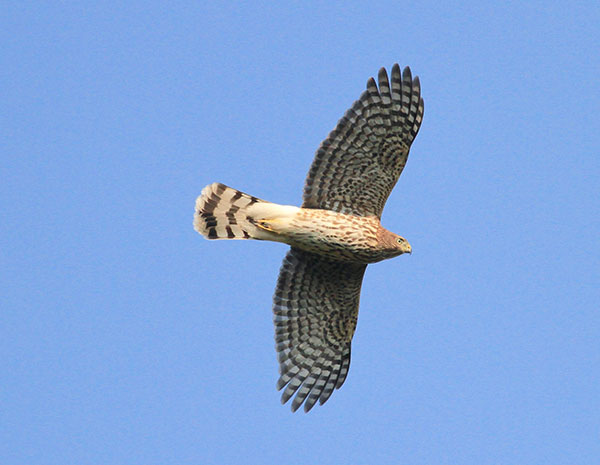
Cooper's Hawk, August 2018. Note the rounded tail feathers that help distinguish this species from Sharp-shinned Hawk. (Adam Dudley)
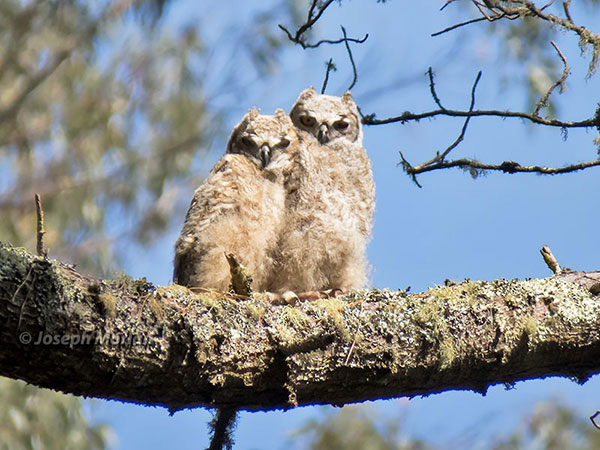
Great Horned Owl chicks, July 2020 (Joe Morlan)
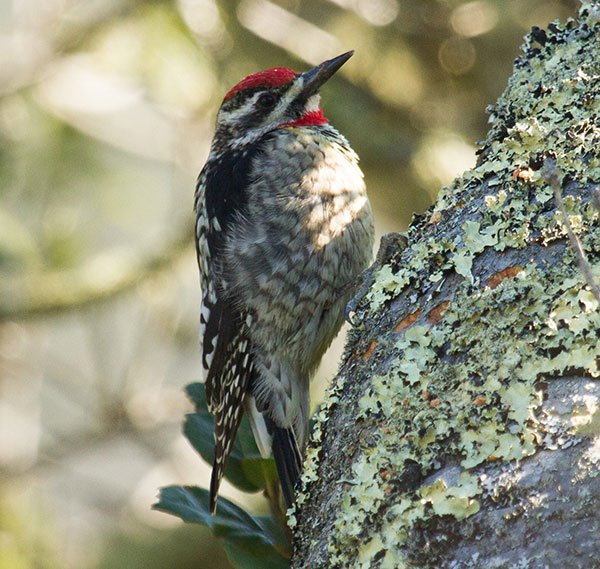
Red-naped Sapsucker, January 2014 (Donna Pomeroy)
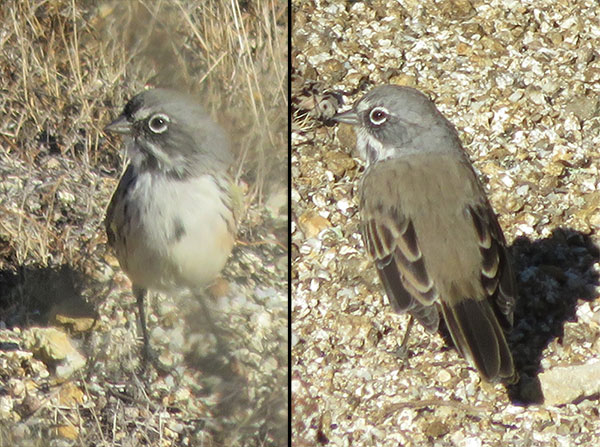
Apparently breeding Bell's Sparrow, discovered by Dominik Mosur in summer 2018, at the border of San Pedro Valley County Park, McNee Ranch State Park, and Rancho Corral di Tierra of GGNRA, on Montara Mountain (Kent Forward, August 2018)
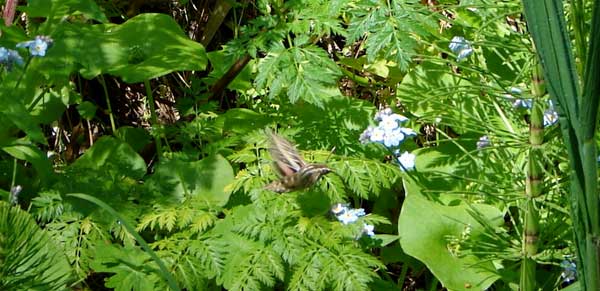
White-lined Sphinx Moth (Hyles lineata), San Pedro Valley Park, April 2009 (Jennifer Rycenga)
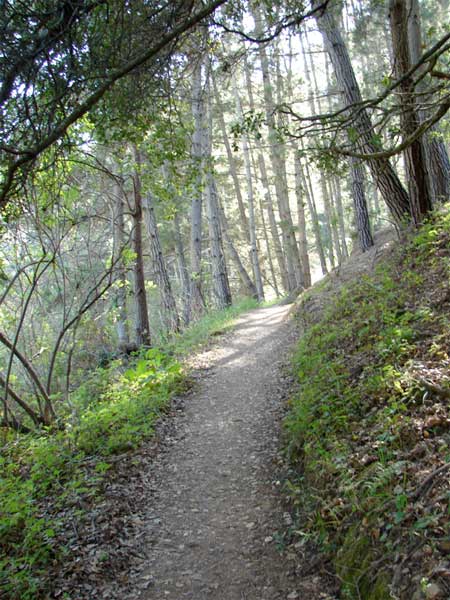
Old Trout Farm Trail, San Pedro Valley Park, April 2009 (Jennifer Rycenga)
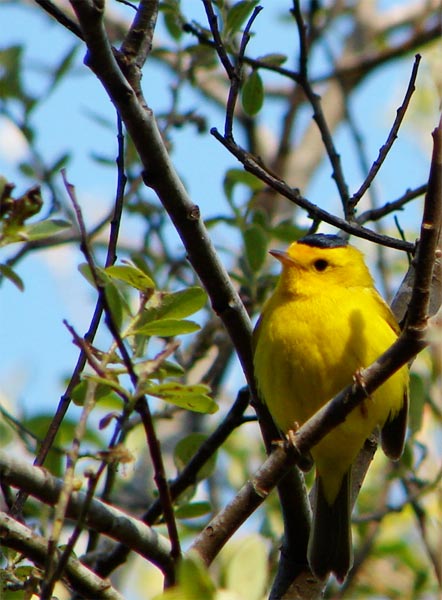
Wilson's Warbler, San Pedro Valley Park, April 2009 (Jennifer Rycenga)
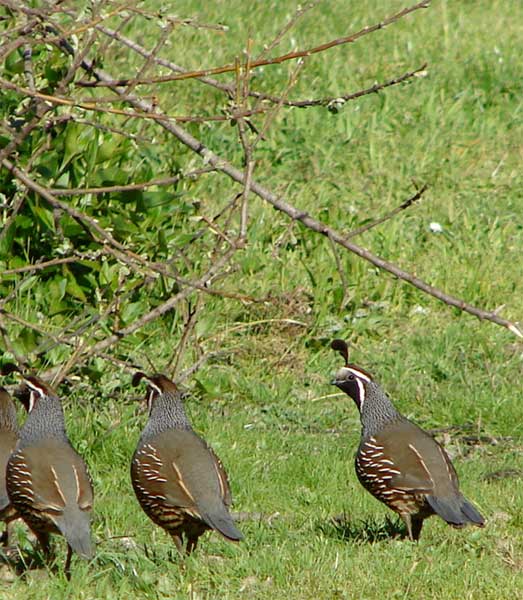
California Quail, San Pedro Valley Park, April 2009 (Jennifer Rycenga)
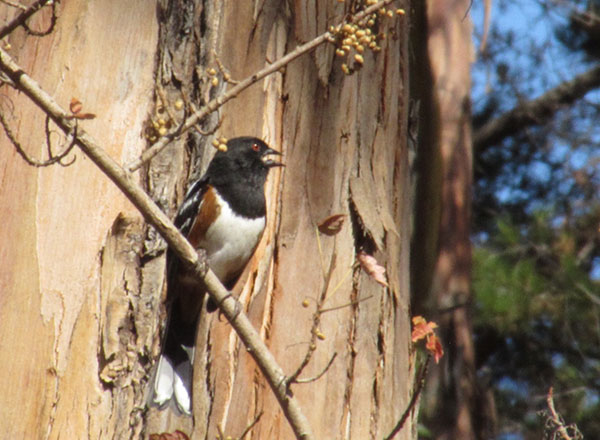
Spotted Towhee, San Pedro Valley County Park, September 2015 (Jennifer Rycenga)
Author: Scott Smithson
Uploaded:
April 6, 2009
Last Update:
March 30, 2021 10:14am.
Updated by: Judy Spitler
All content ©Sequoia Audubon Society and others
No use without written permission

