 Summer
Fall
Winter
Spring
Summer
Fall
Winter
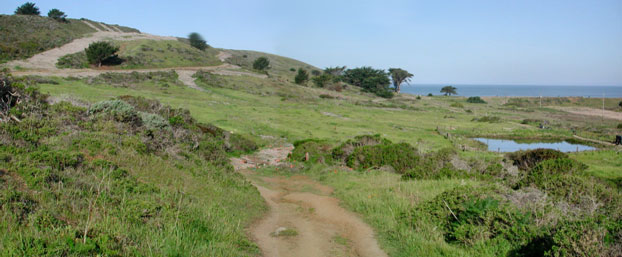
Looking west, showing repair of unofficial trails and creation of new pond
Mori Point is deserving of more attention from Peninsula birders and naturalists. It was saved from development after a generation of battles, and added to the GGNRA in 2000. We enter the park from the intersection of Mori Point Road and Bradford Way, taking one of the footpaths that parallels the road itself. In this coastal scrub area are the usual species, like California Towhee and California Scrub-Jay, Wrentit and White-crowned Sparrow. Rock Pigeons wheel over the houses sandwiched between Mori Point Road and the Sharp Park Golf Course, which is owned and operated by the City of San Francisco. We walk west until the valley opens out with our first view of the ocean. In this area, which was heavily scarred in the past by off-road vehicles and unofficial trails, we see signs of restorations, with the creation of new frog ponds, and the closure of some trails. American and Lesser Goldfinch, House and Purple Finch are abundant along this valley, and the adjacent marsh supports Red-winged and Brewer's Blackbirds. As recently as September 2008, the marsh was a repository of hundreds of old tires. These had been used in the past as a horse corral, and were removed in October 2008.
We have seen Red-shouldered Hawk, American Kestrel, and White-tailed Kite along the electrical wires over the marsh, usually harassing each other. House Finches and Black Phoebes also use the wires to perch. The pumphouse is a nesting spot for Black Phoebe. The pond attracts Marsh Wren, American Coot, and Pied-billed Grebe, with occasional Mallards.
We turn north along the levee that protects the golf course from the ocean. The beach attracts gulls, Caspian and Elegant Tern in turn, Black Turnstone, Willet, Whimbrel, Surfbird, and Sanderling. The levee, beach, and cypress grove are home to many Common Ravens. They will often fly low over walkers or stand unperturbed on the path. Leaving the levee path to the right and descending into the cypress grove, one makes one's way to Laguna Salada, a large freshwater lake and marsh that hosts Mallard, Pied-billed Grebe, Ruddy Duck, American Coot, herons, egrets, Marsh Wren, and an occasional Sora.Returning south, we climb to the actual point. The rocks below host Pelagic, Double-crested, and Brandt's Cormorants. Black Oystercatchers are resident. Sea birds include Surf and Black Scoters, Pigeon Guillemot, Clark's and Western Grebes. Brown Pelicans glide by. From this height, a Parasitic Jaeger was seen. The ground is covered with wildflowers in spring, and the White-crowned Sparrow is the most common bird. Say's Phoebe hunts up here in fall.
We descend from the point into the valley along one of the two remaining trails, to the junction with Mori Point Road, which we follow east back to the parking area. There is a seep along this path, and willow trees and conifers, which attract warblers, Chestnut-backed Chickadee, Hutton's Vireo, and Purple Finch. Spotted Towhee calls from the scrub. There is one last area we check before leaving, a foot path that begins almost at the junction of Mori Point Road and Highway 1, which leads back into more willows. In this area, in July 2007, we observed a female Bullock's Oriole feeding two juveniles.Uncommon birds for this location include Horned Grebe, Greater White-fronted and Canada Goose, Hooded Merganser, Peregrine Falcon, California Quail, Wandering Tattler, Red-necked Phalarope, Common Tern, Downy and Hairy Woodpecker, Willow Flycatcher, Tropical Kingbird, Loggerhead Shrike, American Crow, House Wren, Winter Wren, California Thrasher, Western Tanager, Lark Sparrow. Very rare records exist of Scissor-tailed Flycatcher and Blue Grosbeak.
Mallard, Surf Scoter, Black Scoter, Common Goldeneye, Ruddy Duck, Red-throated Loon, Pacific Loon, Common Loon, Pied-billed Grebe, Eared Grebe, Western Grebe, Clark's Grebe, Brown Pelican, Brandt's Cormorant, Double-crested Cormorant, Pelagic Cormorant, Great Blue Heron, Great Egret, Snowy Egret, Green Heron, Black-crowned Night-heron, Turkey Vulture, Osprey (rare), White-tailed Kite, Sharp-shinned Hawk, Cooper's Hawk, Red-shouldered Hawk, Red-tailed Hawk, American Kestrel, Merlin, Peregrine Falcon, Sora, American Coot, Black-bellied Plover, Snowy Plover, Semipalmated Plover, Killdeer, Black Oystercatcher, Spotted Sandpiper, Wandering Tattler, Willet, Whimbrel, Marbled Godwit, Black Turnstone, Surfbird, Sanderling, Western Sandpipier, Dunlin, Long-billed Dowitcher, Wilson's Snipe, Red-necked Phalarope, Red Phalarope (2010, Sharp Park), Bonaparte's Gull, Heermann's Gull, Short-billed Gull, Western Gull, California Gull, Glaucous-winged Gull, Caspian Tern, Forster's Tern, Elegant Tern, Parasitic Jaeger, Common Murre, Pigeon Guillemot, Rhinoceros Auklet (rare here), Rock Pigeon, Band-tailed Pigeon, Mourning Dove, Anna's Hummingbird, Allen's Hummingbird, Barn Owl, Downy Woodpecker, Northern Flicker, Pacific-slope Flycatcher, Black Phoebe, Say's Phoebe, Loggerhead Shrike, Hutton's Vireo, Warbling Vireo (migration), California Scrub-Jay, American Crow, Common Raven, Barn Swallow, Chestnut-backed Chickadee, Bushtit, Pygmy Nuthatch, House Wren (uncommon at this location), Bewick's Wren, Marsh Wren, Ruby-crowned Kinglet, Hermit Thrush, American Robin, Wrentit, Northern Mockingbird, European Starling, American Pipit, Orange-crowned Warbler, Yellow Warbler, Yellow-rumped Warbler, Townsend's Warbler, Common Yellowthroat, Wilson's Warbler, Western Tanager, Spotted Towhee, California Towhee, Savannah Sparrow, Song Sparrow, Lincoln's Sparrow, White-crowned Sparrow, Golden-crowned Sparrow, Black-headed Grosbeak, Red-winged Blackbird, Brewer's Blackbird, Brown-headed Cowbird, Bullock's Oriole, Western Meadowlark, Purple Finch, House Finch, Pine Siskin, Lesser Goldfinch, American Goldfinch, House Sparrow
In this guide, "rarities" are defined as those species given an County Abundance Code of 4, 5, or 6.
Emperor Goose (2017), Greater White-fronted Goose (2009, 2010, 2011), Cackling Goose (2010, 2011, 2017, 2019), White-winged Scoter (2010, 2014, 2022 by Pacifica pier), Harlequin Duck (2013, 2014), Long-tailed Duck (2014, 2016), Red-necked Grebe (2011, 2014, 2017), Northern Gannet (2018), White-faced Ibis (2013, Sharp Park Golf Course Pond), Bald Eagle (2016, 2019), Broad-winged Hawk (2014, fall migration), Fork-tailed Storm-Petrel (2017 invasion by the pier), Glaucous Gull (2015), Dusky-capped Flycatcher (2020, using Sharp Park Golf Course, too), Western Kingbird (2013), Tropical Kingbird (2019, using Sharp Park Golf Course), Mountain Bluebird (2021), Black-and-White Warbler (2018), Palm Warbler (2010), Northern Waterthrush (2022), Clay-colored Sparrow (2011), White-throated Sparrow (2010), Great-tailed Grackle (2013)
Mori Point is located in Pacifica just west of Highway 1, and directly south of Sharp Park Golf Course. Trailheads are found at the south end of Bradford Way and at the west end of Fairway Drive.
Red Markers: Parking Area or Trail Head
Hover mouse pointer over marker, or click marker, for pin identification.
Use + or - buttons to change map zoom. Click & Drag to pan.
No fees
24/7/365
Cliffs can be unstable, and there's poison oak around, so stay on the trails. On those trails you will likely meet dog walkers, joggers, and cyclists; all are usually polite and well-behaved.
Portapotty, clean but sometimes paperless, at the trailhead at Bradford Way and Mori Point Road. Public restrooms at the fishing pier at Sharp Park Beach.
Accessibility information is currently not available for this location.
Pacifica Visitor Center 650-355-4122
Presidio Visitor Center 415-561-4323
Site Stewardship Program, 415-561-3067
Disabled access 415-556-8371
There are two relevant hot spots in eBird. Mori Pt. has 199 species represented, with data in all forty-eight calendar quadrants. The Sharp Park Beaches covers the shore immediately north of Mori Pt., including the walkway; the two areas are contiguous. This hotspot has data in 40 of 48 time quadrants representing 169 species.
Because of the recent restoration of the land here, it is vitally important to submit your sightings to eBird, and share them on Peninsula-birds. We have a rare opportunity here to document the return of a habitat and its avifauna. The editor of the SMCBG looks forward to writing an entry on the Sharp Park section of GGNRA in a few years, too!
The iNaturalist place marker for Mori Point is rich with data, reflecting the bioblitz held here in 2014 as part of the National Parks' anniversary Summer of Blitzes. The results can be seen here, but this is cumulative for the entire GGNRA.
The San Francisco Bay Bird Observatory (SFBBO) is conducting a long-range study of gull movements in the Bay Area. California Gulls have been leg-banded with plastic colored bands. If you see any of these gulls, please note the leg and the color of the band; if it is possible to read the number on the band, record that also. This information can be shared directly with SFBBO. If the birds also have a metal band, and you can read that number, too, please report that to the National Bird Banding Lab.
Sequoia Audubon Society has sponsored five field trips to Mori Point, all in the decade of the 2010s.
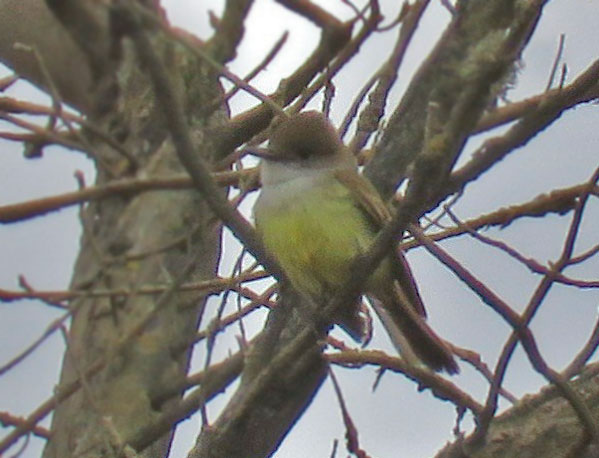
Dusky-capped Flycatcher, November 2020 (Jennifer Rycenga)
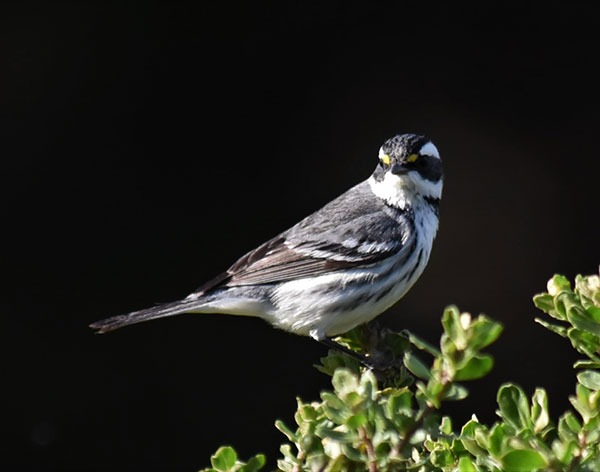
Black-throated Gray Warbler, a rare over-wintering adult male, December 2018 (Bruce Mast)
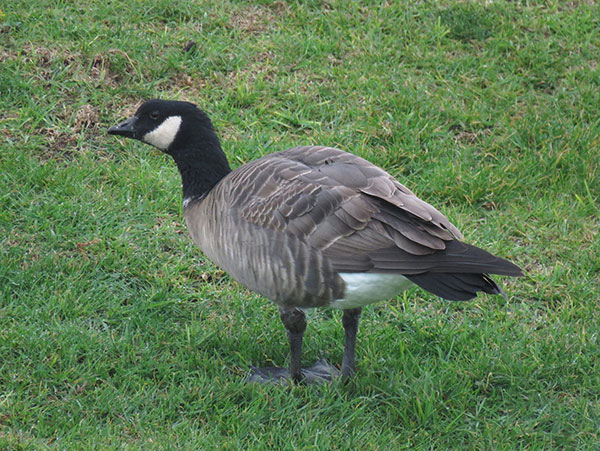
Cackling Goose, January 2019. Note the compressed bill and short neck (Casey Girard)
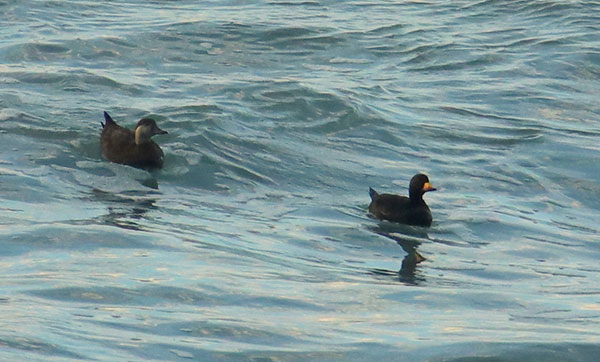
Black Scoter, male and female, January 2017 (Albert Linkowski)
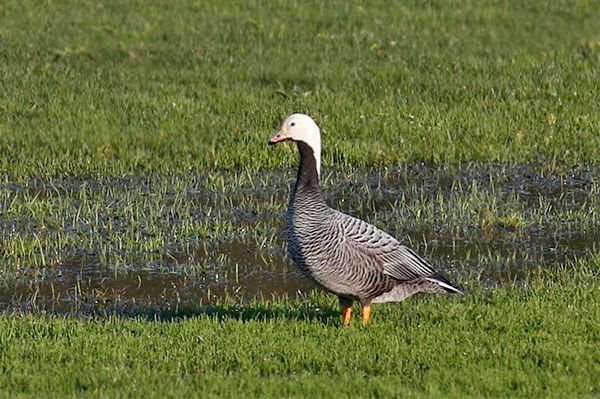
This Emperor Goose, the first to grace the county in over 55 years, was found on the lagoon of the Sharp Park Golf Course, easily visible from the levee along the ocean, January 2017 (Donna Pomeroy)

Looking north along the beach toward the Pacifica Pier
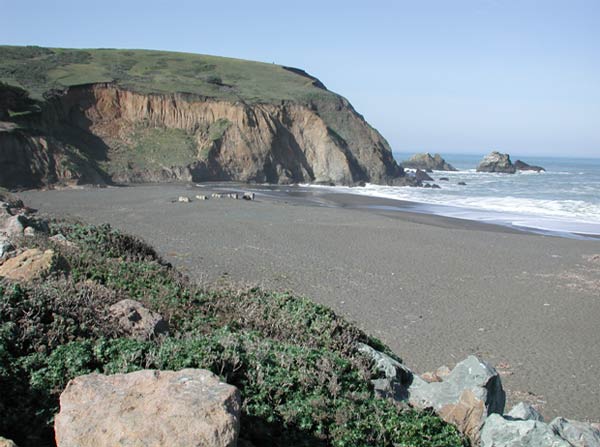
Mori Point
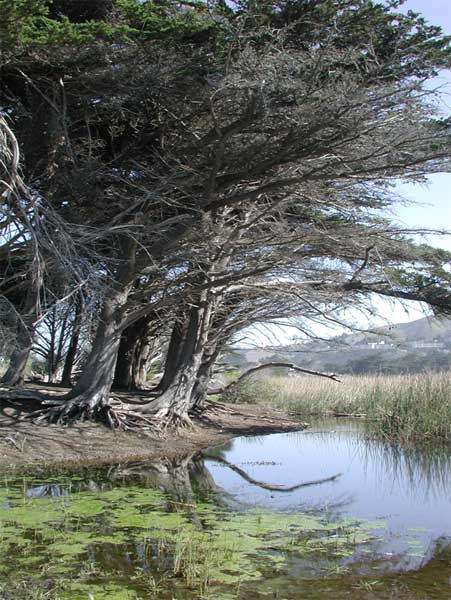
Laguna Salada
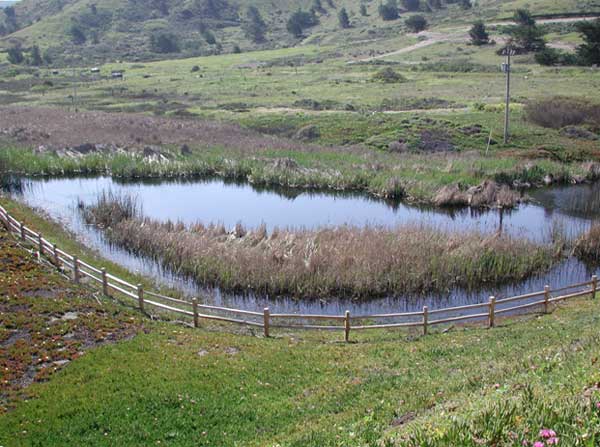
Pumphouse Marsh
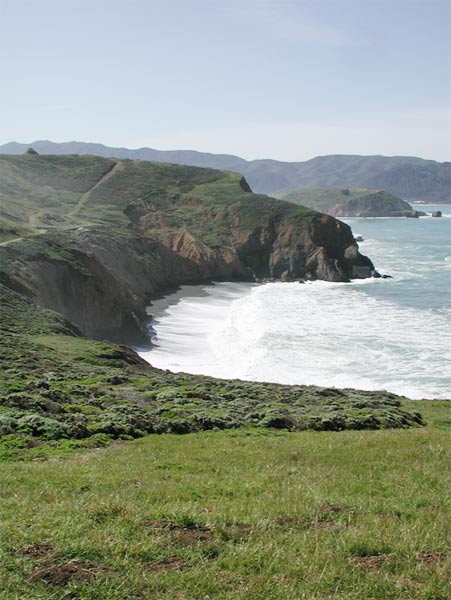
View south toward Rockaway Beach
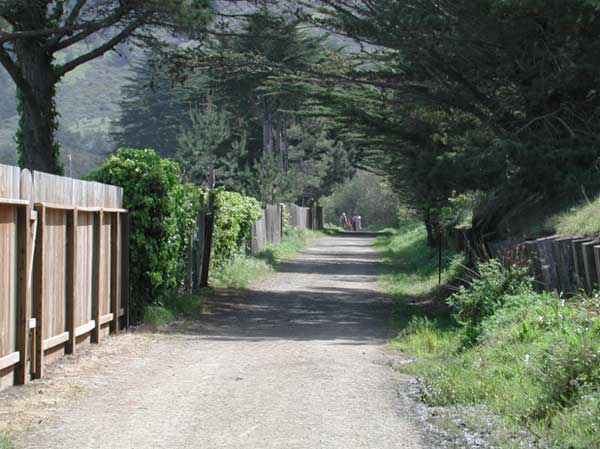
Walking back toward the parking area through the "tunnel"
Author: Laurie Graham and Jeff Fairclough
Uploaded:
April 8, 2009
Last Update:
September 5, 2022 5:26pm
All content ©Sequoia Audubon Society and others
No use without written permission

