 Summer
 Fall
Winter
Spring
Summer
Fall
Winter
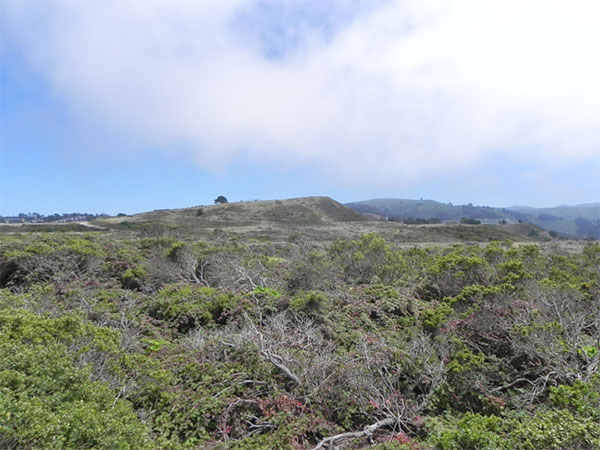
Milagra Ridge, August 2011 (Jennifer Rycenga)
Milagra Ridge is an island of wilderness in the midst of urbanity, surrounded by roads and houses. It is harsh, with strong winds and dense fog throughout the year. It can appear barren and uninteresting: its life only opens to a visitor gradually. A network of trails starts from the parking area.
Milagra Ridge is a favorite location for wildflower enthusiasts in spring; this is also a good time to look for north-bound raptors. Indeed, this site is intriguing because of its hawk-watching possibilities, though there are better places to try your luck in this category in the county (see entries for San Bruno Mountain and Russian Ridge in this guide). There are few trees, but, because of their dearth, they can contain interesting birds. Overall, the authors recommend that there are more interesting places to go birding on the Peninsula, and even in Pacifica proper. But if other interests bring you here, please note your avian sightings: some rare birds associated with open country have been spotted here, such as Sage Thrasher and Western Kingbird.
Milagra Ridge is prime habitat for the Mission Blue and San Bruno Elfin Butterflies, and the California Red-legged Frog. Other insects include the Acmon Blue and Bay Checkerspot. For the attentive, or the early morning hiker, animals such as Bobcat, Coyote, Salamander, and more can enrich your experience here.
At one time, Milagra Ridge was a county park; it was later absorbed into the Golden Gate National Recreation Area, run by the National Park Service. It is often still referred to on maps as Milagra Ridge County Park
Canada Goose (flyover), Mallard, Surf Scoter (distant flyover), California Quail, Rock Pigeon, Band-tailed Pigeon, Eurasian Collared-Dove, Mourning Dove, Vaux's Swift (migration), White-throated Swift, Anna's Hummingbird, Allen's Hummingbird, Killdeer, Whimbrel, Wilson's Snipe, Black-legged Kittiwake (rare here), Short-billed Gull (rare here), Western Gull, California Gull, Herring Gull, Glaucous-winged Gull, Caspian Tern, Elegant Tern, Double-crested Cormorant, Brown Pelican, Great Blue Heron, Turkey Vulture, Osprey, White-tailed Kite, Northern Harrier, Sharp-shinned Hawk, Cooper's Hawk, Red-shouldered Hawk, Red-tailed Hawk, Great Horned Owl, Downy Woodpecker, Hairy Woodpecker, Nuttall's Woodpecker, Northern Flicker, American Kestrel, Merlin, Peregrine Falcon, Pacific-slope Flycatcher, Black Phoebe, Say's Phoebe, Hutton's Vireo, Warbling Vireo (migration), Steller's Jay, California Scrub-Jay, American Crow, Common Raven, Chestnut-backed Chickadee, Northern Rough-winged Swallow (migration), Violet-green Swallow, Tree Swallow (uncommon here), Barn Swallow, Cliff Swallow (migration), Bushtit, Wrentit, Golden-crowned Kinglet, Ruby-crowned Kinglet, Red-breasted Nuthatch, Pygmy Nuthatch, Brown Creeper, Blue-gray Gnatcatcher, House Wren, Pacific Wren (rare here), Marsh Wren (rare here), Bewick's Wren, European Starling, Northern Mockingbird, California Thrasher, Western Bluebird, Swainson's Thrush, Hermit Thrush, Varied Thrush, American Robin, Cedar Waxwing, American Pipit, Purple Finch, House Finch, Red Crossbill, American Goldfinch, Lesser Goldfinch, Pine Siskin, Fox Sparrow, Dark-eyed Junco, White-crowned Sparrow, Golden-crowned Sparrow, Savannah Sparrow, Song Sparrow, Lincoln's Sparrow, California Towhee, Spotted Towhee, Western Meadowlark, Hooded Oriole, Red-winged Blackbird, Brown-headed Cowbird, Brewer's Blackbird, Orange-crowned Warbler, Common Yellowthroat, Yellow Warbler, Yellow-rumped Warbler, Black-throated Gray Warbler, Townsend's Warbler, Hermit Warbler (rare here), Wilson's Warbler, Western Tanager, Black-headed Grosbeak, Lazuli Bunting
In this guide, "rarities" are defined as those species given an County Abundance Code of 4, 5, or 6.
Cackling Goose (2019), Ross's Goose (likely; 2019), Bald Eagle (2013), Burrowing Owl (2018), Yellow-bellied Sapsucker (2004), Western Kingbird (2006, 2019), Horned Lark (2019), Sage Thrasher (2005, 2021), Lapland Longspur (2020), White-throated Sparrow (2011), Chipping Sparrow (2020)
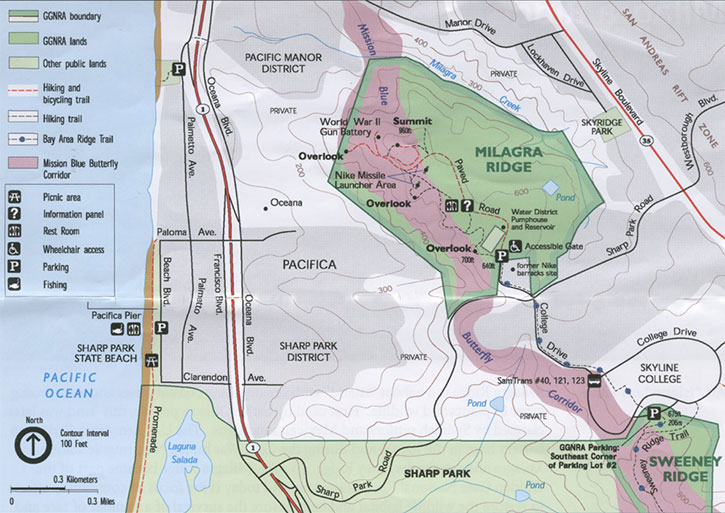
From south on 280, take the Avalon/Westborough Blvd exit (44). From north on 280, take the Westborough Blvd exit (45). Go west (uphill). Cross Skyline Blvd (Highway 35); the name of the road changes to Sharp Park Road. There is one traffic light at Pacific Heights Blvd. The next light is College Drive. Turn right.
From Highway 1, take Sharp Park Road east, and turn left at College Drive, which will be the first traffic light.
Follow the road to a dead end. Park on the dirt verge. Do not park in the condo parking spaces, or anywhere along the red curbs. There is room for approximately 6 vehicles.
Red Markers: Parking Area or Trail Head
Hover mouse pointer over marker, or click marker, for pin identification.
Use + or - buttons to change map zoom. Click & Drag to pan.
Free
Unrestricted
Occasional zero visibility. Ticks in summer; rattlesnakes possible.
One porta-potty at the junction of all trails.
Accessibility information is currently not available for this location.
Ft. Funston Ranger Station 415-239-2366
Golden Gate National Park Association 415-776-1607
Milagra Ridge is a hotspot in eBird, with 117 recorded species, with data in 46 of 48 time quadrants (quite an improvement over the decade; when this entry was first published in 2010, data only existed for five of forty-eight time quadrants!) Since Milagra Ridge is a good place to take visiting friends for the views, note your sightings and record them in eBird to enrich knowledge of this habitat.
The iNaturalist place marker capably demonstrates the range of interesting organisms here, and the dearth of birds!
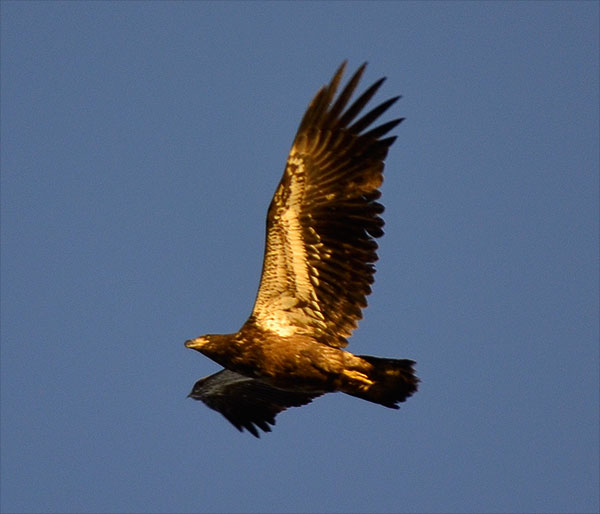
Bald Eagle, January 2013 (Cédric Duhalde)
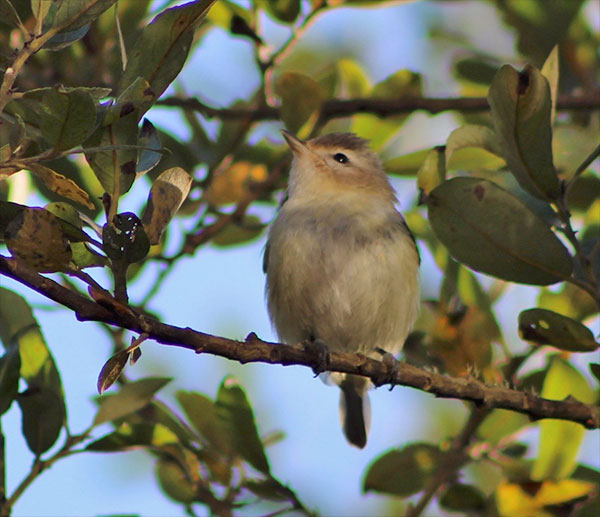
Warbling Vireo, September 2019 (Cédric Duhalde)
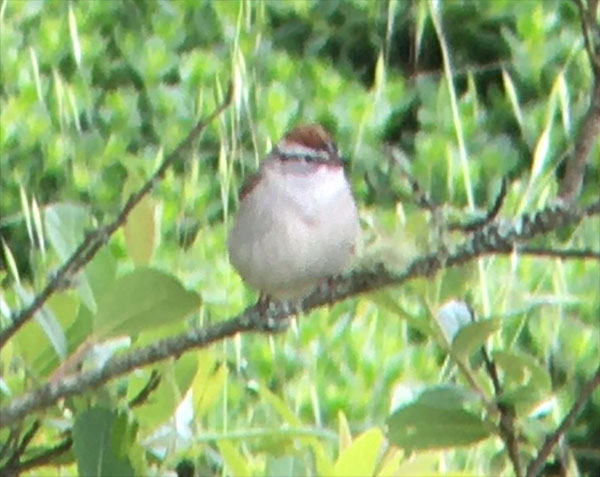
Chipping Sparrow, April 2020 (Cédric Duhalde)
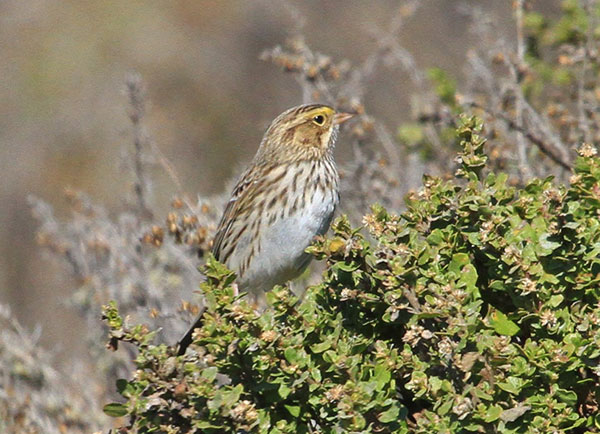
Savannah Sparrow, October 2019 (Kent Forward)
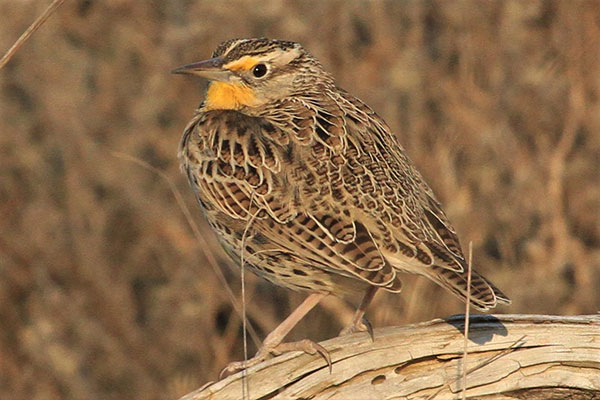
Western Meadowlark, October 2019 (Kent Forward)
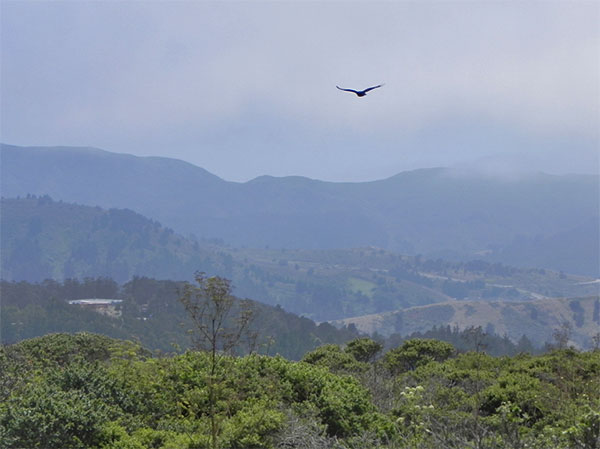
Turkey Vulture soaring over the peaks and valleys of Pacifica, seen from Milagra Ridge, August 2011 (Jennifer Rycenga)
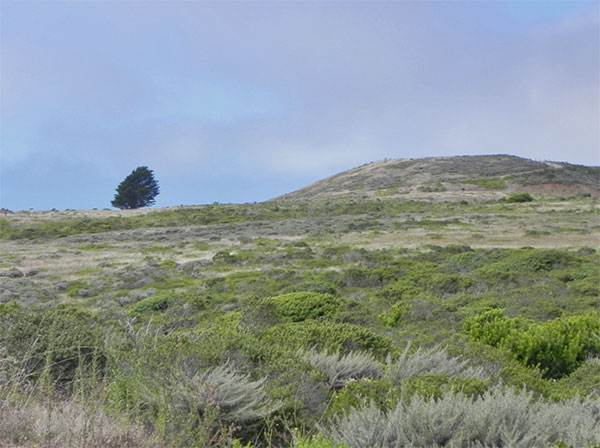
"The Tree" of Milagra Ridge, August 2011 (Jennifer Rycenga)
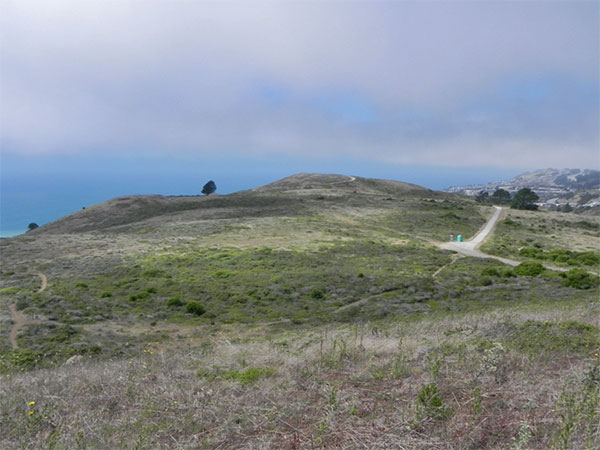
A wide view of Milagra Ridge, looking west. "The Tree" can be seen, as well as a small grove along the wide trail, to the north in this picture. The port-a-potty and storyboard can be seen at the trail junction. August 2011 (Jennifer Rycenga)
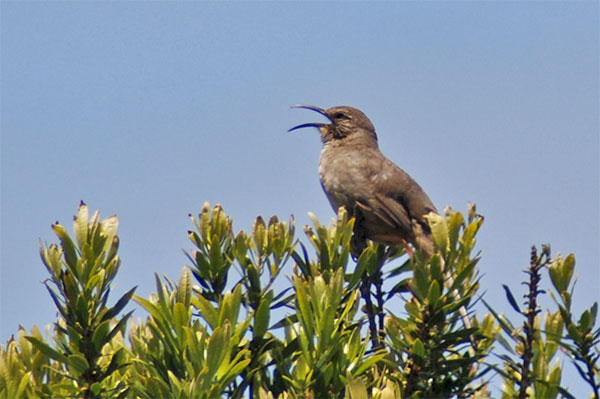
California Thrasher, Milagra Ridge, August 2011 (Jeff Fairclough and Laurie Graham)
Author: Laurie Graham & Jeff Fairclough
Uploaded:
August 10, 2011
Last Update:
November 12, 2021 7:56pm.
Updated by: Jennifer Rycenga
All content ©Sequoia Audubon Society and others
No use without written permission
