 Summer
 Fall
Winter
Spring
Summer
Fall
Winter
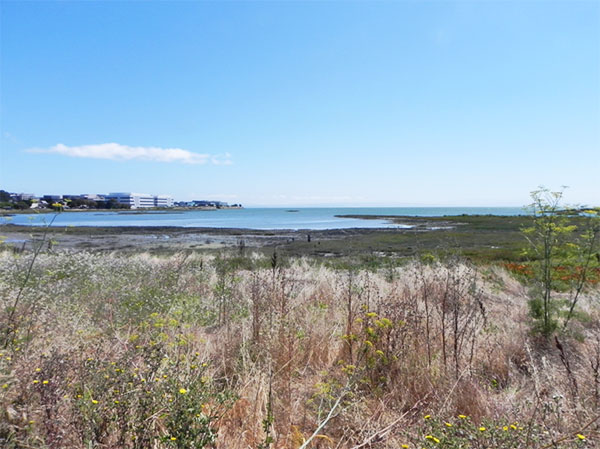
Littlefield Avenue marsh access, looking southeast. August 2011 (Jennifer Rycenga)
The San Francisco Bay Trail on the northern Peninsula runs continuously from north Sierra Point to SamTrans Peninsula, just north of SFO. The entire section of trail is 7.5 miles long, one way. This has been arbitrarily divided for this guide into six easily-walkable segments, listed south to north:
- Colma Creek Public Shore
- Littlefield Avenue Public Shore
- San Bruno Point Park
- Oyster Point
- Oyster Cove
- Sierra Point
This article covers segment 2 - Littlefield Avenue Public Shore - with designated parking in a lot at the junction of Littlefield Ave. and Utah Street.
The best time to come here is from fall to spring, on either side of the high tide, for the shorebird activity. Park and step out onto the Bay Trail. To your right is the segment covered in the "Colma Creek Public Shore" entry. Ahead of you is a restored marsh area, which is fenced. To the right of the fenced area is a stand of eucalyptus trees. Under these trees is a good place to scope the birds in the marsh and water. As the tide rises, the shorebirds come closer to land, but they become less active. Birds include Black-necked Stilt, American Avocet, Black-bellied Plover, Dowitchers, Least and Western Sandpipers, Killdeer, Semipalmated Plover, Willet, Whimbrel, Long-billed Curlew, and Marbled Godwit. Just offshore, California Gulls float in the water, while Northern Shovelers forage.
After indentifying all these birds, begin walking north. As the trail turns to the right (east), slow down and start watching for California Towhee, Yellow-rumped Warbler, and Anna's Hummingbird in the ornamental trees to your left, and White-crowned, Savannah, or Song Sparrow along the fence to your right. There might also be Common Yellowthroat. Coots love this section, and Green-winged Teal can be seen just past the reeds. Anywhere along here, you might get to see and hear the endangered California Clapper Rail.
Continuing east, you will approach the Haskins Way Public Shore parking. In this area there are resident Northern Mockingbirds. As you approach the South San Francisco Scavenger Waste Transfer Station, you will begin to see birds associated with garbage and people: Brewer's Blackbird, European Starling, Rock Pigeon, American Crow, Common Raven, and Western Gull. As you round the end of the transfer station, the odor is strong, but not overwhelming. If you can tolerate it, look out at the junction of marsh and bay; you may see Horned Grebe close to shore, with Western and Clark's Grebe further out. Brown Pelican and Double-crested Cormorant will fly by or be engaged in a feeding frenzy. Look down at the base of the bluff to the south, for any small numbers of shorebirds like Greater Yellowlegs. Forster's Tern hunt close by, and another Anna's Hummingbird might buzz you. Golden-crowned Sparrows hop around in the plants on the bluff. The trail has been completed with a new bridge over a little freshwater marsh. In the marsh you will often find Snowy Egret, and almost certainly a Black Phoebe, occasionally a Mallard or two. American Coot in significant numbers sail back and forth between here and Point San Bruno like an armada. From here, the trail is covered in the segment "San Bruno Point Park".
On the return trip, pay attention to the lawn and trees between 260 Littlefield and the trail, where you will see House Finch and House Sparrow, and an occasional surprise. This unpromising bit of vegetation has attracted some rare migrant warblers; Ron Thorn, local birder extraordinaire, has found many a rarity over the years here. A Prothonotary Warbler in the fall of 2004 brought birders from far and wide. The area is a magnet for rare sparrows; White-throated Sparrow is almost annual, the diminutive members of the Spizella family (Clay-colored, Chipping, and Brewer's) drop by here some years, and this is one of the best places in the county to look for Swamp Sparrow. A Nelson's Sparrow also once graced this spot.
Canada Goose, Greater White-fronted Goose (uncommon, winter), Mallard, Cinnamon Teal, Northern Shoveler, Northern Pintail, Blue-winged Teal, Green-winged Teal, Eared Grebe, Horned Grebe, Western Grebe, Clark's Grebe, Double-crested Cormorant, Brown Pelican, Great Blue Heron, Great Egret, Snowy Egret, Turkey Vulture, White-tailed Kite, Northern Harrier, Red-tailed Hawk, American Kestrel, Merlin, Ridgway's Rail, Virginia Rail, Sora, American Coot, Black-bellied Plover, Semipalmated Plover, Killdeer, Black Oystercatcher, Black-necked Stilt, American Avocet, Greater Yellowlegs, Willet, Whimbrel, Long-billed Curlew, Marbled Godwit, Western Sandpiper, Dunlin, Red Knot, Least Sandpiper, Short-billed Dowitcher, Long-billed Dowitcher, Wilson's Snipe, Ring-billed Gull, California Gull, Western Gull, Caspian Tern, Forster's Tern, Elegant Tern, Rock Pigeon, Eurasian Collared-Dove, Mourning Dove, Anna's Hummingbird, Black Phoebe, American Crow, Common Raven, Barn Swallow, Bushtit, Northern Mockingbird, European Starling, Orange-crowned Warbler, Yellow-rumped Warbler, Yellow Warbler, Common Yellowthroat, California Towhee, Savannah Sparrow, Song Sparrow, Lincoln's Sparrow, White-crowned Sparrow, Golden-Crowned Sparrow, Red-winged Blackbird, Brewer's Blackbird, House Finch, American Goldfinch, House Sparrow
In this guide, "rarities" are defined as those species given an County Abundance Code of 4, 5, or 6.
Cackling Goose (2011, 2015), Semi-palmated Sandpiper (2008), Bar-tailed Godwit (2020), Red Phalarope (2020), Short-eared Owl (2006), Burrowing Owl (migrant, 2006), Willow Flycatcher (migrant, 2005), Western Kingbird (migrant), Tropical Kingbird (2013, 2014), Sedge Wren (2005), Prothonotary Warbler (2004), Palm Warbler (2002, 2003, 2006, 2009, 2012, 2014, 2015), Prairie Warbler (2021, 2022), Canada Warbler (2021), Brewer's Sparrow (2006, 2012), Clay-colored Sparrow (2002, 2006, 2009, 2012, 2015, 2016, 2018), White-throated Sparrow (2007), Lark Sparrow (2004, 2007. 2012), Vesper Sparrow (2006, 2012), Swamp Sparrow (close to annually), Chipping Sparrow (migrant 2005), Clay-colored Sparrow (2012), Nelson's Sharp-tailed Sparrow (2003-04), Dickcissel (2020), Blue Grosbeak (2011, 2014), Bobolink (2012), Baltimore Oriole (2014)
Going north on 101, take exit 424, turn right, and drive down South Airport Blvd. Turn left on Utah Street, and drive all the way to the end where it turns left and becomes Littlefield. Do NOT turn left; turn into the parking lot on your right, then head east (left) to the dead end, where you will find two Public Shore parking spaces.
Going south on 101, take exit 424. Turn right on Produce Avenue, turn right on South Airport Blvd and right again - this is a confusing interchange. Turn left on Utah Street, and drive all the way to the end where it turns left and becomes Littlefield. Do NOT turn left; turn into the parking lot on your right, then head east (left) to the dead end, where you will find two Public Shore parking spaces.
Red Markers: Parking Area or Trail Head
Hover mouse pointer over marker, or click marker, for pin identification.
Use + or - buttons to change map zoom. Click & Drag to pan.
This is public access, free, 24/7.
This is public access, free, 24/7.
This is a multi-use path, including dogs, walkers, joggers, and cyclists.
None.
Accessibility information is currently not available for this location.
None.
There is an active study of Clapper Rails being conducted under the auspices of the USGS Western Ecological Research Center, that includes radio-tagged rails in this area.
This area has a hotspot in eBird, entitled "SF Bay Trail - Haskins Way." It is severely underpopulated with data, with only two time quadrants showing data.
Sequoia Audubon Society has sponsored two field trips to this location, both in the 2010s.
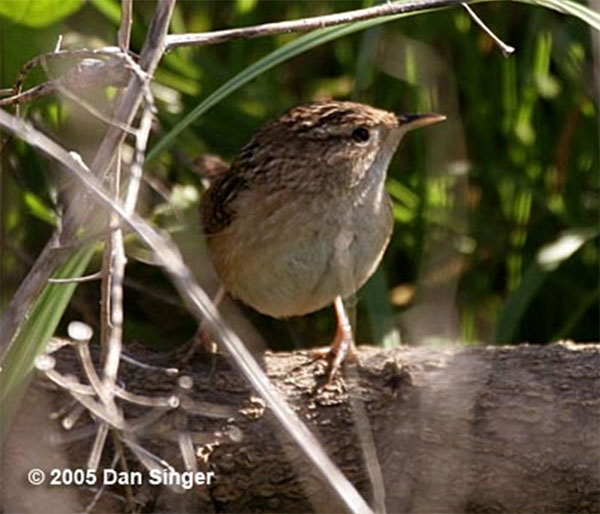
Sedge Wren, Littlefield Avenue marsh, January 2005 (Dan Singer)
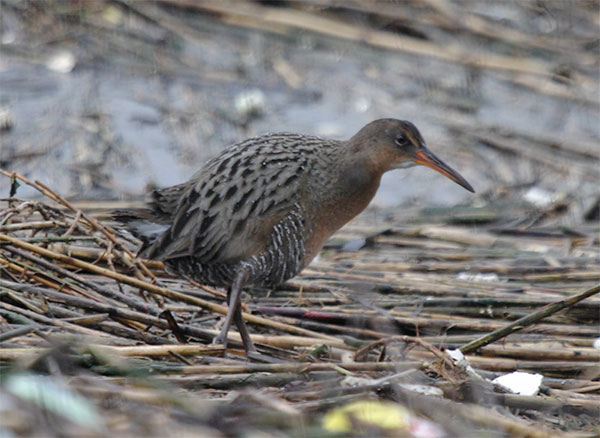
Clapper Rail, Littlefield Marsh. (Calvin Lou)
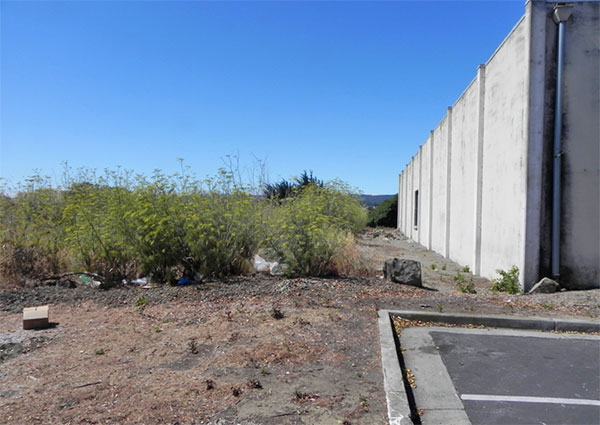
This doesn't look like a promising place to bird, but this patch of fennel at the corner of the lot behind 260 Littlefield has produced Prothonotary and Palm Warblers! Littlefield Avenue Marsh, August 2011 (Jennifer Rycenga)
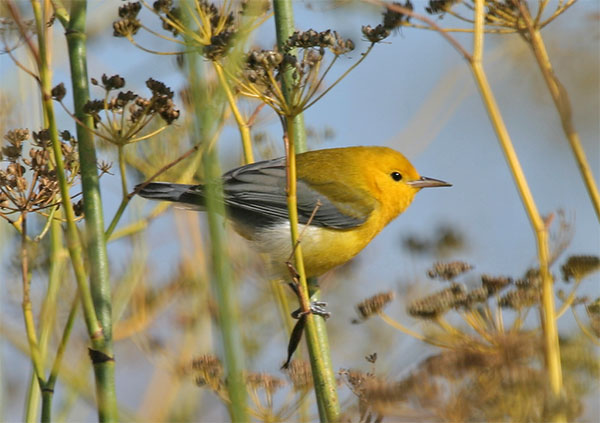
Prothonotary Warbler, Littlefield Avenue marsh, September 2004 (Calvin Lou)
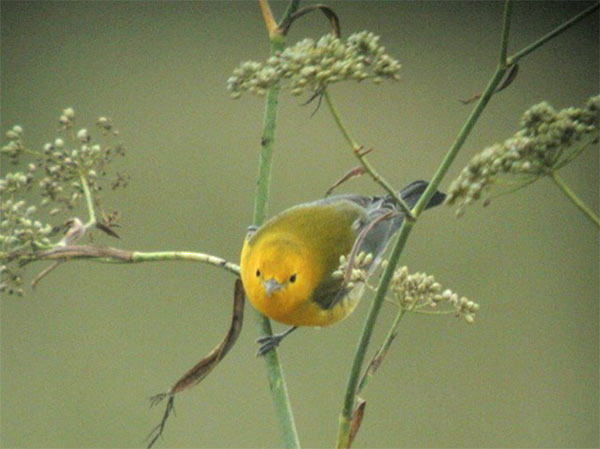
Prothonotary Warbler, Littlefield Avenue marsh, September 2004 (Eric Goodill)
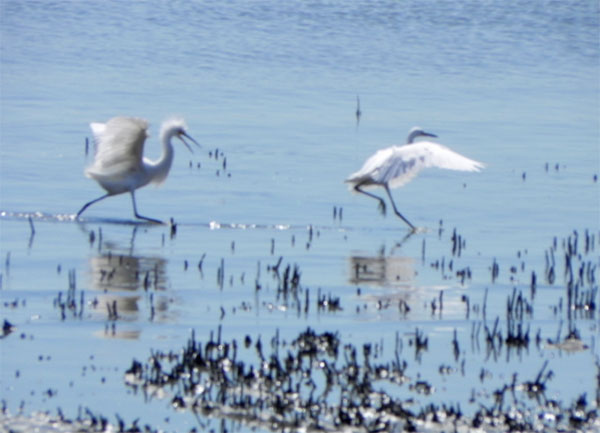
When Snowy Egrets turn aggressive. Littlefield Avenue Marsh, August 2011 (Jennifer Rycenga)
Author: Laurie Graham & Jeff Fairclough
Uploaded:
August 12, 2011
Last Update:
January 8, 2022 8:54pm.
Updated by: Jennifer Rycenga
All content ©Sequoia Audubon Society and others
No use without written permission
