 Summer
 Fall
Winter
Spring
Summer
Fall
Winter
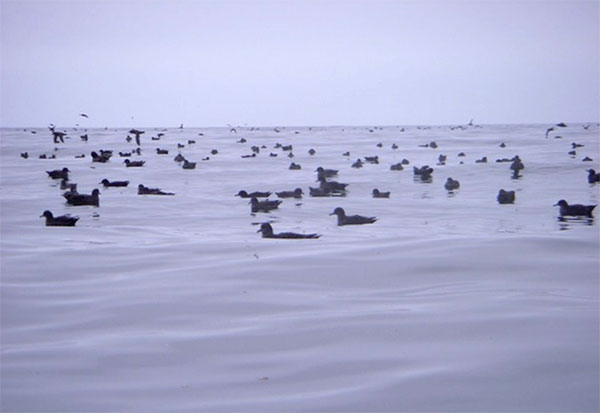
Sooty Shearwaters near Princeton Harbor, July 2007 (Barbara Kossy)
Birding by Kayak Made Easy - by Barbara Kossy
- Be comfortable in a small boat. You don't have to know how to swim, you'll be wearing your life jacket.
- Have a pair of waterproof or "disposable" binoculars. I've never accidentally dropped my WP binoculars overboard. But you'll want WP binos so you can rinse them off after getting them coated in salt water from your hands, or from resting in the kayak.
- Pick a day with light or little wind. Mornings are often calmest.
- Go to Pillar Pt. Harbor, in Princeton, just north of the town of Half Moon Bay and rent a sit-on-top kayak from either California Canoe & Kayak or Half Moon Bay Kayak.
- You can paddle the harbor in the rain! Great views of shorebirds on the breakwaters.
- Explore the harbor and happy birding.
It's that easy!
Tips:
- More kayaks spook birds. If you really want to see birds go alone, or with others who know how to be stealthy.
- Use a kayak with a rudder. A rudder allows you to steer the kayak, or keep it pointed at the birds while you have two hands on your binoculars.
- You don't need binoculars to bird by kayak. You can get very close to some birds and get good looks, optics free.
- You can paddle around birds on the water to see them in better light.
- You can get closer to some species than to others. Minimize splashing with paddle and talking to get close without flushing.
- On days with a breeze you can set up so the breeze moves you towards or parallel to the birds, again minimizing paddle action.
- You can predict (or try) where a diving bird will surface, and positions yourself near that spot while the bird is under water.
- During high tides paddle along the breakwaters to see more birds.
Photographing Birds from a Kayak
- I don't photograph birds so I don't have tips for how to photograph birds from a kayak.
- I've tried it, and it's hard to get anything but the most basic ID shot unless you have great waterproof gear.
- Long, expensive lenses, a moving base and a moving target add up to challenging conditions.
Birds that are easy to approach
- Loons are pretty relaxed and you can get very close.
- Phalaropes in the water let you get very close if you approach slowly. They seem to think your kayak is flotsam.
- Gulls are easy to approach on the water or rocky outcrops.
- Brown Pelicans often allow close approach if you're not rowdy. Some individuals can't tolerate it, others don't care.
- Cormorants are variable, some allow approach and others don't.
- Shorebirds on the breakwater do not tolerate a close approach, unless you're extremely stealthy. This varies by individual and species.
- Ducks vary by individual and species.
Feeding frenzies
- You can paddle, quietly, into the middle of a feeding frenzy.
- Pelicans and terns dive into the waters around you. Sea lions and seals leap from the water below. A real thrill. This can happen in the harbor, or outside of the harbor. It just depends where the bait fish are.
Out on the waters of Half Moon Bay and the Pacific Ocean
- You can get quite close to Common Murres and their young.
- Marbled Murrelets will dive when startled, and rarely allow close approach.
- If you're lucky you'll be able to paddle into the middle of a flock of Sooty Shearwaters.
- Phalaropes often allow a close approach.
Ocean Safety
If you plan to paddle on the ocean, take some kayaking classes. I recommend California Canoe & Kayak. When it's flat and windless it's pretty safe. However, always be aware of your surroundings. Check the wind and swell forecasts. Be cautious. Always keep an eye on the sea. Be aware of boat traffic and boat wakes. Have safety training. Know how to re-enter your kayak and do wear a wetsuit or drysuit. Don't paddle on the ocean unless you have adequate training, or you're with a guide.
Kayaking Route
Starting at California Canoe & Kayak and the Half Moon Bay Yacht Club
At the north end of the harbor, CCK at the Half Moon Bay Yacht Club has a smooth sand beach at all but the highest tides.
Western Gulls nesting on sailboats
Western gulls use the derelict sailboats that are anchored out as nesting sites. Most summers see more than one of the boats littered with nesting material and gull waste, but serving as floating nurseries for Western Gull parents. It's fun to paddle around the sailboats and get good looks at the cute chicks. You can watch the young grow from ooh aahh cuteness into gangly adolescents. And follow their adventures as they test their wings and explore the waters around their island home.
Romeo Pier
Romeo Pier was in use within the last decade. It docked fishing boats that caught baitfish for the fertilizer business. That's my understanding. It's becoming derelict.
Romeo Pier has a resident flock of pigeons, and gulls and pelicans use the roof now and then, but it's also a reliable place to spot Belted Kingfishers. They fly from the pier pilings to sailboat masts, cypress trees, and back. The best way to spot them is by ear, but I always check the mast tops and pier pilings just in case.Harbor seal floating dock
Just to the east of the pier is a floating dock that serves as a resting place for harbor seals. Do not get so close to the seals that they look up and become alert. That's too close, according to the Marine Mammal Act. These seals are relatively calm, but do be aware that paddling closer than 5 - 10 meters violates the Marine Mammal Protection Act.
Continuing NW around or under the pier you see a stretch of sand beach that's just south of the Princeton Marsh and the stand of cypress trees just to the west of the trail that leads to Mavericks.
On this sand beach I've seen Brants, Sanderlings, and other shorebirds that use sand.
I heard from an old timer that Snowy Plovers used to nest on this beach. Unleashed dogs and human strollers often disturb any birds that are present, so if you hope to see birds on this beach come early in the day, or in bad weather.Just inland is the Princeton Marsh. You can land your kayak here if you like and walk up the trail for better views. Princeton Marsh is covered in other sections of this website. I've enjoyed seeing spinning phalaropes in a marsh pond here.
The Monterey Cypress Stand
During the summer and fall you get the best view of the birds roosting in these trees by kayak. Folks walking under the trees may notice the feathers on the ground, but few look up to find the source.
From the vantage point of the water, with or without binoculars, you can see the Black-crowned Night Herons, and Great Blue Herons that use these trees as a roosting area.
Towards Mavericks
This area is better by far when humans and dogs are not present.
I've seen Brants feeding on sea grass in the sandy areas. Occasionally, in the shallow water you can spot bat rays and leopard sharks.Cement Breakwater
You may want to land your kayak on the sand and take a look at Mavericks Beach.
I usually don't bother because typically dogs and people have flushed the birds.Western Breakwater
Past the Mavericks Breakwater you'll find a section with shallow water, rocky shore and rock breakwater.
Light is best on this breakwater either in the morning, or on overcast days. It's in shadow on sunny afternoons.It's fun and productive to paddle along the inside of this far west breakwater.
You can find Wandering Tattlers, Surfbirds, Turnstones, and just about any bird looking for a resting spot, or Yellow-rumped Warblers chasing flies.To the east spreads the entire harbor waters. From here in the afternoons with good afternoon light you get great views of winter ducks and loons.
In summer you may see the occasional Common Murre, summering loon, or Pigeon Guillemot.
Toward the mouth of the harbor in the waters there you can find the more pelagic birds that may feed or shelter in the harbor, like Common Murres, Pigeon Guillemots, Phalaropes.
The South Breakwater
Similar to the west breakwater, but few birds in part because there are more fishers that use the wall.
Small Boat Launch
There's a bathroom here and a nice sand beach to land on if you want to take a break.
Inner Harbor
The beach near Half Moon Bay Kayaks sometimes has shorebirds and waders.
Occasionally Caspian terns may settle in.
Often it is bare, since birds are chased off by dogs and people.It's fun to paddle in the inner harbor, though I don't often see birds of note.
Sometimes the summering Elegant Tern flock roosts on the inside of the south-inner breakwater. In 2011 they were using a northern inner breakwater. If they're around, they're easy to find roosting.The Island Breakwater
Best inner harbor birds are on the Island Breakwater. It's freestanding in the harbor. Best bird I ever saw there was a Brown Booby. It stayed for a number of weeks.
In summer you can see Western Gulls pair up, build nests and feed their young. As the gulls grow up you can see them learn to fly and take to the water.In 2011 you could also see two pairs of Black Oystercatchers raise young on this breakwater.
In season it's full of Brown Pelicans of all ages, gulls, terns, cormorants, and all allow you to paddle close and get great looks.
It's a wonderful place to sit back in the kayak and just observe birds behavior. I've seen bonding, mating, nesting, feeding, aggression, and interspecies interactions. It's fun to watch an oystercatcher chase off a Western Gull. Or to see a gull on it's first flight.
Again paddle quietly here and do your best not to flush the birds. Again, some individuals fly, and others don't. Don't crowd them.Paddling out of the harbor, to the north beyond the little fishing pier (watch for lines)
is the mouth of Denniston Creek and to the left the beach under Barbara's Fishtrap.
You can count and ID gulls from the comfort of your kayak. Some rarities have been seen here, so do check it out.Now you're back at the launching spot at CCK.
You've just had a great harbor tour!
Brown Pelican, Pelagic Cormorant, Brandt's Cormorant, Double-crested Cormorant, Black Oystercatcher, Western Gull, Glaucous-winged Gull, California Gull, Heermann's Gull, Elegant Tern, Caspian Tern, Common Murre, Pigeon Guillemot, Black Phoebe, Common Yellowthroat, White-crowned Sparrow (nuttalli race), Belted Kingfisher. Brant, Snowy Plover, Spotted Sandpiper, Ruddy Turnstone, Red-necked Phalarope, Red Phalarope, Parasitic Jaeger, Bonaparte's Gull, Sooty Shearwater, Northern Rough-winged Swallow, Barn Swallow, Yellow-rumped Warbler, Short-billed Gull, Marbled Murrelet, Ancient Murrelet, Say's Phoebe, Song Sparrow, Brewer's Blackbird, Red-winged Blackbird, Tricolored Blackbird
In this guide, "rarities" are defined as those species given an County Abundance Code of 4, 5, or 6.
Long-tailed Duck, Red-necked Grebe, Northern Gannet (2015, 2016), Baird's Sandpiper, Pectoral Sandpiper, Ruff, Black-legged Kittiwake, Rock Sandpiper, Glaucous Gull, Rhinoceros Auklet (2013)
The two kayak rental companies listed below have different addresses within the greater harbor area. To reach Pillar Point area in general, take Capistrano west from SR 1. Make an immediate left into the parking area for the harbor; there is a launch spot here (and this is the location for Half Moon Bay Kayak). The other launch spot is at the Half Moon Bay Yacht Club, where California Canoe and Kayak company is located. The address is 214 Princeton. To get there, follow Capistrano around to Mezza Luna restaurant, where you take a left onto Prospect, then a quick left at the T-intersection, and a right onto Princeton.
Red Markers: Parking Area or Trail Head
Hover mouse pointer over marker, or click marker, for pin identification.
Use + or - buttons to change map zoom. Click & Drag to pan.
Kayak rental fees are available on the websites for the kayak companies, or by calling them in advance (a good policy in any case, in terms of checking for availability).
If you have your own kayak, your hours are your own to choose; as recommended above, the weather conditions may well determine your desire to be out on the water. The rental companies have highly variable hours, depending on season. Call ahead to determine days and times of availability.
The hazards and difficulties connected with the act of kayaking itself are covered in the description section itself. Princeton Harbor is considered to be one of the safest locations in the country for salt-water kayaking. Don't forget the sunscreen whenever you are out on open water.
Locations on a harbor kayak tour with bathrooms are listed in the tour above; there are public bathrooms by the harbormaster's station.
Accessibility information is currently not available for this location.
To contact the harbormaster, call 650-726-5727.
The harbor itself - especially on the water - is best designated by the eBird hotspot "Pillar Point Harbor." The launch spot for kayaking, from the shore to the inner breakwater, including the mud flats closest to Highway 1, are part of the hotspot named "Princeton Harbor." The Denniston Creek Mouth area has its own "Denniston Creek mouth" hotspot. If you do not want to write separate lists for all of these areas, "Pillar Point Harbor" would be the best catch-all. For more details on the eBird situation, see the article in this guide on Princeton Harbor and Pillar Point.
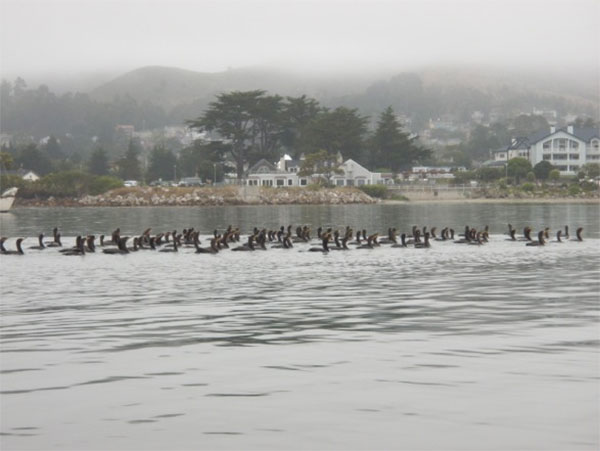
Raft of Double-crested Cormorants, Princeton Harbor, August 2011 (Yao-Jung Wen)
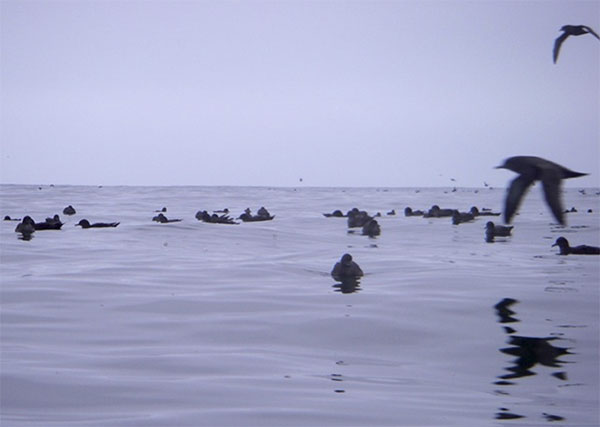
Sooty Shearwaters, seen close-up by kayak, July 2007 (Barbara Kossy)
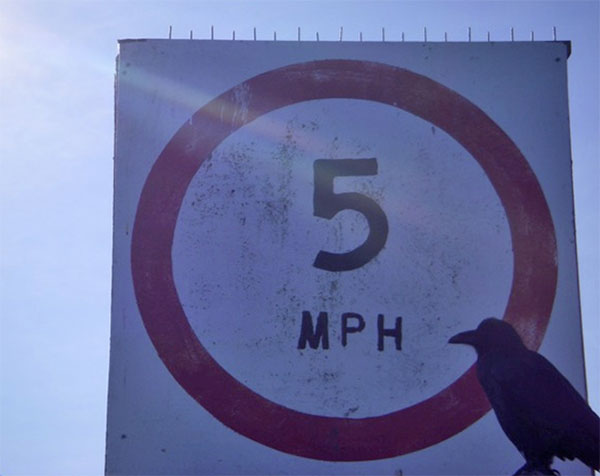
Common Raven, checking your speed, Princeton Harbor, December 2008 (Barbara Kossy)
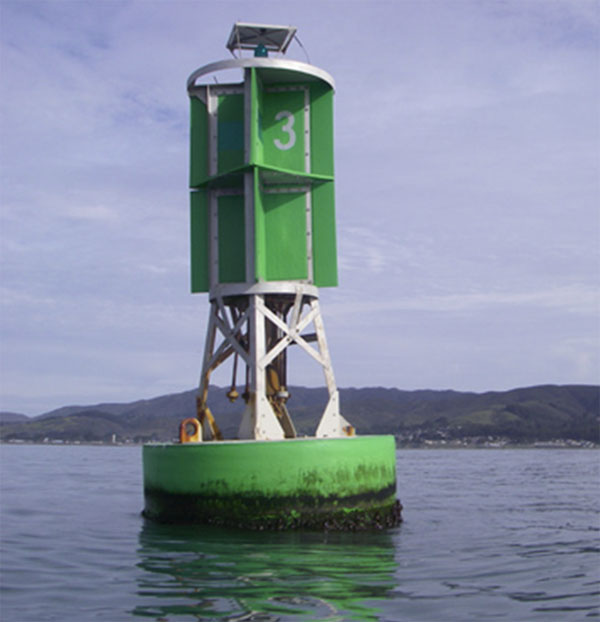
Green Buoy, Half Moon Bay (Barbara Kossy)
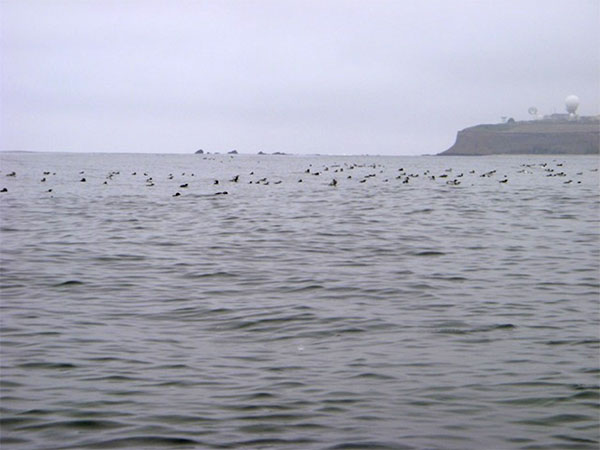
Common Murres, Pillar Point, August 2009 (Barbara Kossy)
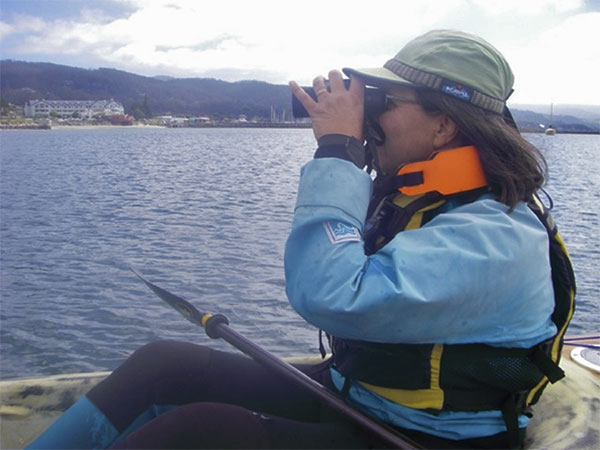
Birding by Kayak, with your author, Barbara Kossy.
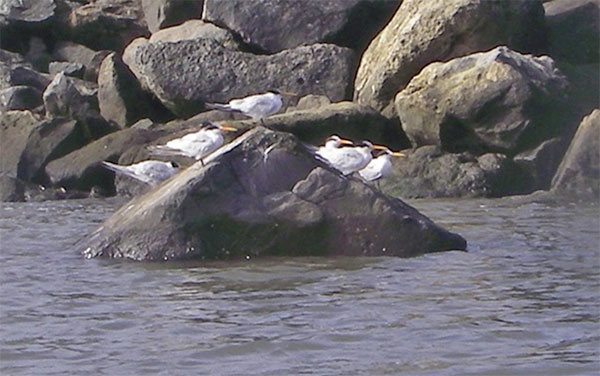
Elegant Terns, Pillar Point breakwater (Barbara Kossy)
Author: Barbara Kossy
Uploaded:
August 16, 2011
Last Update:
October 14, 2021 8:43am.
Updated by: Jennifer Rycenga
All content ©Sequoia Audubon Society and others
No use without written permission
