 Summer
 Fall
Winter
Spring
Summer
Fall
Winter
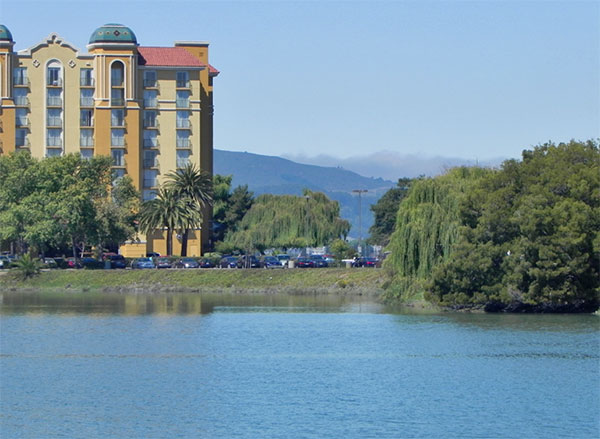
The Lagoon at the Embassy Suites in Burlingame, looking north; you can spy a roosting Great Egret in the foreground tree to the right. August 2011 (Jennifer Rycenga)
Burlingame is a medium-sized suburb of San Francisco, lying just south of the airport. The city is divided internally by US 101, a major highway. This entry covers the bayshore region of Burlingame, east of US 101, which has a set of man-made water features that could make this an interesting birding location.
We say "might" though, because there are better areas for birding within sight of the locations covered here. Most notable among these is Coyote Point, one of the finest places for bird-watching in all of San Mateo county, visible in its tree-filled peninsular glory just south of Burlingame. Likewise, the Millbrae mudflats, just north of Burlingame (and contiguous to it on the paved Bayside Trail) are more productive because of the creek mouth connected to that area (see the entry for Millbrae in this guide). Furthermore, the Burlingame bayfront area is not very attractive, cluttered by small industrial buildings, playing fields, and hotels, as well as sad-sack vacant buildings and abandoned lots. It has to be one of the least aesthetically appealing places to bird in the county.
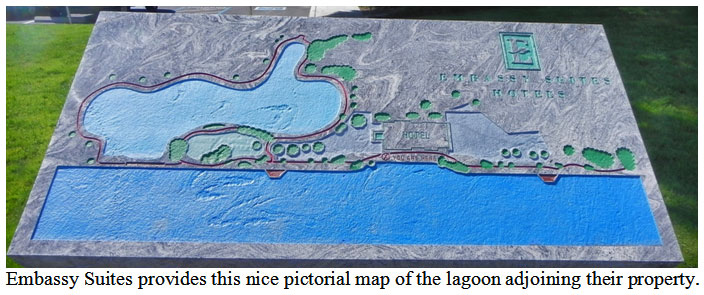
There is a positive caveat, however: if you are staying in one of the Burlingame hotels, you can take a walk in the morning and see two-dozen species and more. At low tide, especially in fall and winter, a shorebird bonanza will open up to you, with no obstructions keeping you from clear viewing. In particular, the Embassy Suites has done a nice job of incorporating its adjoining lagoon into a landscaping scheme that makes for a pleasant walk, and provides the birds with some habitat. Also, if you enjoy plane-spotting as well as bird-watching, this is the place for you (actually Millbrae may be better for that too, but it gets too noisy there to hear birds).
In the zone defined by Airport Boulevard to the east and US 101 to the west, there are four main bodies of water. San Francisco Bay is one of them, and the most obvious. In the southeastern corner lies Anza Lagoon (misidentified on many computer maps as Robert Wooley State Park - it is named Robert Wooley Park, but it is under local (not state) jurisdiction, and that name is not a common moniker for it; birders refer to it as Anza Lagoon). Closer to US 101, Burlingame Lagoon is on the south, and Sanchez Marsh to the north. Both of these sites have significant noise interference from the highway.
Along the Bay itself, there is a parking lot with space for about ten vehicles, that abuts onto the paved bay trail. You can also park at Bayfront Park, from which you can access both the Bay trail and Sanchez Marsh. Birding along the Bay trail is simple and obvious; checking a tide table in spring or fall will help you make a wise decision about when to visit this site, as the shorebirds are more in evident when mudflats are present at low tide. If you walk south towards the Embassy Suites, you encounter more trees and the larger Anza lagoon there. The walkway is paved around the lagoon, and there are flocks of Chestnut-backed Chickadees and Bushtits that could attract migrants to this spot.
Access to the Marsh and Burlingame Lagoon requires visiting the backs of corporate buildings, specifically Bay Park Plaza buildings at 555 and 577 Airport Boulevard. In both cases, there are signs directing you to the limited number of public spaces in their lots. Birding Burlingame Lagoon tends to be either feast or famine. There are power poles in the lagoon that attract birds of prey, cormorants, and wading birds. There are also waterfowl using the lagoon in winter, in addition to some common birds using the shrubbery, such as Bushtit, American Robin, and California Towhee. The highway noise, though, is distracting for passerine birding.
Sanchez Marsh stands as the best site within the Burlingame Bayfront. Like its neighbor, the Burlingame Lagoon, Sanchez Marsh has PG&E towers in it, providing perches for avian predators: an Osprey has worked here for the past few winters, and Great Horned Owls are sometimes observed using these perches by passing motorists on US101. Water birds, including ducks, grebes, and wading birds, have been recorded here. Two unusual birds for the county, and for the bayside particularly, have been noted in recent years: Hooded Merganser and Blue-gray Gnatcatcher. Access to this site requires some determination. There are hike-in locations from Bayside Park, both from near the golf course and from near the playing fields. Do NOT try to bird this site from the shoulder of 101 or the Anza bridge!
Discontiguous with these areas, at the extreme southern tip of Airport Boulevard before it makes a right-hand turn towards Coyote Point, is a paved parking area that hosts a dilapidated fishing area. Because this is a kind of peninsular point, it provides some good bay-watching possibilities, especially in August and September, when ocean-going birds Common Murre and Ashy Storm-Petrel are sometimes seen within the bay. A vacant lot next to the fishing pier creates an edge habitat effect that provides a haven for gulls.
The Burlingame Bayfront should not be your first, or only, choice of where to bird in the county. Aesthetics, cluttered environments, human-made inconveniences and dangers, all conspire to make this site less than ideal for birding. But let one intrepid birder search through the dregs of Burlingame, turning up a great bird, and everyone will come flocking there. When that happens, and more birders come to understand the logic of where to find such gems here, this article will be revised - in tone, and in content!
Brant, Canada Goose, Blue-winged Teal, Cinnamon Teal, Northern Shoveler, Gadwall, American Wigeon, Mallard, Northern Pintail, Green-winged Teal, Canvasback, Ring-necked Duck (unusual her), Greater Scaup, Lesser Scaup, Surf Scoter, Black Scoter (unusual), Bufflehead, Common Goldeneye, Barrow's Goldeneye (rare here), Hooded Merganser (rare at this location), Common Merganser, Ruddy Duck, Red-throated Loon, Pacific Loon (uncommon at this location), Common Loon, Pied-billed Grebe, Horned Grebe, Eared Grebe, Western Grebe, Clark's Grebe, Brandt's Cormorant, Pelagic Cormorant, Double-crested Cormorant, American White Pelican, Brown Pelican, Great Blue Heron, Great Egret, Snowy Egret, Black-crowned Night-Heron, Turkey Vulture, Osprey, White-tailed Kite, Sharp-shinned Hawk, Cooper's Hawk, Red-shouldered Hawk, Red-tailed Hawk, American Kestrel, Merlin, Peregrine Falcon, Ridgway's Rail, American Coot, Black-bellied Plover, Semipalmated Plover, Killdeer, Black-necked Stilt, American Avocet, Spotted Sandpiper, Greater Yellowlegs, Willet, Lesser Yellowlegs, Whimbrel, Long-billed Curlew, Marbled Godwit, Black Turnstone, Sanderling, Western Sandpiper, Least Sandpiper, Dunlin, Short-billed Dowitcher, Long-billed Dowitcher, Short-billed Gull, Ring-billed Gull, Western Gull, California Gull, Herring Gull, Glaucous-winged Gull, Caspian Tern, Forster's Tern, Elegant Tern, Rock Pigeon, Band-tailed Pigeon, Mourning Dove, Eurasian Collared-Dove, Anna's Hummingbird, Allen's Hummingbird, Belted Kingfisher, Acorn Woodpecker, Nuttall's Woodpecker, Northern Flicker, Black Phoebe, Say's Phoebe, Hutton's Vireo, California Scrub-Jay, American Crow, Common Raven, Northern Rough-winged Swallow, Tree Swallow, Violet-green Swallow, Bank Swallow, Barn Swallow, Cliff Swallow, Chestnut-backed Chickadee, Oak Titmouse, Bushtit, Wrentit, Blue-gray Gnatcatcher (rare here), Marsh Wren, Bewick's Wren, Ruby-crowned Kinglet, Red-breasted Nuthatch, Pygmy Nuthatch, Western Bluebird, American Robin, Northern Mockingbird, European Starling, Cedar Waxwing, American Pipit, Orange-crowned Warbler, Yellow-rumped Warbler, Common Yellowthroat, Yellow Warbler, Townsend's Warbler, California Towhee, Spotted Towhee, Fox Sparrow, Savannah Sparrow, Song Sparrow, Lincoln's Sparrow, White-crowned Sparrow, Golden-crowned Sparrow, Dark-eyed Junco, Red-winged Blackbird, Brown-headed Cowbird, Western Meadowlark, Hooded Oriole, Bullock's Oriole, Brewer's Blackbird, House Finch, Purple Finch, Pine Siskin, American Goldfinch, Lesser Goldfinch, House Sparrow
In this guide, "rarities" are defined as those species given an County Abundance Code of 4, 5, or 6.
Greater White-fronted Goose (2012, 2022), White-faced Ibis (2020), Pacific Golden-Plover (2011), Bald Eagle (1999, 2010), Western Kingbird (2013), Palm Warbler (2015-16, 2018, 2022)
From US 101 north, take Anza Boulevard (419A) or Broadway (419B). From US 101 south, take Broadway (419B). Your destination will determine which exit is best for you, and what set of turns to take to get you there. This is a small and relatively simple area to figure out.
Red Markers: Parking Area or Trail Head
Hover mouse pointer over marker, or click marker, for pin identification.
Use + or - buttons to change map zoom. Click & Drag to pan.
There are no fees associated with use of these areas. However, because of the proximity of these locations to San Francisco International Airport, parking restrictions should be assiduously observed. A parking ticket of any size is too great a price to pay for birding Burlingame's bayfront.
Daylight
Your worries about mountain lions, poison oak, ticks, and rattlesnakes need not surface here. The hazards here are man-made and human-generated. There is a treatment plant that prepares materials vile enough that Bayside Park's restrooms have a methane gas alarm posted on them! There are cars everywhere (and they are not looking for birders): be careful when crossing roadways here. Be attentive to parking regulations, as the area is patrolled by officers looking for cars that have been parked overly long.
There are restrooms at Bayside Park. The restroom near Anza Lagoon had no doors on the stalls in the women's room. Post a guard. The bathroom at Bayfront Park is in better shape, has room for two and working sinks. It does, however, have a methane gas warning over its entrance. There are snacks and restaurants inside the hotels and along side streets.
Accessibility information is currently not available for this location.
The City of Burlingame's parks department has jurisdiction over much, but not all, of the area covered in this entry. They can be reached at 650-558-7300.
Currently, there are three hotspots covering this small area. Bayside Park is the one most lacking in data, with only 25 of 48 time quadrants holding data. Sanchez Creek Lagoon has 132 species with data in 46 of 48 quadrants. Anza Lagoon has data in 40 of 48 quadrants, accounting for 103 species. Data is most notably absent for summer. Continue to fill these hotspots with data
The San Francisco Bay Bird Observatory (SFBBO) is conducting a long-range study of gull movements in the Bay Area. California Gulls have been leg-banded with plastic colored bands. If you see any of these gulls, please note the leg and the color of the band; if it is possible to read the number on the band, record that also. This information can be shared directly with Carly at SFBBO (cschacter@sfbbo.org). If the birds also have a metal band, and you can read that number, too, please report that to the National Bird Banding Lab.
Sequoia Audubon Society has led five trips to Burlingame Bayshore area, but none since 1980.
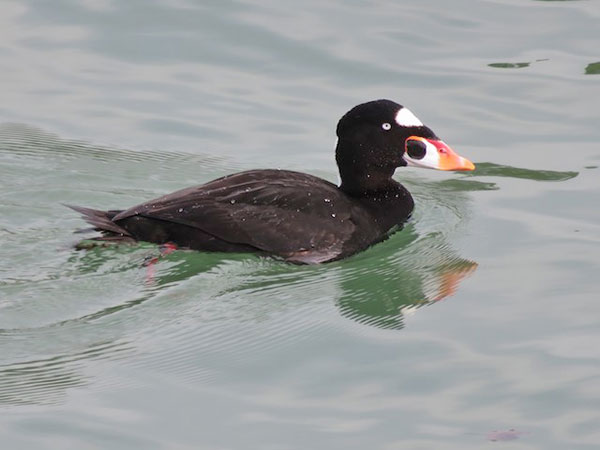
Surf Scoter (Kent Forward, January 2016)
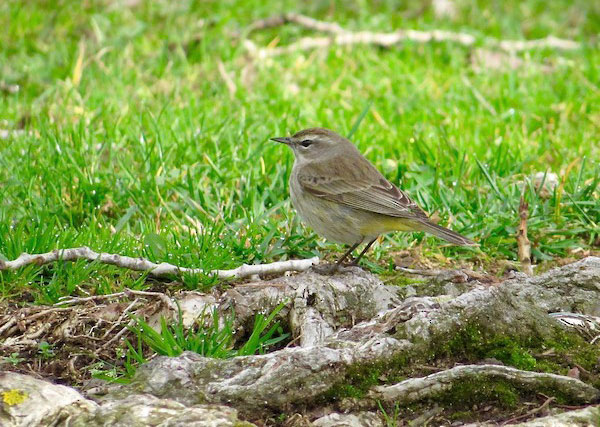
Palm Warbler (Adam Dudley, January 2016)
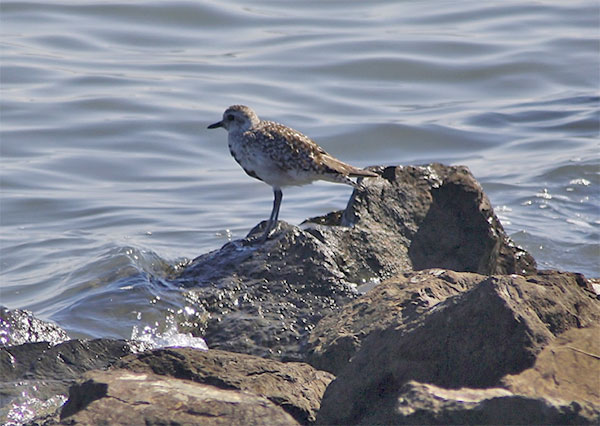
Black-bellied Plover, molting from alternate plumage, Burlingame Bayfront, Bay Trail, August 2011 (Katherine Whyte)
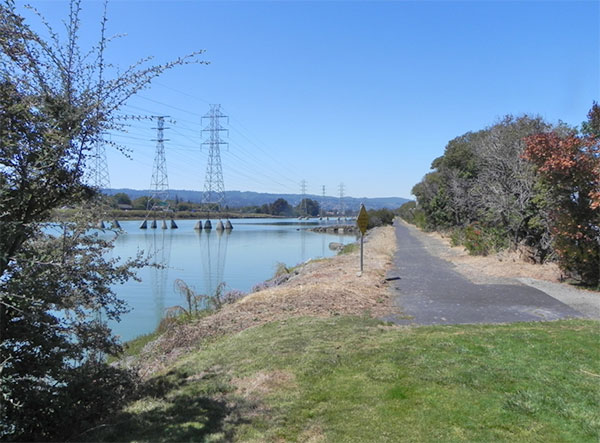
Sanchez Creek Lagoon, looking north. Highway 101 runs along the other side of this lagoon. August 2011 (Jennifer Rycenga)
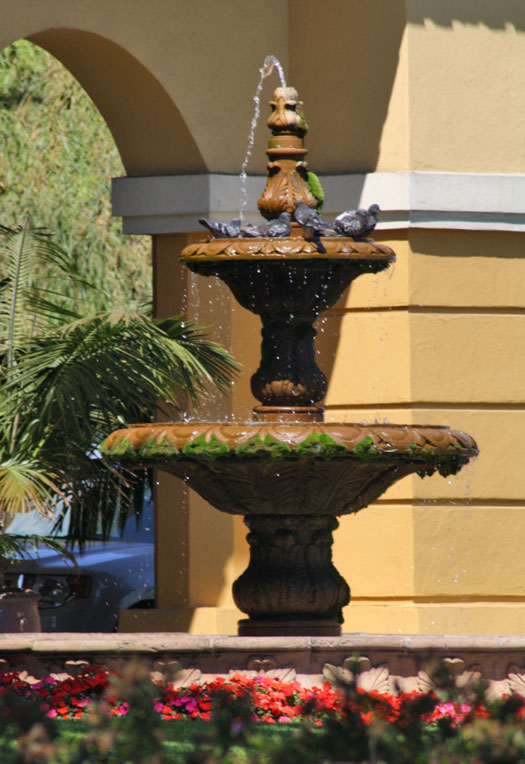
Rock Pigeons enjoying the fountain at Embassy Suites, Burlingame Bayfront, August 2011 (Katherine Whyte)
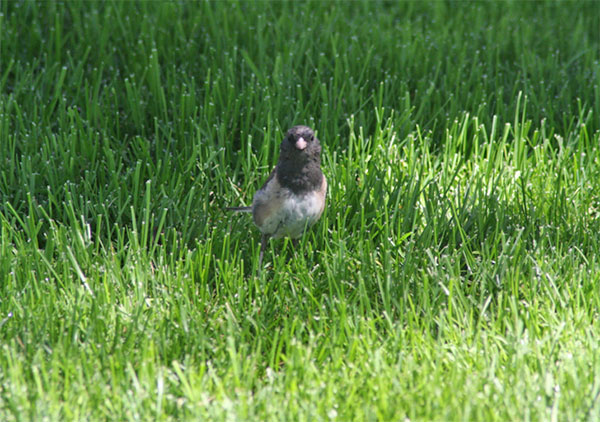
Dark-eyed Junco enjoying the well-watered lawn of the Embassy Suites, Burlingame Bayfront, August 2011 (Katherine Whyte)
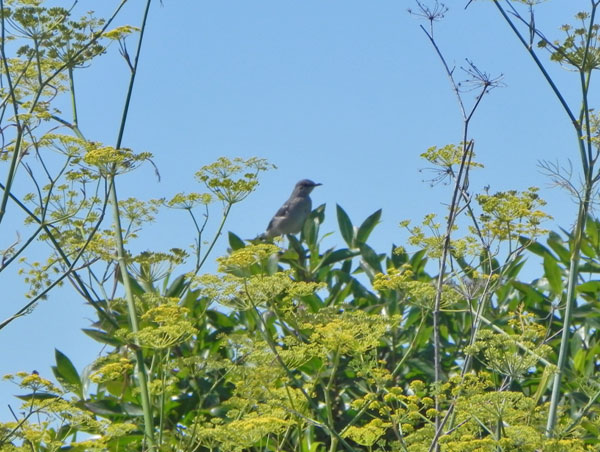
Northern Mockingbird keeping watch near the sweet fennel, Burlingame Bayfront, August 2011 (Jennifer Rycenga)
Author: Jennifer Rycenga, Laurie Graham, and Katherine Whyte
Uploaded:
September 1, 2011
Last Update:
November 14, 2022 12:47pm
All content ©Sequoia Audubon Society and others
No use without written permission
