 Summer
 Fall
Winter

Spring
Summer
Fall
Winter
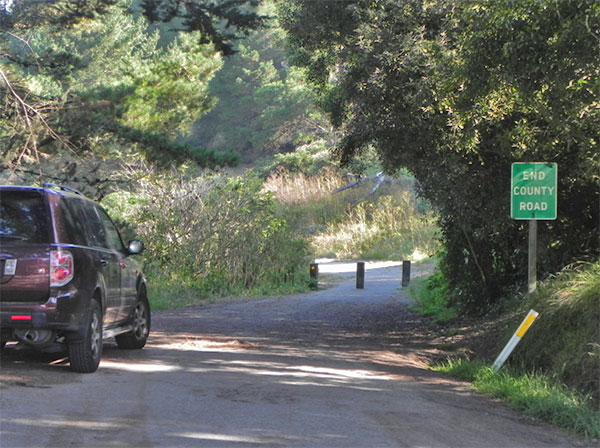
Old San Pedro Mountain Road trail entrance, September 2011 (Jennifer Rycenga)
This park defines the space between the town of Montara and the base of Montara Mountain. The northern boundary is roughly shaped by Martini Creek, and the southern edge by Montara Creek, meaning that the outskirts of this park offer the best opportunities for riparian species and migrant searching. The park is currently in process of changing jurisdiction from Peninsula Open Space Trust to Golden Gate National Recreation Area. Over the next few years there will likely be changes in access and regulations, as well as expansion, upgrading, and interlocking of trail systems between Rancho Corral de Tierra and other contiguous parks. Stay tuned; Sequoia Audubon will attempt to keep this entry updated.
There are three principal accessible areas in Rancho Corral de Tierra, that together form a large triangle, easily walked in a few leisurely hours. These three access points are along the Old San Pedro Mountain road in the southeast corner, the marsh corner at Kanoff Street off of Second Street in the southwest corner, and the border between McNee Ranch State Park and Rancho Corral de Tierra at Martini Creek. Parking is limited at all three locations, but available, especially for the early-morning birder.
The Kanoff Street spot makes a great migrant trap. It features water (Montara Creek), luxurious plantings at the residence on the street, and other habitat edge effect with the chaparral, grasslands and marsh nearby. It is worth parking here and lingering a bit, pishing to bring out drop-in visitors. From this trailhead, you can either proceed east along the Montara Creek riparian zone, or walk along the west end of the dense vegetation on the Farallone Road trail, heading north toward McNee Ranch and Montara Mountain.
Hiking first along the riparian east, walk until you see some riparian to your right, and a fenced schoolyard (Farallone View) up on a hill in front of you (there is an entrance from near the school, too). This section of Montara Creek has good sightlines (though it is crowded with poison oak - beware), and also has clear skies above to see migrating hawks. It lets you out onto a residential street; retrace your steps to continue on the trail.
Continue walking north (the short east spur would take you to Farallone View school grounds). The trail will take you to some grasslands, where you will see a large crossroads between a trail that runs east-west and another that runs north-south. There is an unsecured bench here, as well as bags for doggie refuse. Turn right (east) here. You will notice a change with more conifers, adding birds like Pygmy Nuthatch and Hairy Woodpecker to the birds associated with the open fields and chaparral that have dominated the avifauna so far. This trail ends at what remains of the paved old San Pedro Mountain Road.
This section of the trail, as mentioned, is still largely paved (watch out for cyclists on both paved and unpaved trails in this park). It is officially described as the corner of San Pedro Mountain Road and Corona Street, with a few parking spaces available if you wish to begin your walk here. The first hundred yards of this trail have a real mix of habitats. Band-tailed Pigeons replace the Eurasian Collard-Doves one most likely saw down on Kanoff Street! The trail/road winds down to the northwest, and the expanse of this land opens up: the ocean is rarely out of view, but between you and it lies agricultural land, open woodlands, coastal prairie, grasslands, and chaparral. Plus, Montara Mountain looms before you, in all its beauty and fog-shrouded moodiness. There are few places in San Mateo county that so splendidly exemplify the wonders of our geography.
As you leave the woodlands behind and enter into more open country, be on the lookout for raptors of all kinds. The mix of open habitats especially attracts them. Flocks of crowned sparrows work the edges of the pavement and gravel: search them for White-throated Sparrows in winter.
As you near the working farm at the western edge of this territory, you enter into a grove of eucalyptus trees that is much-prized by migrants. Because this is the most time-consuming and least convenient of the entrances to Rancho Corral de Tierra, it receives correspondingly less birding attention. Your authors feel it would repay regular attention. This entrance is accessible by parking at the McNee Ranch parking lot at the base of Devil's Slide and walking up the pedestrian-only entrance road about half-a-mile to the bridge that crosses Martini Creek just past a ranger's residence.
To complete the loop back to Kanoff Street, retrace your steps along the paved San Pedro Road, then turn right and walk to a trail by a farm field fence. This is the Farallone Road trail. From here, you will walk past a marsh area, currently off limits, that is being restored/recreated. It is not fully functional at this time (September 2011), and in fact appears to be dry. As information about this project becomes available, Sequoia Audubon will update this site.
Rancho Corral de Tierra is much larger than this Montara section, stretching through much of the open space of Moss Beach and all the way to El Granada (see map below). When and if access to these areas becomes possible, Sequoia Audubon will attempt to inform our members and visitors. Likewise, throughout the area, there are additional trails other than the main system described in this article. In other words, there are plenty of opportunities to explore. As the area moves under the jurisdiction of Golden Gate National Recreation Area, hikers and birtwatchers are unlikely to be greatly affected. However, there are some local tensions exacerbated by this change, notably in terms of leashed dog-walking. The local practice has been to let dogs run free here with owner supervision. Be forewarned that regardless of your own politics in the matter of off-leash dogs, birdwatchers are perceived as partisan players in the battle, and, furthermore, that off-leash dogs are often around in the park, with varying levels of obedience and response to their humans' commands. The canines' droppings do not always make it into the bags supplied by trail monitors, either - it is best to look down at times when walking here!
Pacific Loon, Common Loon, Western Grebe, Brown Pelican, Double-crested Cormorant, Brandt's Cormorant, Pelagic Cormorant, Great Blue Heron, Surf Scoter, Osprey, White-tailed Kite, Sharp-shinned Hawk, Cooper's Hawk, Red-shouldered Hawk, Red-tailed Hawk, American Kestrel, Merlin, Peregrine Falcon, California Quail, Black Oystercatcher, Killdeer, Greater Yellowlegs, Wilson's Snipe (rare here), Heermann's Gull, Short-billed Gull, Glaucous-winged Gull, Western Gull, Common Murre, Pigeon Guillemot, Rock Pigeon, Band-tailed Pigeon, Eurasian Collared-Dove, Mourning Dove, Barn Owl, Great Horned Owl, White-throated Swift, Vaux's Swift (rare here), Anna's Hummingbird, Allen's Hummingbird, Downy Woodpecker, Hairy Woodpecker, Northern Flicker, Olive-sided Flycatcher, Black Phoebe, Say's Phoebe, Western Kingbird, Barn Swallow, Cliff Swallow, Golden-crowned Kinglet, Cedar Waxwing, Bewick's Wren, House Wren, Marsh Wren, Northern Mockingbird, California Thrasher, Swainson's Thrush, American Robin, Wrentit, Blue-gray Gnatcatcher, Bushtit, Chestnut-backed Chickadee, Pygmy Nuthatch, Loggerhead Shrike, Western Scrub-Jay, American Crow, Common Raven, European Starling, House Sparrow, Hutton's Vireo, Purple Finch, House Finch, Red Crossbill, Pine Siskin, American Goldfinch, Lesser Goldfinch, Western Tanager, Orange-crowned Warbler, Nashville Warbler, Yellow Warbler, Yellow-rumped Warbler, Townsend's Warbler, Hermit Warbler, Common Yellowthroat, Wilson's Warbler, Spotted Towhee, California Towhee, Savannah Sparrow, Grasshopper Sparrow, Fox Sparrow, Song Sparrow, Lincoln's Sparrow, White-crowned Sparrow, Golden-crowned Sparrow, Dark-eyed Junco, Red-winged Blackbird, Tricolored Blackbird, Western Meadowlark, Brewer's Blackbird, Brown-headed Cowbird, Hooded Oriole, House Sparrow
In this guide, "rarities" are defined as those species given an County Abundance Code of 4, 5, or 6.
Cackling Goose (fly-over flocks), Snow Goose (2016), Greater White-fronted Goose (2016, 2022, fly-overs), White-faced Ibis (2022, fly-over), Golden Eagle (2017, evidence of breeding possible), Bald Eagle (2022), Tropical Kingbird (2020), Western Kingbird (2019, 2021), Purple Martin (2017), Rock Wren (2015), Gray Catbird (2019), Sage Thrasher (in adjoining neighborhood, 2002), Brewer's Sparrow (2020), Clay-colored Sparrow (2019), Chipping Sparrow (2018, 2021), White-throated Sparrow (2013), Prothonotary Warbler (2021, adjacent El Granada neighborhood), Black-and-White Warbler (2019), Blue Grosbeak (2019), Bobolink (2019)
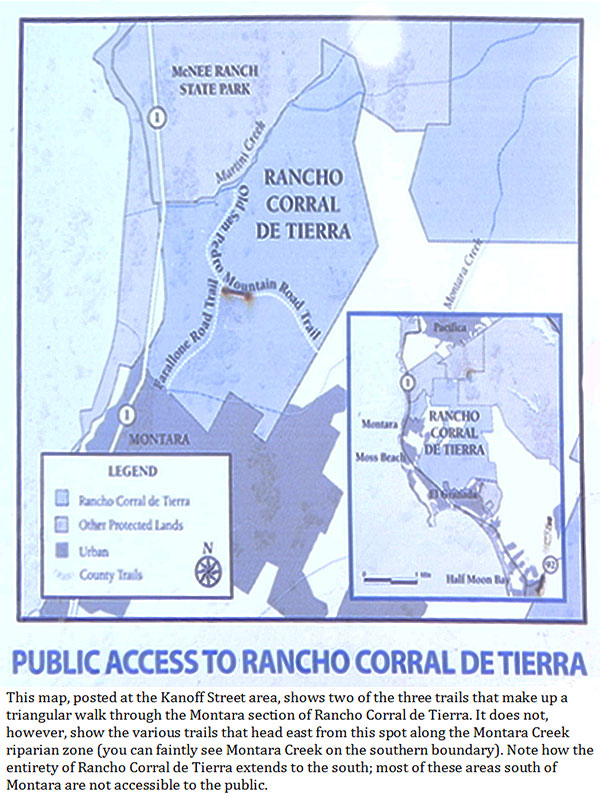
Montara is located along SR1, north of Moss Beach and Half Moon Bay. To reach the Kanoff Street parking area, turn east off of SR1 on Second Street, then left onto Kanoff, which is very short: park on the dirt scrape at the end. To reach the corner of Corona and San Pedro Mountain Road is tricky, requiring many turns in a short span of time. Here is one set of directions from SR1: Go east off of SR1 on Second Street. Turn right on Farallone Avenue, then your next left on Third Street. Third Street becomes Kanoff Street (in a later incarnation!), from which you turn left on Tamarind Street. Take a slight right onto Edison, then your second left onto Birch. Birch becomes San Pedro Mountain Road, although it still twists and turns a bit. You'll see the intersection with Corona, and the sign saying "End of County Road." There are some spaces before the locked gate here, on either side of the road. To reach the Martini Creek section of Rancho Corral de Tierra, park at the lot off of SR1 just before the hill over Devil's Slide begins, for McNee State Ranch. Walk up the entrance road, until you reach the bridge over Martini Creek and enter Rancho Corral de Tierra.
Red Markers: Parking Area or Trail Head
Hover mouse pointer over marker, or click marker, for pin identification.
Use + or - buttons to change map zoom. Click & Drag to pan.
Currently, no fees are connected with this area.
There are no posted hours.
The hazards here are the usual - poison oak is omnipresent near trail edges in woods and riparian; ticks are likely because of the grassy habitat; mountain lions are a remote possibility (the more remote you get, the more likely the possibility); rattlesnakes, too, are a distant factor to keep in mind. The most likely things to startle and worry you, though, are bicyclists and dogs. When near the working farms adjoining McNee State Ranch, do not interfere with the farmers and their work; do not ask to pet their farm animals.
There are restrooms at Montara State Beach, on the west side of SR1. There are no other facilities in Rancho Corral de Tierra itself, aside from a few benches, garbage cans, and dog bag dispensaries. You are close to stores and restaurants in Montara, Moss Beach, and, over the slide, in Pacifica.
Accessibility information is currently not available for this location.
GGNRA's website has basic information, including requesting visitors to call 911 or (650) 363-4911 in an emergency.
Currently there are three hotspots in eBird associated with this area, labeled "Rancho Corral de Tierra-Kanoff Area," "Rancho Corral de Tierra--San Pedro Mtn. Rd.," and "Montara-North Meadow." Together they have data in thirty-one of forty-eight time quadrants, representing 101 species. When doing a full loop, the decision about when to use each hotspot is somewhat subjective.
Because of the switch in jurisdiction, there are currently numerous forms of evaluation of this park's resources. Stay alert for news of citizen-science projects and trail building plans here at Rancho Corral de Tierra.
Sequoia Audubon Society sponsored one field trip here in 2013, soon after the signage and trail system were opened.
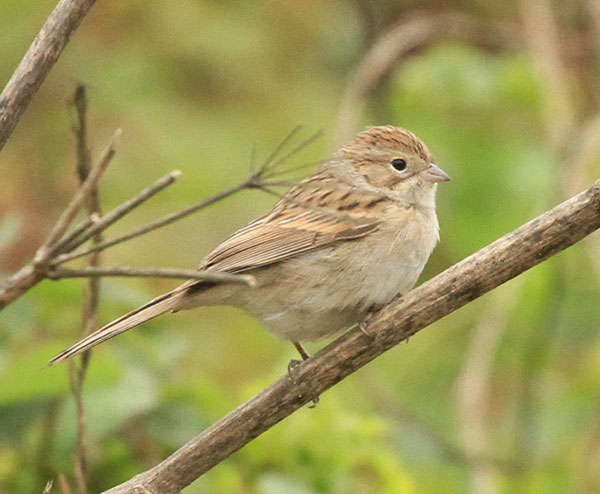
Brewer's Sparrow, in the Moss Beach section of Rancho Corral de Tierra, August 2020 (Kent Forward)
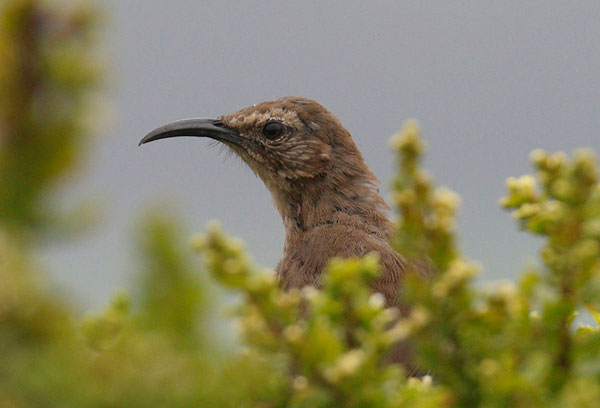
California Thrasher (Donna Pomeroy, September 2019)
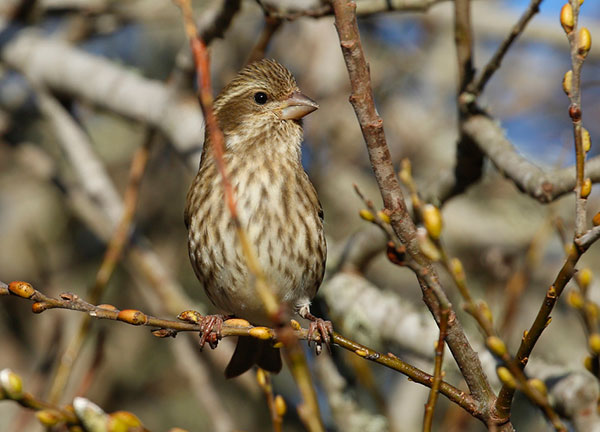
Female Purple Finch (Donna Pomeroy, January 2020)
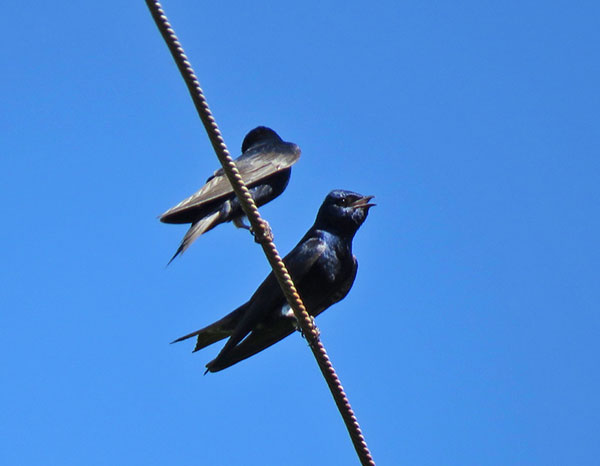
Purple Martins (Leslie Flint, June 2019)
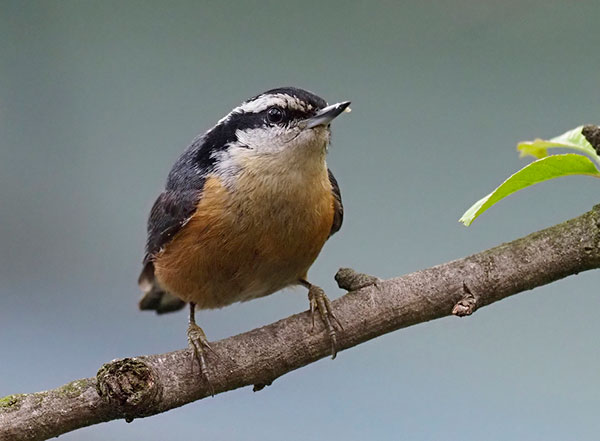
Red-breasted Nuthatch (Donna Pomeroy, April 2020)
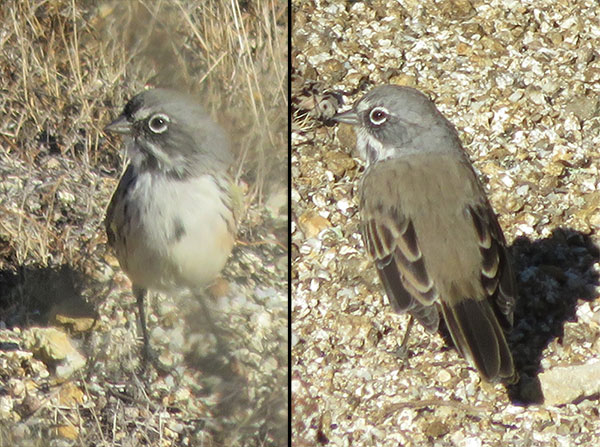
Apparently breeding Bell's Sparrow, discovered by Dominik Mosur in summer 2018, at the border of San Pedro Valley County Park, McNee Ranch State Park, and Rancho Corral di Tierra of GGNRA, on Montara Mountain (Kent Forward, August 2018)
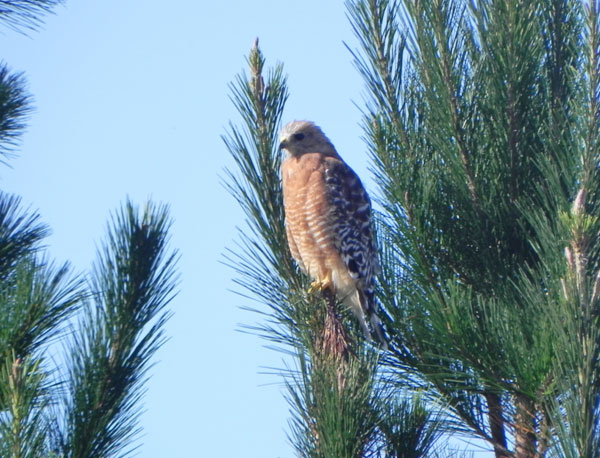
Red-shouldered Hawk inspects Rancho Corral de Tierra, September 2011 (Jennifer Rycenga)
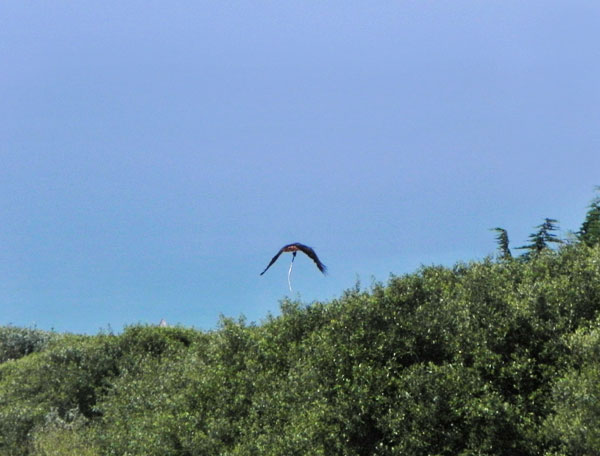
Red-tailed Hawk takes off with a captured snake in its talons. Rancho Corral de Tierra, September 2011 (Jennifer Rycenga)
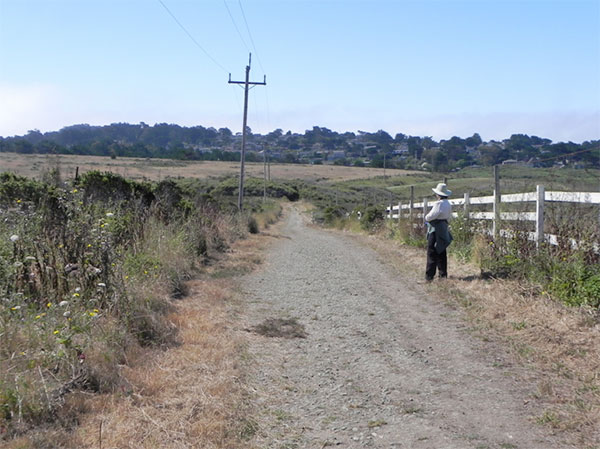
Birder and long-time Sequoia Audubon volunteer Sue Cossins inspects the Farallone Road Trail at Rancho Corral de Tierra, September 2011 (Jennifer Rycenga)
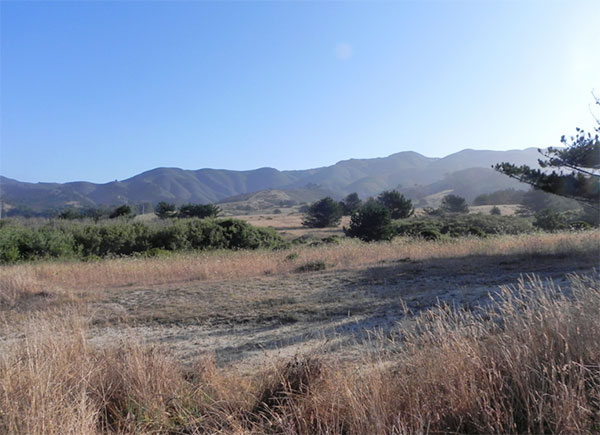
The many habitats of Rancho Corral de Tierra, looking north to Montara Mountain, September 2011 (Jennifer Rycenga)
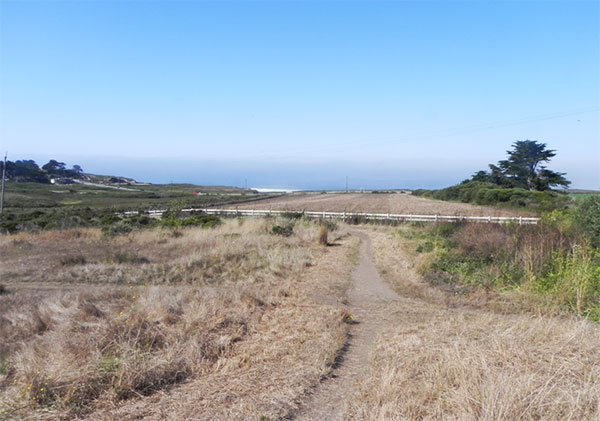
The many habitats of Rancho Corral de Tierra, looking west to the agricultural fields and the ocean. This is where the Farallone Road trail breaks off from the San Pedro Mountain Road trail. September 2011 (Jennifer Rycenga)
Author: Jennifer Rycenga, with substantial and necessary help from Alvaro Jaramillo, Katherine Whyte, Nelle Lyons, Sue Cossins, Edwin Geer, J.C. Shaver
Uploaded:
September 3, 2011
Last Update:
October 11, 2022 8:44pm
All content ©Sequoia Audubon Society and others
No use without written permission
