 Summer
 Fall
Winter

Spring
Summer
Fall
Winter
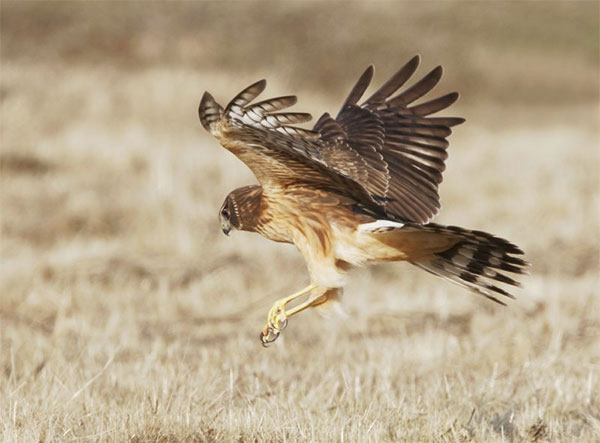
Northern Harrier female, Wavecrest, Fall 2007 (Tom Grey)
The Wavecrest area in the City of Half Moon Bay is a common destination for birders, especially for those looking for winter raptors along the San Mateo County Coast. Wavecrest is essentially the undeveloped area of about 450 acres between the Ocean Colony and Arleta Park neighborhoods, bordered by Redondo Beach Road on the south and Seymour Street on the north, and extending east-west between Highway 1 and the bluffs overlooking the Pacific Ocean. The habitats within the Wavecrest property are primarily annual grasslands and seasonal wetlands, with coastal scrub consisting of coyote brush scattered throughout, and riparian habitat along an arroyo near the south end of the area. Scattered trees include willows in the riparian area, eucalyptus groves and cypress wind rows. The City of Half Moon Bay Little League fields (aka Smith Field) occupy an area near the center of Wavecrest at the west end of Wavecrest Road. Portions of the area nearest Highway 1 (northeast of the ballfields) are cultivated for hay production each year, but much of the western portion of the area (northwest and south of the ballfields) consists of native habitats in an area that has never been tilled for agriculture. The runways of an old model airplane field in the area west of the ballfields are accessed by a dirt road originating near Smith Field and are a well-used spot from which to view raptors soaring or patrolling in the area. Additional blufftop open space north of Seymour Street and west of Railroad Avenue is part of Blufftop Park, accessible from the end of Poplar Avenue, with habitats and birds similar to Wavecrest (see separate entry for "Blufftop Park and Coastal Trail" in this guide)
To a raptor flying along the coast Wavecrest looks like a veritable smorgasbord. This area has everything a hawk could want: mature trees that provide perching and roosting sites, grasslands that provide foraging habitat, riparian corridors and coyote brush in fields that provide cover, and an abundance of voles that serve as a source of prey. Sequoia Audubon Society considers Wavecrest to be the most important habitat for wintering raptors in San Mateo County, as it supports a greater diversity of raptors and number of individuals than any other site. Common winter raptor species include Red-tailed Hawk, Red-shouldered Hawk, Northern Harrier, White-tailed Kite and American Kestrel, but many other raptor species are present. Wavecrest field trips in winter, conducted by Sequoia Audubon, are among the most popular field trips sponsored by the organization each year, with many people interested in seeing the winter raptors, including the signature species for this area: Short-eared Owl.
Wavecrest was a focus of development wars for years, and Sequoia Audubon Society was instrumental in publicizing the valuable natural resources of this area in communications with regulatory agencies for over 20 years. In the late 1980s, Ocean Colony Partners proposed a massive 750-home, two golf course development at Wavecrest. After a great deal of controversy, the voters rejected the development in a 1995 citywide advisory measure by a 2:1 margin. However, in 1999, the City approved the Wavecrest Village project for 217 homes, commercial and retail space, a new middle school and a Boys and Girls Club. This approval by the City was appealed to the California Coastal Commission, and Sequoia provided considerable written comment during review of this appeal. Finally, on the morning of August 16, 2007, the Peninsula Open Space Trust (POST) announced that they had reached agreement on the terms for purchase of the portion of the Wavecrest property that was slated for development so that it could be protected into perpetuity as open space. An area totaling 206 acres out of the Wavecrest area was officially purchased by POST in January of 2008.
Wavecrest is home to the federally-listed threatened California red-legged frog, documented at the site by a California Academy of Sciences biologist in 2004, and, according to the U.S. Fish and Wildlife Service, the Wavecrest area serves as habitat for the federally-listed endangered San Francisco garter snake. In addition to the many raptor species, bird species of concern found here include nesting pairs of San Francisco Common Yellowthroat in the wetlands south of the baseball fields, and Loggerhead Shrikes, which often winter.Wavecrest receives extensive winter use by Red-tailed Hawk, Red-shouldered Hawk, White-tailed Kite, Northern Harrier and American Kestrel; Sharp-shinned Hawk, Cooper's Hawk, Great Horned Owl, Barn Owl and Short-eared Owl are also present. Numbers of White-tailed Kite, Northern Harrier and Red-tailed Hawk can be impressive at Wavecrest in the winter. These species are easily seen even by the casual observer from Highway 1 in winter. Over 20 Red-tailed Hawks have been observed on short visits to the site during CBCs and by other observers at various times in winter. Barn owls are common in winter in the vicinity of Wavecrest Road, and are routinely seen perched on telephone wires along both Wavecrest Road and portions of Highway 1 near Cameron's Pub and Inn.
Populations of the California vole at Wavecrest are cyclical, peaking every three or four years. In September of 2007, a peak in the vole population resulted in an explosion in the numbers of White-tailed Kite. The White-tailed Kite is a gregarious species that sometimes forms large roosts during late fall and winter, especially in California and Texas. One evening, Gary Deghi counted 65 White-tailed Kites while standing in one spot west of the ballfields, and when another 35 flew from the next field over the row of cypress trees it was clear that the number of kites exceeded 100. On the same evening, Alvaro Jaramillo counted 15 Barn Owls in a nearby Wavecrest field just to the north.
Wavecrest is the most important wintering site for Short-eared Owl in San Mateo County. As many as eight individuals of this state-designated species of concern have been observed at one time from the area of the model airplane runways, but the number of wintering individuals usually ranges between one and five. They can be present anytime from October to March. This species has been missed on the Crystal Springs CBC only twice in the last 25 years. Most years, Sequoia runs a field trip to Wavecrest in January, commencing late in the day, so we have a chance to see the Short-eared Owls at dusk. The area of the model airplane runways is a good place from which to view the fields in all directions searching for Short-eared Owl at dusk.
Many rare raptor species have also occurred. Ferruginous Hawk, Merlin and Osprey are observed almost every year. Rough-legged Hawk is found rarely, but six were counted on the CBC in 1988. Both Swainson's Hawk and Prairie Falcon were observed in the fall of 2010, with the Swainson's Hawks often visible from Highway 1 perched near the white house along Highway 1 north of Cameron's. A Swainson's Hawk that wintered in 1998-1999 was the first documented record of overwintering Swainson's Hawk ever in coastal Northern California. Other rare species of raptor to look for include Broad-winged Hawk, Golden Eagle and Peregrine Falcon.
From the ballfields raptors are often in view in winter; American Kestrels often perch on the backstop or fence for the ballfields, and Say's Phoebe or Loggerhead Shrike can sometimes be found in this area. Check for shorebirds on the outfield grass as flocks of Black-bellied Plovers have included Pacific Golden Plovers among them. Common grassland species such as Black Phoebe, Red-winged Blackbird, Western Meadowlark and Savannah Sparrow are to be found throughout, but during the spring and early summer look for Grasshopper Sparrow which breeds here some years (especially in the area of the model airplane runways). Seasonal wetlands occur throughout, and Swamp Sparrows are found some years (look especially in the wet area of tall grass at the east end of the cypress wind row north of the ballfields). The area south of Wavecrest Road once contained so much water that extensive marshes there supported Virginia Rails which could be heard calling on winter mornings, but the source of the water was from the nursery along Highway 1 which has been closed for many years now. Swamp Sparrow was once almost a given on the CBC in this area, but they are more difficult to find now. However, the trees in this area have been known to harbor roosting Barn Owls, so be on the lookout. Walking along the wind rows of cypress could produce White-crowned, Song or Fox Sparrows, Hermit Thrush and, in some years, Red-breasted Sapsucker. These trees are not known as a particularly productive migrant trap, but a Dusky Flycatcher found here in December of 1996 was a great find. Search the eucalyptus grove for roosting Great Horned Owl and passerines such as Pacific Wren, large numbers of Anna's Hummingbirds, sparrows, and many Yellow-rumped Warblers. The riparian area along the arroyo is a good place to look for Bewick's Wren, Allen's Hummingbird (after late January), Northern Flicker, and species such as Wilson's Warbler and Swainson's Thrush in spring. A Hooded Warbler found in the riparian habitat here in November of 2008 was a good find.
Ecologically important wetlands are scattered throughout the area. These wetlands provide winter feeding areas for waterbirds such as Great Blue Heron and Great Egret and shorebirds such as Whimbrel, Marbled Godwit and Wilson's Snipe. During rainy winters when water persists in ponds until April or May, these wetlands provide stopping points for shorebirds on their northward migration such as Black-bellied Plover, Western Sandpiper, Dunlin, Long-billed Curlew or even the uncommon Red Knot. Wetland ponds along Redondo Beach Road have been known to harbor Red-necked and, in some years, even Red Phalaropes during migration.
Rock Sandpiper is sometimes found on the rocks below the end of Redondo Beach Road, mixed in with flocks of Black Turnstone and Surfbird. A Black Oystercatcher can usually be found here as well. Marbled and even Ancient Murrelets are at times found just offshore in winter along with flocks including Surf Scoter, Red-throated Loon, Western Grebe, all three cormorants and all the wintering gulls, including an occasional Thayer's.
Two main points of access can be used to access the Wavecrest area. The most popular access point is at the end of Wavecrest Road. Turn west off of Highway 1 at Wavecrest Road, 1.5 miles south of the intersection of Highways 1 and 92. Cameron's Pub and Inn is on the corner of Wavecrest Road; Cameron has been a supporter of Sequoia Audubon. Park at the end of Wavecrest Road in the dirt parking lot for Smith Field. From here you can take trails around the Wavecrest area going clockwise or counterclockwise. To take the counterclockwise route take the trail north past the ballfields and toward the cypress wind rows and eucalyptus grove. The area on your right is conservation land purchased and managed by POST; the area on the left remains in private ownership but is accessible. In winter, the raptor species are common in the fields in either direction. Continue north to the cypress trees or the eucalyptus grove, or both, before walking west out to the ocean bluff. The cypress usually support roosting hawks and kites, and sparrows and other passerines can be found within the trees. Check wet areas of tall grass for Swamp Sparrows. Search the eucalyptus grove for roosting Great Horned Owl, sparrows, warblers and other passerines. In the late '80s this eucalyptus grove supported a monarch butterfly overwintering site. The field between the cypress wind rows is also conservation land owned and managed by POST; brushy areas in this field are prime habitat for sparrow flocks, and a Lincoln's can usually be found.
Once at the ocean bluff scan for winter gulls, waterbirds and shorebirds on the beach or within the surf, or maybe even a pelagic species offshore. Walking south along the bluff, one can cut back on a trail towards the ballfields, stopping at the old model airplane runways to scan for raptors. This is a good place to scan for Short-eared Owl at dusk, but be patient, sometimes they don't come out until it is almost dark. Sometimes a Short-eared Owl can be flushed during the day when walking across the field; they hide during the day in areas of tall grass and coyote brush. The area near the blufftop trail here harbored a Chestnut-collared Longspur that was seen by many observers during the winter of 1999-2000. One can also proceed further south toward the arroyo, and return to the parking area by walking east along the arroyo and following the trail north back toward the ballfields. The area southeast of the arroyo should be checked as there are usually Red-shouldered Hawks and White-tailed Kites in this area. To cover this area in a clockwise fashion, walk south from the Smith Field parking lot toward the arroyo and do this in reverse.
An alternate access point is at the end of Redondo Beach Road. Redondo Beach Road is approximately 0.4 miles south of Wavecrest Road; if you see the Ocean Colony community or the golf course on your right you are too far south. Proceed west on Redondo Beach Road; check ponds along the road for phalaropes in migration. The thicket of coyote brush and California blackberries surrounded by eucalyptus and Monterey pine on the north side of the road opposite the Ocean Colony corporation yard has had Yellow-breasted Chat in spring. A Thick-billed Kingbird spent three winters (1998-2000) between this area within Wavecrest and adjacent portions of the Ocean Colony community, including the area of the corporation yard.
Park in the dirt lot at the end of Redondo Beach Road. Rock Sandpipers are seen on the rocks below the end of the road during some winters. Note two paved trails running to the south; the one on the right is the driveway to the private residence, but the one on the left is the coastal trail and accessible to pedestrians. The house is private property, but a birder could take the coastal trail and view the rocky shore from the south side of the house and perhaps have a better shot at observing Rock Sandpiper (when present Rock Sandpiper is best seen from the 18th green or fairway on the golf course south of the house, but this area is private property and essentially off-limits unless you want to pay the green fees to play a round of golf). From the parking lot, walk north on the trail to the arroyo and proceed east; eventually you will come to the north-south trail that will allow access across the arroyo where you can access the field with the model airplane runways west of the ballfields.
Brant, Canada Goose, Cinnamon Teal, Northern Shoveler, American Wigeon, Mallard, Northern Pintail, Green-winged Teal, Ring-necked Duck, Greater Scaup, Lesser Scaup, Surf Scoter, Bufflehead, Common Goldeneye, Hooded Merganser, Red-breasted Merganser, California Quail, Red-throated Loon, Pacific Loon, Common Loon, Horned Grebe (uncommon at this location), Eared Grebe (uncommon at this location), Western Grebe, Clark's Grebe, Northern Fulmar, Sooty Shearwater, Black-vented Shearwater, Brandt's Cormorant, Double-crested Cormorant, Pelagic Cormorant, Brown Pelican, Great Blue Heron, Great Egret, Snowy Egret, Green Heron (rare at this location), Turkey Vulture, Osprey, White-tailed Kite, Northern Harrier, Sharp-shinned Hawk, Cooper's Hawk, Bald Eagle (unusual), Red-shouldered Hawk, Red-tailed Hawk, American Kestrel, Peregrine Falcon, American Coot, Black-bellied Plover, Semipalmated Plover, Killdeer, Black Oystercatcher, Wandering Tattler, Greater Yellowlegs, Willet, Whimbrel, Long-billed Curlew, Marbled Godwit, Black Turnstone, Red Knot (unusual), Surfbird, Sanderling, Western Sandpiper, Least Sandpiper, Short-billed Dowitcher, Long-billed Dowitcher, Wilson's Snipe, Red-necked Phalarope, Red Phalarope, Bonaparte's Gull, Heermann's Gull, Short-billed Gull, Ring-billed Gull (rare at this location), Western Gull, California Gull, Herring Gull, Glaucous-winged Gull, Caspian Tern, Elegant Tern, Pomarine Jaeger, Common Murre, Pigeon Guillemot, Marbled Murrelet, Rhinoceros Auklet (rare at this location), Band-tailed Pigeon, Mourning Dove, Rock Pigeon, Eurasian Collared-Dove, White-throated Swift, Barn Owl, Great Horned Owl, Anna's Hummingbird, Allen's Hummingbird, Rufous Hummingbird, Belted Kingfisher, Red-breasted Sapsucker (uncommon migrant), Nuttall's Woodpecker (uncommon at this location), Downy Woodpecker, Hairy Woodpecker, Northern Flicker, Olive-sided Flycatcher (migrant), Pacific-slope Flycatcher, Black Phoebe, Say's Phoebe, Hutton's Vireo, Warbling Vireo, Loggerhead Shrike, California Scrub-Jay, Steller's Jay, American Crow, Common Raven, Northern Rough-winged Swallow, Tree Swallow, Violet-green Swallow, Bank Swallow, Cliff Swallow, Barn Swallow, Chestnut-backed Chickadee, Bushtit, Pygmy Nuthatch, Red-breasted Nuthatch, Brown Creeper, Blue-gray Gnatcatcher, Bewick's Wren, House Wren (uncommon), Pacific Wren, Marsh Wren, Golden-crowned Kinglet, Ruby-crowned Kinglet, Wrentit, American Pipit, Western Bluebird, Swainson's Thrush (irregular, summer), Hermit Thrush, American Robin, Varied Thrush (irruptive years), Northern Mockingbird (uncommon), European Starling, Cedar Waxwing, Orange-crowned Warbler, Common Yellowthroat, Yellow Warbler, Yellow-rumped Warbler, Townsend's Warbler, Wilson's Warbler, Spotted Towhee, California Towhee, Savannah Sparrow, Grasshopper Sparrow (irruptive years, summer), Song Sparrow, Fox Sparrow, Lincoln's Sparrow, White-crowned Sparrow, Golden-crowned Sparrow, Dark-eyed Junco, Western Tanager (migrant), Black-headed Grosbeak (migrant), Red-winged Blackbird, Tricolored Blackbird (fall-winter), Western Meadowlark, Brewer's Blackbird, Brown-headed Cowbird, Hooded Oriole, Bullock's Oriole (migrant), Purple Finch, House Finch, Red Crossbill (rare, irruptive), Lesser Goldfinch, American Goldfinch, Pine Siskin, House Sparrow,
In this guide, "rarities" are defined as those species given an County Abundance Code of 4, 5, or 6.
Snow Goose (2014, 2018, by Cameron's Inn), Ross's Goose, Greater White-fronted Goose (2012, 2019), Cackling Goose (2012, 2019), White-winged Scoter, Black Scoter, Blue-footed Booby (2013), White-faced Ibis, Bald Eagle (2017), Broad-winged Hawk, Ferruginous Hawk (2019), Rough-legged Hawk (2018, 2021), Swainson's Hawk (2010, 2012), Prairie Falcon (2007, 2010), Merlin, Golden Eagle, Pacific Golden-Plover, Pectoral Sandpiper, Rock Sandpiper, Black-legged Kittiwake, Iceland Gull thayeri, Glaucous Gull, Common Tern (2015), Short-tailed Shearwater (2013), Cattle Egret (1996), Cassin's Auklet (2014, close to shore in a flock feeding frenzy), Tufted Puffin, Horned Puffin, Short-eared Owl (most winters), Lesser Nighthawk, Dusky Flycatcher, Tropical Kingbird, Thick-billed Kingbird, Western Kingbird (2007, 2009, 2017), Scissor-tailed Flycatcher (along golf course, 2014), Horned Lark (1976, 1977, 1996), Sedge Wren (2008), Sage Thrasher, Red-throated Pipit, Black-and-white Warbler, Blackpoll Warbler, Palm Warbler (2013), Hooded Warbler, Yellow-breasted Chat, White-throated Sparrow, Vesper Sparrow, Swamp Sparrow, Clay-colored Sparrow (2012), Snow Bunting, Chestnut-collared Longspur, Lapland Longspur, Bobolink
Wavecrest Road and Redondo Beach Road both originate off of SR1, just south of where Main Street joins SR1 in Half Moon Bay. See description section for directions on what to do once you've parked: this is an extensive area!
Red Markers: Parking Area or Trail Head
Hover mouse pointer over marker, or click marker, for pin identification.
Use + or - buttons to change map zoom. Click & Drag to pan.
There are no fees to use this area.
Wavecrest is considered a day use area. Both Wavecrest Road and Redondo Beach Road are controlled with gates which are closed at night. The gates are locked and the parking areas are closed between the hours of 6:00 p.m. to 7:00 a.m. Pacific Standard Time and 8:00 p.m. to 6:00 a.m. Pacific Daylight Time. No birder who was looking for Short-eared Owls and stayed until after dark has ever been locked in; those locking the gate will generally make sure all cars of recreational users have left before locking the gate. During winter the gate is usually not open early enough to drive to the end of Wavecrest Road to look for Short-eared Owls at dawn. For questions or problems call the Half Moon Bay police at 650-726-8286.
The paved coastal trail extends north and south of Wavecrest, but the Wavecrest area currently represents a gap in this facility. Nevertheless, the informal bluff top dirt trail is a continuation of the coastal trail and receives extensive use from mountain bicycles and hikers, so beware of other recreational users. The cliff at the bluff's edge could have some risk of collapse; take the precaution to not stand right at the loose edges of the cliff. Take precautions to avoid ticks when walking through the grass.
There are no bathrooms at the end of Redondo Beach Road. Porta-potties are present near the parking lot at Smith Field at the end of Wavecrest Road.
Accessibility information is currently not available for this location.
For questions related to access through the gates on either Wavecrest Road or Redondo Beach Road call the Half Moon Bay police at 650-726-8286. For questions about conservation land at Wavecrest call POST at 650-854-7696 or go to their website at www.openspacetrust.org.
Wavecrest is a hotspot in eBird, populated mostly with data from late fall and winter. Point Reyes Bird Observatory (PRBO) maintains a long-running study of Western Gulls; if you see Western Gulls with colored leg bands, note the respective legs and colors, and contact PRBO to forward this data to the researchers on this project.
Nathan Deghi's middle school science fair project in 2004 involved a comparison of three sites, Pillar Point Harbor, Pescadero Marsh and Wavecrest, to see which had the largest bird populations and the greatest number of species. Several visits were made to each site by Nathan and his father (Gary, who helped with bird identification), and timed bird counts were made along transects. After totaling the data for a cumulative total of two hours of counts at each site, the number of raptors observed was surprising: 4 raptor individuals seen at Pillar Point Harbor, 12 at Pescadero Marsh, and 74 at Wavecrest!
Wavecrest has been a perennial favorite field trip destination in the twenty-first century, with 17 field trips sponsored by Sequoia Audubon Society since 2003, many thanks to the man instrumental in saving this open space area, Gary Deghi.
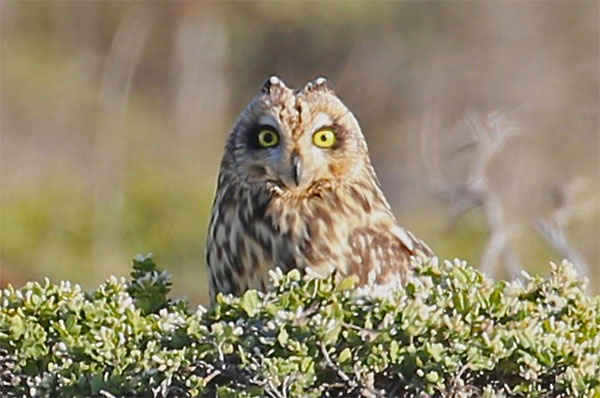
Short-eared Owl roosting on the ground at Wavecrest, October 2020 (Keith Gress)
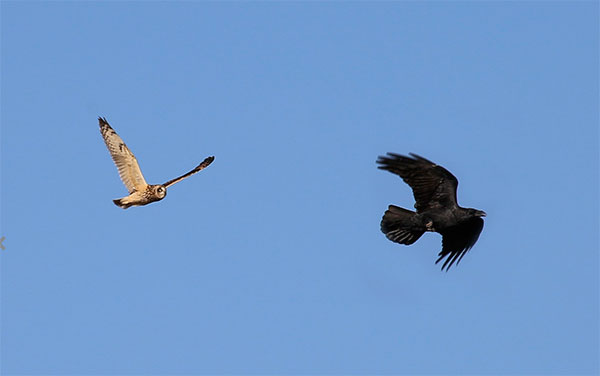
Short-eared Owl in aerial flight/fight with a Common Raven at Wavecrest, October 2020 (Keith Gress)
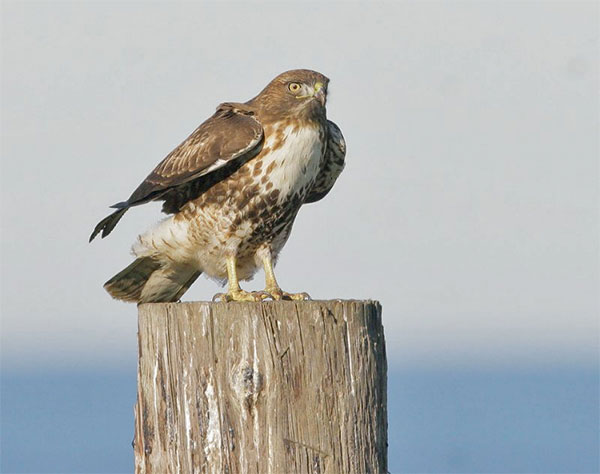
Red-tailed Hawk immature, Wavecrest, Fall 2007 (Tom Grey)
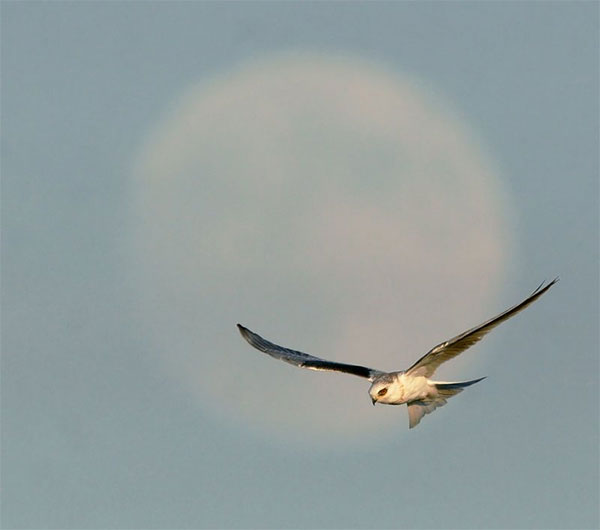
White-tailed Kite against the rising moon, Wavecrest, Fall 2007 (Tom Grey)
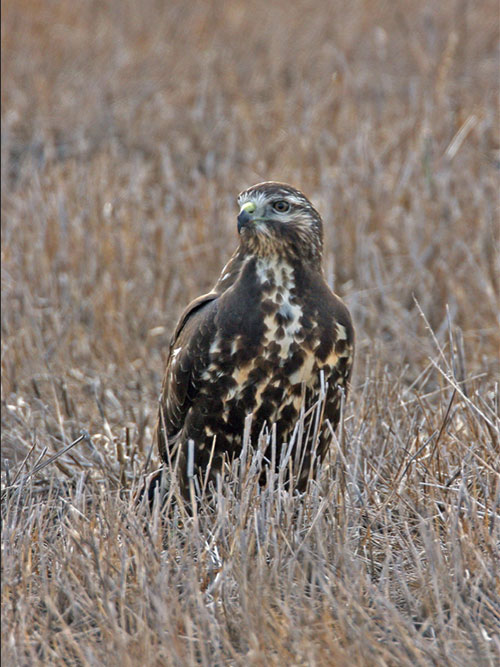
Swainson's Hawk, Wavecrest, Fall 2007 (Ron Wolf)
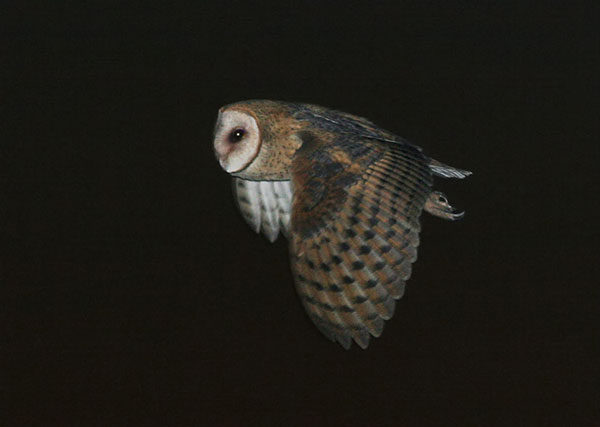
Barn Owl in flight, Fall 2007 (Ron Wolf)
Author: Gary Deghi
Uploaded:
September 30, 2011
Last Update:
January 16, 2022 11:47am
All content ©Sequoia Audubon Society and others
No use without written permission
